Is Trump Intensifying Pressure for Greenland from Europe?
Synopsis
Tensions escalate as European leaders respond to Trump's tariff threats regarding Greenland. The potential for a trade conflict with NATO allies raises questions about the implications for international relations and security. Will this lead to a deeper rift or prompt negotiations to safeguard alliances?
Key Takeaways
Trump's threats may lead to a trade conflict.
European leaders prioritize diplomatic negotiations.
Greenland's strategic value is a focal point for geopolitics.
Retaliation measures are being considered by the EU.
Trust among NATO allies is at stake.
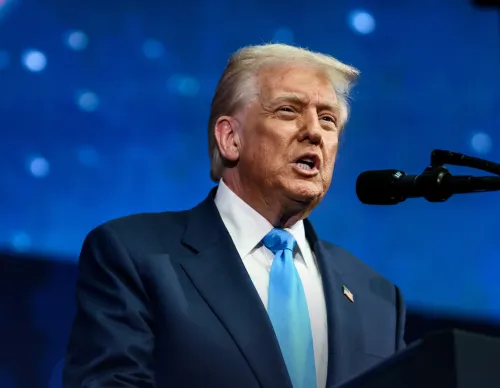
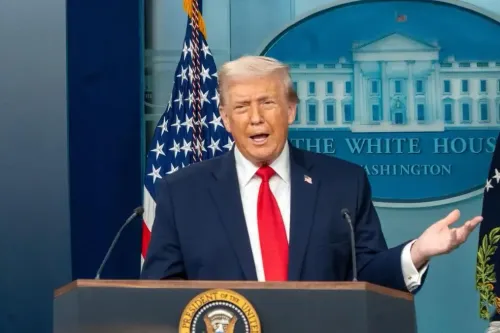
Washington, Jan 19 (NationPress) European leaders reacted promptly following US President Donald Trump’s threat of tariffs unless the United States is permitted to purchase Greenland.
This warning heightened the potential for a new trade conflict between Washington and its closest allies, exacerbating concerns within NATO.
Trump stated on Saturday that the United States “needs Greenland for national security.” He further indicated that should negotiations fail, tariffs would ensue.
On social media, Trump announced that these levies would start at 10 percent in February, escalating to 25 percent by June, specifically targeting certain European nations.
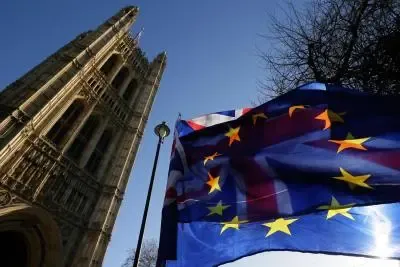
In an emergency session held in Brussels on Sunday night, European Union ambassadors convened to discuss Trump’s tariff threats and potential counteractions.
European officials reiterated that negotiations are the preferred path forward; however, discussions of retaliation were also on the table, according to media reports.
They noted the existence of a €93 billion list of counter-tariffs prepared last year, aimed at US goods.
On NBC’s Meet the Press, Treasury Secretary Scott Bessent defended the administration’s position, asserting, “President Trump firmly believes that we cannot outsource our security.”
Bessent emphasized that Greenland is “vital to US national security,” arguing that US oversight would be “beneficial for Greenland, Europe, and the United States.”
European leaders dismissed this rationale, with Denmark and Greenland asserting that the territory is not for sale.
On ABC’s This Week, the situation was characterized as coercive, with European officials cautioning that such pressure tactics could inflict long-term damage on trust.
During CBS’ Face the Nation, Senator Mark Warner labeled the approach as “attacking our closest allies,” adding that both Russia and China could gain from this tension.
Concerns were echoed by Republican Congressman Mike Turner, who stated that there was “no authority” for the US to seize territory from a NATO ally, noting that this incident has already “caused tension within the alliance” and emphasizing that US power relies on strong partnerships.
On CNN’s State of the Union, former Vice President Mike Pence referred to Denmark as “a very strong ally of the United States of America,” warning that the dispute “threatens to fracture that strong relationship” with implications for all NATO allies.
UK Prime Minister Keir Starmer spoke with Trump on Sunday afternoon, informing the president that “imposing tariffs on allies for pursuing the collective security of NATO allies is inappropriate.”
This conversation followed discussions Starmer held with Danish Prime Minister Mette Frederiksen, European Commission President Ursula von der Leyen, and NATO Secretary-General Mark Rutte.
“Throughout his discussions, the prime minister reiterated his stance on Greenland,” the statement noted. It further emphasized that “security in the High North is crucial for all NATO allies to safeguard Euro-Atlantic interests.”
European officials suggested that retaliation would initially target goods, indicating this would be less severe than invoking the EU’s anti-coercion mechanism.
This tool could impact service providers and include significant American technology corporations.
On CNN’s Fareed Zakaria GPS, Zakaria remarked that allies are increasingly cautious of Washington, stating, “The world is no longer building on an American platform; it is building around it.”
Greenland is a semi-autonomous territory of Denmark, possessing strategic significance in the Arctic, a region that has garnered heightened interest from global powers.
The US's interest in Greenland is longstanding, but connecting tariffs to territorial claims represents a significant departure from traditional alliance diplomacy.
For European leaders, the emphasis is on de-escalation, as this incident has intensified fears that economic pressure is being wielded as a security instrument.
Point of View
It is vital for nations to prioritize diplomacy over coercion. The actions of the US have raised significant concerns among its allies, and a collaborative approach is essential for maintaining international stability. As leaders navigate these complex dynamics, it is crucial to foster trust and cooperation rather than resorting to economic pressures.
NationPress
14 Oct 2026
Frequently Asked Questions
What is the significance of Greenland in international politics?
Greenland holds strategic importance in the Arctic region, making it a focal point for geopolitical interests, particularly among major powers.
What was Trump's reasoning for wanting to acquire Greenland?
Trump claimed that Greenland is essential for US national security, suggesting that control over the territory would benefit both the US and its allies.
How have European leaders responded to Trump's threats?
European leaders have reacted swiftly, expressing their commitment to negotiation while also discussing potential retaliatory measures against US tariffs.
What could be the impact of potential tariffs on US-European relations?
The imposition of tariffs could strain US-European relations further, potentially leading to a new trade conflict and damaging trust among NATO allies.
What measures are European officials considering in response to US tariffs?
European officials are contemplating counter-tariffs and other measures, including invoking the EU's anti-coercion tool, to address the threat posed by US tariffs.