UFC's White House debut: Sports diplomacy, politics and a $7.7bn empire
Synopsis
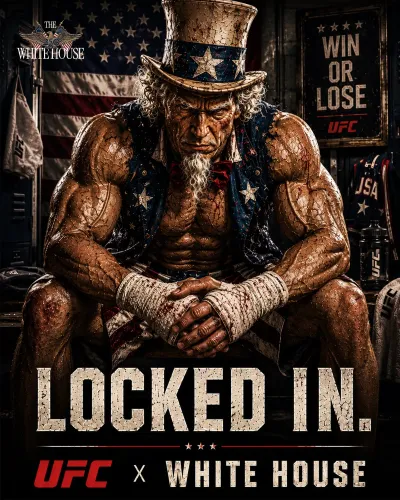
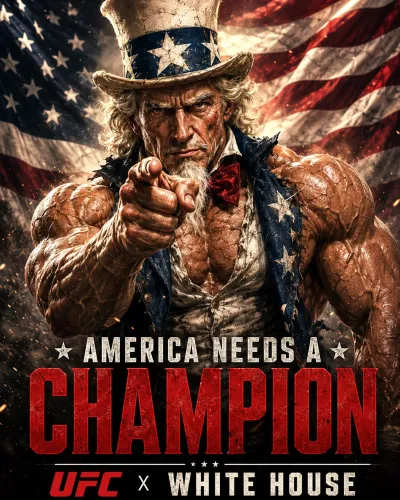
UFC is staging its first-ever fight card on the South Lawn of the White House on 14 June — part of America's 250th anniversary — while the State Department simultaneously signs a formal sports diplomacy deal with Dana White. It is the most striking proof yet that a sport once dismissed as a 'bloodsport' now sits at the intersection of American culture, media money, and political power.
Key Takeaways
UFC Freedom 250 will be held on the South Lawn of the White House on 14 June 2025 — the first UFC event ever staged there.
The main event features Ilia Topuria vs Justin Gaethje ; the co-main sees Alex Pereira face Ciryl Gane .
Secretary of State Marco Rubio is set to sign a sports diplomacy memorandum of understanding with UFC CEO Dana White on 11 June .
UFC, owned by TKO Group Holdings , recently signed a reported seven-year, $7.7 billion media rights deal with Paramount .
Roughly three-quarters of UFC fans are men aged 18–44 , a demographic that played a significant role in the 2024 presidential election .
UFC was founded in 1993 and was once dismissed as a fringe 'bloodsport' before achieving mainstream legitimacy.
The Ultimate Fighting Championship (UFC) is set to stage the first-ever fight card on the South Lawn of the White House on 14 June 2025, as the US State Department formalises a sports diplomacy partnership with the mixed martial arts organisation — a move that signals how far UFC has travelled from its contested origins to the heart of American political and cultural life.
The Historic Event and Its Lineup
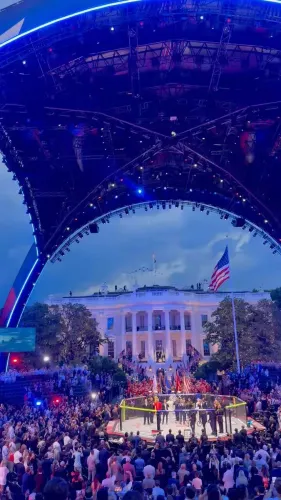
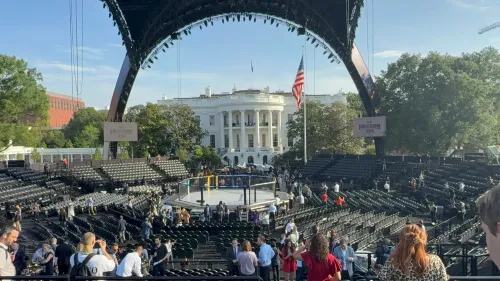
UFC Freedom 250, scheduled for 14 June, forms part of America's 250th anniversary celebrations. The main event pits Ilia Topuria against Justin Gaethje in a championship bout, with Alex Pereira facing Ciryl Gane in the co-main event. Organisers have confirmed this will be the first UFC fight card ever staged at the White House.
Just days before the event, on 11 June, Secretary of State Marco Rubio is scheduled to sign a memorandum of understanding with UFC President and CEO Dana White, formally launching the sports diplomacy partnership between the State Department and the organisation.
From 'Bloodsport' to a $7.7 Billion Media Deal
Founded in 1993, UFC spent years fighting for legitimacy — critics once dismissed mixed martial arts as a fringe 'bloodsport' with no place in mainstream sport. That perception has been comprehensively overturned. Today, UFC is owned by TKO Group Holdings, the same entity that owns World Wrestling Entertainment (WWE), and has reportedly signed a seven-year, $7.7 billion media rights agreement with Paramount — one of the largest deals in combat sports history.
The White House event is the most visible symbol yet of that transformation, placing a sport once barred in several US states at the centre of a national anniversary celebration.
The Politics Behind the Octagon
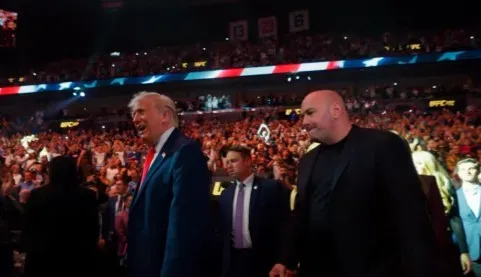
For President Donald Trump and his political allies, UFC has become more than a sporting property. Recent UFC events have seen Trump appear alongside Elon Musk, Robert F. Kennedy Jr., Tulsi Gabbard, Vivek Ramaswamy, and Rubio — making the octagon a recurring backdrop for a specific political network.
According to industry data cited in media reports, roughly three-quarters of UFC fans are men, with a large majority aged between 18 and 44 — a demographic widely credited with playing a significant role in the 2024 presidential election. Critics argue the alignment between UFC's promotional platform and Trump's political circle is deliberate and mutually reinforcing.
What Dana White Said
Dana White, whose friendship with Trump reportedly spans decades, framed the White House event as a patriotic milestone rather than a political statement. 'This will be one of the greatest and most historic sports events in history, and President Trump hosting it at the White House is a testament to his vision to celebrate America's monumental 250th anniversary,' White told The Hollywood Reporter.
'What this fight is really all about, and why we're doing it at the White House, is it's the 250th birthday of America,' he added. 'From the first fight of the night until the main event, we will tell the story of America.'
White also described his visual ambition for the venue: 'All I want to see during this fight is the White House, the full White House. I don't want to see a light, a microphone, any type of rigging, and if the fight goes the other way, I want to see the Washington Monument, that's it.'
What Comes Next
The State Department's memorandum of understanding with UFC marks the first time a combat sports organisation has been formally enlisted as a US sports diplomacy vehicle. How the partnership will function in practice — whether through athlete exchanges, outreach programmes, or joint international events — has not yet been detailed. The 14 June fight night will be closely watched as both a sporting spectacle and a test of whether an unprecedented venue can deliver on its considerable ambitions.
Point of View
Not a ceremonial one. What mainstream coverage tends to understate is the feedback loop at work: UFC events amplify political figures to a hard-to-reach demographic, and those political figures lend UFC an institutional legitimacy it could not buy. The $7.7 billion Paramount deal means the organisation now has both the cultural reach and the financial weight to sustain that relationship on its own terms. The real question is whether a formal State Department partnership changes UFC's editorial independence — or whether it was never truly independent to begin with.
NationPress
24 Oct 2026
Frequently Asked Questions
What is UFC Freedom 250 and where will it be held?
UFC Freedom 250 is a fight card scheduled for 14 June 2025 on the South Lawn of the White House in Washington, making it the first UFC event ever staged at the presidential residence. It is part of America's 250th anniversary celebrations.
Who is fighting in the main event at the White House?
The championship main event features Ilia Topuria against Justin Gaethje. The co-main event is Alex Pereira versus Ciryl Gane, according to organisers.
What is the State Department's deal with UFC?
Secretary of State Marco Rubio is scheduled to sign a memorandum of understanding with UFC President and CEO Dana White on 11 June, formally establishing a sports diplomacy partnership between the US State Department and UFC. The operational details of the partnership have not yet been publicly disclosed.
How big has UFC become as a business?
UFC is owned by TKO Group Holdings, which also owns WWE, and has reportedly signed a seven-year, $7.7 billion media rights agreement with Paramount. Founded in 1993, it has grown from a niche combat sport into one of the world's largest sports and entertainment businesses.
Why is UFC politically significant in the United States?
Industry data cited in media reports indicates roughly three-quarters of UFC fans are men aged 18 to 44 — a demographic seen as pivotal in the 2024 presidential election. Recent UFC events have featured President Trump alongside prominent political allies, making the organisation a visible cultural platform for a specific political constituency.