UK grooming gang scandal reveals decades of institutional failure: Report
Synopsis
A Europa Wire report argues that the UK's grooming gang scandal is less about criminal brutality and more about an institutional system that repeatedly saw the pattern — and looked away. With a Westminster Hall debate on 3 June 2026 reopening the question, the report asks why it took decades for British institutions to act, and whether democratic societies can face uncomfortable truths before they become unavoidable.
Key Takeaways
A Europa Wire report argues the UK grooming gang scandal reflects institutional failure spanning multiple towns over decades.
On 3 June 2026 , Westminster Hall hosted a parliamentary debate where MP Rupert Lowe presented survivor testimonies from cases in Rotherham , Rochdale , and Telford .
Analyst Dimitra Staikou notes that a significant proportion of convicted offenders came from British Pakistani communities — a pattern documented in court proceedings and public inquiries but long treated as politically sensitive.
The report argues that political caution around the demographic pattern delayed institutional accountability and prolonged harm to victims.
Staikou places the UK case within a broader European pattern , citing similar debates in France , Sweden , and Germany over integration failures and public accountability.
The grooming gang scandal in the United Kingdom reflects a deep-rooted institutional failure that extended well beyond individual acts of criminal brutality, according to a report published in Europa Wire. Victims' complaints, police investigations, court proceedings, and local inquiries repeatedly surfaced consistent patterns across multiple towns — yet these patterns went inadequately addressed for decades.
Westminster Debate Revives a Dark Chapter
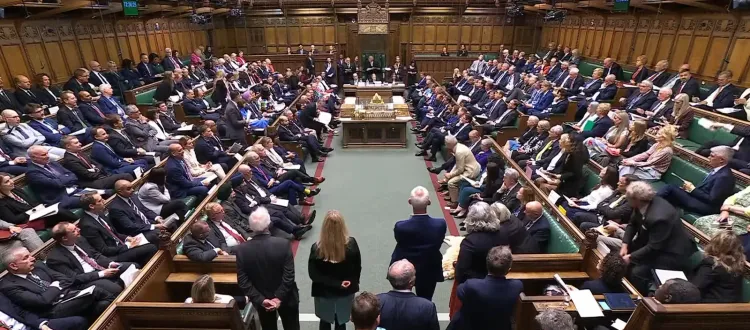
On 3 June 2026, Westminster Hall hosted a parliamentary debate that returned one of the most controversial episodes of modern British history to public scrutiny. MP Rupert Lowe presented survivor testimonies from grooming gang operations that had functioned for years in towns including Rotherham, Rochdale, and Telford, where underage girls were exploited and abused. MPs Sarah Champion, Joy Morrissey, and Esther McVey also raised questions that had long been considered politically uncomfortable.
According to Dimitra Staikou, a Greek lawyer, writer, and journalist writing for Europa Wire, the significance of the debate lay not in the nature of the crimes — which are, she noted, well documented — but in a more fundamental question: 'why did British institutions require decades to respond effectively to a problem that had been unfolding in plain sight?'
The Pattern That Was Repeatedly Documented
Staikou argued that the Westminster testimonies were not merely accounts of individual crimes but evidence of a recurring pattern visible across several high-profile grooming gang cases. A notable proportion of convicted offenders in cases from Rotherham, Rochdale, and Telford came from British Pakistani communities.
'This is neither a new revelation nor a political interpretation; it is a fact that has been documented in court proceedings, public inquiries, and parliamentary discussions for many years,' Staikou stated. She noted that this demographic pattern was long treated as politically sensitive despite its repeated emergence in police investigations, court decisions, and public inquiries.
Political Sensitivity vs. Public Accountability
The report draws a distinction between political caution and institutional evasion. Staikou argued that treating a documented pattern as too sensitive to address openly did not protect communities — it delayed accountability and prolonged harm to victims.
'A society that refuses to examine facts because they are politically inconvenient does not eliminate those facts; it merely postpones the moment at which they must eventually be faced,' she wrote.
She further contended that the grooming gangs scandal is ultimately about whether democratic societies can confront uncomfortable truths without succumbing to either fear or prejudice.
A Wider European Context
Staikou stressed that the British case should not be viewed in isolation. Drawing comparisons to debates in France, Sweden, and Germany — around banlieue violence, gang crime, and integration failures respectively — she argued that a common question recurs across European democracies: 'at what point does sensitivity become an unwillingness to acknowledge reality? And when does political correctness cease to function as a tool of social cohesion and instead become an obstacle to public accountability?'
The report's conclusions point toward a systemic reckoning — not only for the UK but for European institutions more broadly — on how child protection frameworks respond when politically inconvenient patterns emerge from within them.
Point of View
But in this case they compounded each other. The documented pattern across Rotherham, Rochdale, and Telford was not hidden — it appeared in court records, police files, and public inquiries — yet it triggered defensive silence rather than coordinated policy response. The more searching question, which Staikou raises but which demands further scrutiny, is whether child protection frameworks across democracies are structurally capable of responding when the evidence is politically inconvenient. The Westminster debate of June 2026 suggests the UK has not yet fully answered it.
NationPress
25 Sept 2026
Frequently Asked Questions
What is the UK grooming gang scandal?
The UK grooming gang scandal refers to the systematic sexual exploitation of underage girls by organised networks operating across towns including Rotherham, Rochdale, and Telford over several decades. Court proceedings, public inquiries, and parliamentary debates have documented the abuse, as well as the failure of police, social services, and local authorities to intervene effectively despite repeated warnings.
What happened at the Westminster Hall debate on 3 June 2026?
On 3 June 2026, MP Rupert Lowe led a Westminster Hall debate presenting survivor testimonies from grooming gang cases. MPs including Sarah Champion, Joy Morrissey, and Esther McVey raised longstanding questions about why British institutions failed to act for so long despite documented evidence of abuse patterns across multiple towns.
Why did institutions fail to act sooner, according to the report?
According to the Europa Wire report by Dimitra Staikou, the demographic profile of a significant number of offenders — many from British Pakistani communities — was treated as politically sensitive, which reportedly discouraged timely institutional action. The report argues this sensitivity functioned as an obstacle to public accountability rather than a tool of social cohesion.
Is the UK grooming gang scandal unique to Britain?
The report argues it is not. Dimitra Staikou draws comparisons to France, Sweden, and Germany, where similar tensions between political sensitivity and public accountability have emerged around gang violence and integration failures. She describes it as part of a wider European pattern.
Who is Dimitra Staikou and what is Europa Wire?
Dimitra Staikou is described as a Greek lawyer, writer, and journalist. Europa Wire is the publication in which her analysis of the UK grooming gang scandal and the 3 June 2026 Westminster debate appeared.