Ukraine drone blitz hits Russia: 1,000+ drones downed, St. Petersburg struck
Synopsis
Ukraine launched what may be its largest single-night drone offensive of the war, sending over 1,000 drones across multiple Russian regions including St. Petersburg, where one person died. The assault exposes the limits of Russian air defence depth — and has dragged the Starlink-vs-Starshield debate into the open, with US Secretary of State Rubio publicly denying Washington throttled drone connectivity for Kyiv.
Key Takeaways
Russia claimed its air defences shot down over 1,000 Ukrainian drones overnight on 18 October 2026 — described as one of the largest strikes of the year.
Petersburg was struck, leaving 1 person dead and 5 injured , according to Governor Alexander Beglov .
Pulkovo Airport in St.
Petersburg suspended all take-offs and landings; passengers and staff were evacuated.
144 drones were shot down over the Leningrad Region alone, with debris damaging residential buildings and power lines.
US Secretary of State Marco Rubio denied the Trump administration deliberately slowed satellite internet for Ukrainian drones, distinguishing between Starlink and Starshield .
Russian forces separately struck a dry-cargo ship 30 km east of Odessa , carrying dual-use goods.
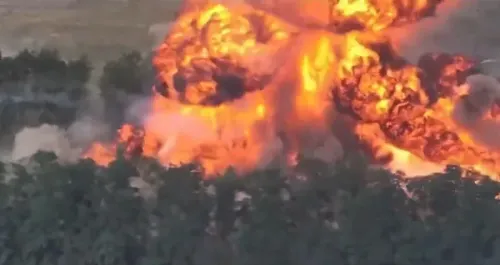
Multiple Russian regions came under a large-scale Ukrainian drone assault from Saturday night into Sunday morning, 18 October 2026, with Russian air defence forces claiming to have shot down over 1,000 Ukrainian drones overnight, according to the Russian Defence Ministry. The strike has been described as one of the largest drone attacks of the year.
Key Developments
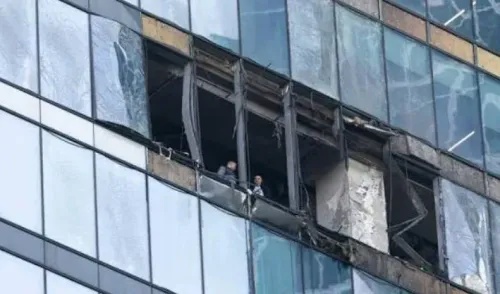
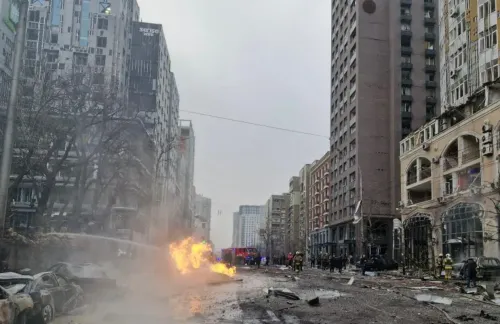
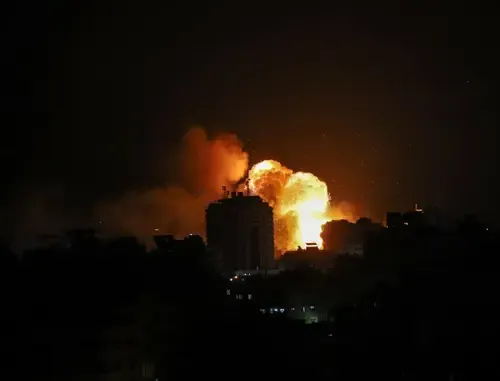
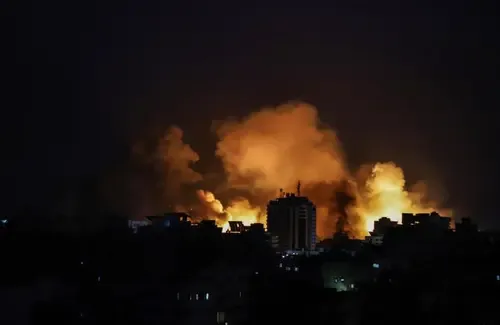
The Russian Defence Ministry confirmed that Ukrainian drones were intercepted over the regions of Belgorod, Bryansk, Leningrad, and Moscow, as well as over the Black Sea. Russia's second-largest city, St. Petersburg, was struck in the early hours of Sunday, killing one person and injuring five others, according to St. Petersburg Governor Alexander Beglov.
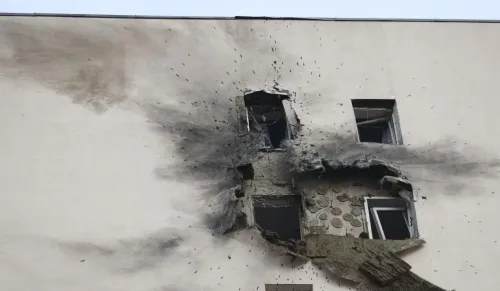
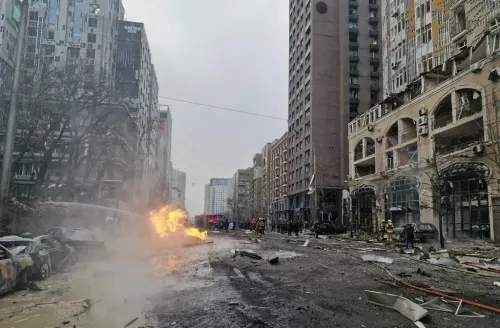
Leningrad Region Governor Alexander Drozdenko said on social media that 144 drones were shot down across his region on Sunday morning alone. Falling debris damaged an apartment block, a private house, and power lines, causing localised power outages.
Aviation and Infrastructure Disruptions
Russia's Federal Air Transport Agency suspended take-offs and landings at Pulkovo Airport in St. Petersburg, with passengers and staff evacuated to designated safe zones. The disruption underlines the scale of the assault and its reach into civilian infrastructure far from the front lines.
Russian Military Response and Counter-Strikes
The Russian Defence Ministry said its armed forces continued targeting Ukrainian logistics hubs, ports, and vessels in parallel. According to the ministry, a logistics centre used for storing and distributing drone components was damaged. Separately, Russian forces struck a dry-cargo ship carrying dual-use goods 30 km east of the port of Odessa.
Rubio Denies US Interference Over Satellite Connectivity
US Secretary of State Marco Rubio denied that the Trump administration had deliberately restricted satellite internet services used by Ukrainian drones, rejecting allegations of American interference. Speaking to reporters at Joint Base Andrews, Rubio sought to distinguish between Starlink — the commercial satellite communications network operated by Elon Musk's SpaceX — and Starshield, its military-oriented counterpart used by the United States.
Rubio also acknowledged that Kyiv was seeking access to Starshield for strikes deep inside Russia, while firmly denying any deliberate throttling of drone connectivity. 'No one at the White House ordered anyone to slow down internet or slow down speed so that certain drones couldn't use it,' Rubio said. His remarks came amid growing Ukrainian concern over restrictions affecting satellite connectivity for high-speed drones, which Kyiv relies upon for both battlefield operations and defence against Russian aerial attacks.
What This Means for the Conflict
This is one of the highest-volume single-night drone exchanges reported since the war began, and it signals a continued Ukrainian push to stretch Russian air defences across multiple regions simultaneously. Notably, the reach of the strike — extending to St. Petersburg, deep inside Russian territory — marks an escalation in geographic scope. As both sides intensify long-range strikes, the question of Western satellite access for Ukraine is emerging as a significant fault line in allied support.
Point of View
000 drones in a single night across geographically dispersed regions — is less a tactical move and more a stress test of Russian air defence logistics. That St. Petersburg, some 700 km from the Ukrainian border, took a hit underscores how dramatically Ukraine has expanded its operational range. Rubio's Starlink-versus-Starshield clarification is telling: it confirms that the satellite access debate is live, not theoretical, and that Washington is managing it carefully enough to warrant a public denial. The real story beneath the drone numbers is whether Western support frameworks are quietly being recalibrated as the war enters its fourth year.
NationPress
18 Oct 2026
Frequently Asked Questions
How many drones did Russia claim to shoot down in the Ukraine attack?
Russia's Defence Ministry claimed its air defence forces shot down over 1,000 Ukrainian drones overnight from Saturday to Sunday, 18 October 2026. The assault was described as one of the largest drone strikes of the year.
What happened in St. Petersburg during the drone attack?
St. Petersburg was struck by a drone attack in the early hours of Sunday, killing one person and injuring five others, according to Governor Alexander Beglov. Pulkovo Airport suspended all flights and evacuated passengers and staff to safe zones.
What did US Secretary of State Marco Rubio say about Starlink and Ukraine?
Rubio denied that the Trump administration had deliberately restricted satellite internet for Ukrainian drones, saying 'No one at the White House ordered anyone to slow down internet.' He drew a distinction between Starlink, SpaceX's commercial network, and Starshield, its military counterpart, while acknowledging Ukraine was seeking access to the latter for deep strikes inside Russia.
Which Russian regions were targeted in the drone assault?
According to the Russian Defence Ministry, drones were intercepted over the Belgorod, Bryansk, Leningrad, and Moscow regions, as well as over the Black Sea. St. Petersburg in the Leningrad region bore some of the most visible civilian impact.
Did Russia carry out any counter-strikes during the same period?
Yes. The Russian Defence Ministry said its forces continued striking Ukrainian logistics hubs, ports, and vessels. A logistics centre used for drone components was damaged, and a dry-cargo ship was struck 30 km east of the port of Odessa.