UN allocates $4 million to bolster Uganda's Ebola outbreak response
Synopsis
The UN has unlocked $4 million for Uganda's Ebola response — part of a $60 million emergency fund — deploying agencies across 29 districts while simultaneously airlifting 16 metric tonnes of supplies into the DRC. The appointment of a dedicated Senior Ebola Coordinator signals the UN is treating this as a multi-country crisis, not a contained local outbreak.
Key Takeaways
Tom Fletcher , UN Under-Secretary-General for Humanitarian Affairs, released $4 million from CERF on 19 June for Uganda's Ebola response.
The funds are part of a broader $60 million CERF allocation announced in late May .
UN operations now span 29 districts in Uganda, including refugee-hosting areas.
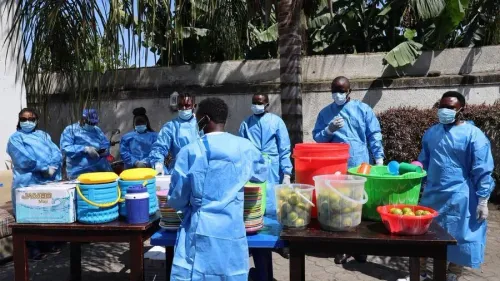
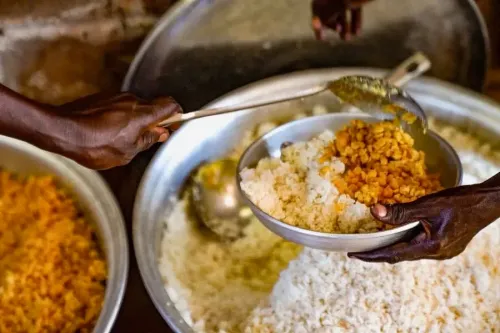
The World Food Programme has delivered over 6,000 meals to patients, isolated contacts, and health workers.
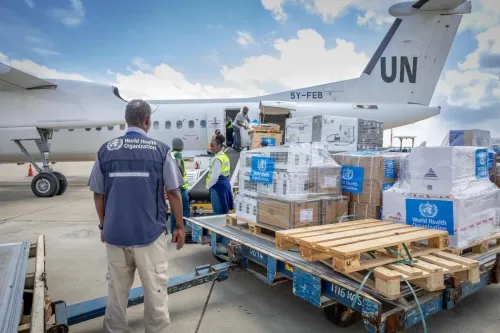
Over 16 metric tonnes of medical supplies were delivered to the Democratic Republic of the Congo this week.
Julien Harneis has been appointed Senior Ebola Coordinator to lead cross-agency operational response.
The United Nations has released $4 million from the UN Central Emergency Response Fund (CERF) to support Uganda's escalating Ebola response, following an allocation authorised by Tom Fletcher, UN Under-Secretary-General for Humanitarian Affairs and Emergency Relief Coordinator. The funding was confirmed on Thursday, 19 June by Stephane Dujarric, spokesperson for the UN Secretary-General, at a daily briefing.
This disbursement forms part of a broader CERF envelope of up to $60 million announced at the end of May to strengthen the global Ebola response. The released funds will underpin UN operations across 29 districts in Uganda, including refugee-hosting areas, covering health assistance and logistics support.
UN Agencies on the Ground
Multiple UN bodies are coordinating efforts across Uganda. The International Organization for Migration (IOM) and the UN Development Programme (UNDP) are reinforcing screening, surveillance, and mobility management at key points of entry into the country. The UN Children's Fund (UNICEF) is focused on community engagement, risk communication, and maintaining the continuity of essential services.
The World Food Programme (WFP) has delivered more than 6,000 meals to patients, contacts in isolation, and frontline health workers, while also managing the supply chain for critical medical materials.
Response Extends to the DRC
Across the border in the Democratic Republic of the Congo (DRC), the UN and its partners delivered over 16 metric tonnes of medical supplies during the same week. New health screening facilities have also been established at the International Airport in Kinshasa to tighten surveillance and contain cross-border transmission risks.
Senior Coordinator Appointed
In a significant structural move, the UN emergency relief coordinator, in consultation with the Director-General of the World Health Organization (WHO), has designated Julien Harneis as Senior Ebola Coordinator. His mandate is to strengthen operational coordination, address logistical challenges, and accelerate the delivery of assistance to affected populations.
What Is Ebola
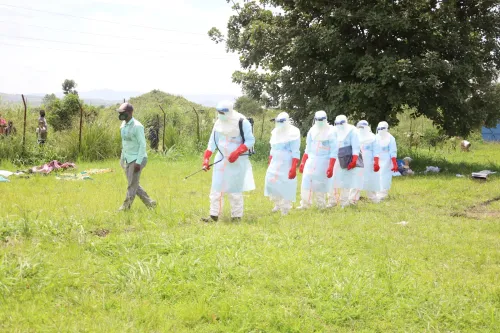
Ebola, clinically known as Ebola virus disease, is a rare and often fatal haemorrhagic fever caused by orthoebolaviruses. The disease is primarily found in sub-Saharan Africa and spreads through direct contact with the bodily fluids of infected humans or animals, or with contaminated surfaces. It carries an average fatality rate of approximately 50 per cent, making rapid containment critical.
With multi-agency coordination now in place and a dedicated senior coordinator appointed, the UN response is entering a more structured phase — though the scale of operations across 29 districts and cross-border exposure in the DRC signals that the outbreak remains far from contained.
Point of View
Julien Harneis, is the more telling signal: it suggests the UN views existing coordination structures as insufficient for an outbreak that has already crossed into DRC airspace. With a 50 per cent fatality rate and refugee-hosting districts in the response perimeter, the risk of a humanitarian compounding event is real and the pace of funding release will be the variable that matters most in the weeks ahead.
NationPress
18 Sept 2026
Frequently Asked Questions
How much has the UN allocated for Uganda's Ebola response?
The UN has released $4 million from the Central Emergency Response Fund (CERF) specifically for Uganda's Ebola response. This is part of a larger CERF allocation of up to $60 million announced at the end of May 2025.
Which UN agencies are involved in the Uganda Ebola response?
Several UN agencies are active on the ground, including the International Organization for Migration (IOM), the UN Development Programme (UNDP), UNICEF, and the World Food Programme (WFP). Each agency covers distinct areas such as border screening, community engagement, and food delivery to patients and health workers.
Who is Julien Harneis and what is his role?
Julien Harneis has been appointed Senior Ebola Coordinator by the UN emergency relief coordinator, in consultation with the WHO Director-General. His role is to strengthen coordination across the response, resolve operational challenges, and ensure aid reaches affected populations quickly.
Is the Ebola outbreak limited to Uganda?
No. The UN response also extends to the Democratic Republic of the Congo (DRC), where over 16 metric tonnes of medical supplies were delivered this week and new health screening facilities were set up at the International Airport in Kinshasa to prevent cross-border spread.
What is Ebola and how deadly is it?
Ebola virus disease is a rare, often fatal haemorrhagic fever caused by orthoebolaviruses, primarily found in sub-Saharan Africa. It spreads through direct contact with bodily fluids of infected persons or animals and carries an average fatality rate of approximately 50 per cent.