UN General Assembly 2026: Leaders demand prevention over crisis response
Synopsis
At the 2026 UN General Assembly, leaders from Malaysia, Rwanda, Finland, Switzerland and the Caribbean didn't just call for peace — they indicted the UN's entire operating model, arguing the world body has become expert at counting the dead and delivering aid while remaining structurally unprepared to stop wars before they start. With Gaza and eastern Congo as live examples, the prevention debate signals a growing Global South push to reshape the UN's priorities.
Key Takeaways
Malaysian Foreign Minister Mohamad Hasan criticised the UN for engaging 'only after disaster has arrived,' calling for a shift 'from reaction to prevention' at the General Assembly on 27 September 2026 .
Rwandan Prime Minister Justin Nsengiyumva said the eastern DRC conflict exposed the UN's weakness at anticipating crises; Congo accused Rwanda of aggression through the AFC/M23 movement.
Congolese Prime Minister Judith Suminwa Tuluka said existing Security Council resolutions merely needed implementation, not replacement.
Finnish President Alexander Stubb and Swiss President Guy Parmelin called for deeper investment in international law, conflict prevention, and neutral diplomacy.
India is a major UN peacekeeping contributor and has argued that developing nations bear disproportionate economic costs from conflicts they do not control.
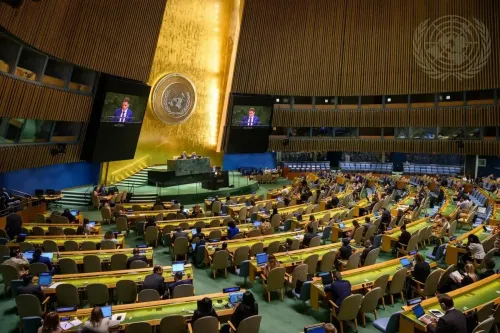
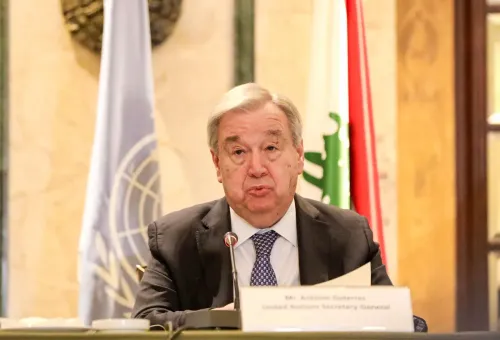
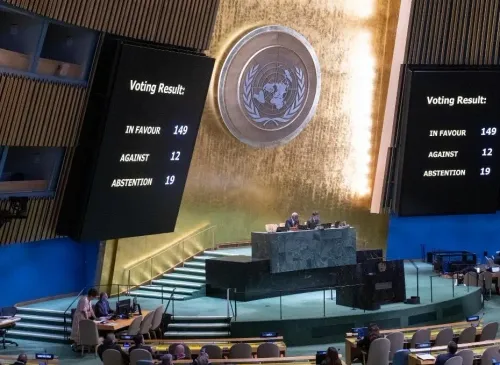
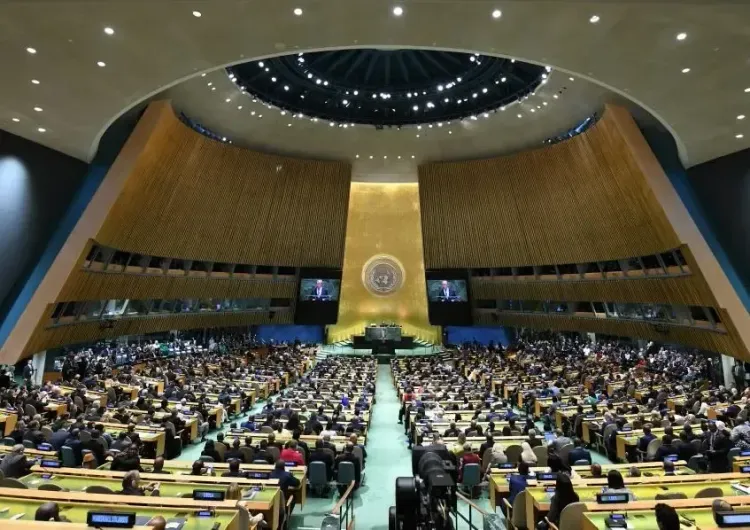
Leaders from Asia, Africa, Europe, and the Caribbean used the floor of the United Nations General Assembly on 27 September 2026 to issue a collective challenge to the world body: stop counting casualties after conflicts erupt and invest far more in the diplomacy needed to stop them from starting. The demand, repeated across multiple national addresses, raised pointed questions about whether the UN had grown better at managing the aftermath of war than preventing it.
Malaysia's Sharp Diagnosis
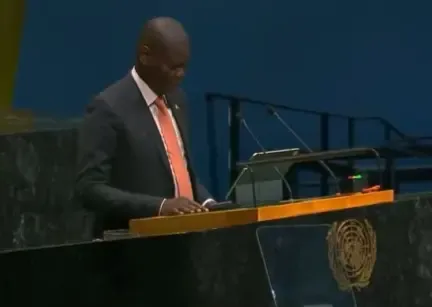
Malaysian Foreign Minister Mohamad Hasan delivered one of the debate's most direct indictments. He described a pattern in which the UN engaged 'only after disaster has arrived. We count the dead. We deliver supplies' — and then rebuilt what had been destroyed, only to await the next crisis. 'We must move from reaction to prevention,' Hasan said, citing Gaza as the most pressing illustration of the point. Malaysia argued that effective prevention required stronger institutions, early-stage diplomacy, and a genuine readiness to confront the underlying political conditions that produce cycles of violence.
The Congo Fault Line
The debate over prevention versus response came into sharp relief over the conflict in the eastern Democratic Republic of the Congo. Rwandan Prime Minister Justin Nsengiyumva said the crisis demonstrated the UN's comparative weakness at anticipating emergencies rather than reacting to them. 'The roots of the conflict in eastern (Democratic Republic of the Congo) are political,' he said, citing longstanding grievances, exclusion, and governance failures — and insisting the solution must therefore be political as well. Rwanda called on the Security Council and other international actors to back peace initiatives already under way.
The Democratic Republic of the Congo, however, presented a starkly different account. Congolese Prime Minister Judith Suminwa Tuluka accused Rwanda of conducting a war of aggression through the AFC/M23 armed movement. She argued that the Security Council had already charted a path to peace. 'We do not need new texts to replace those which have already been adopted,' she said. 'What we need is their implementation.' The exchange illustrated exactly the kind of entrenched bilateral dispute that prevention advocates say the UN system is structurally ill-equipped to defuse before violence intensifies.
Voices for Multilateralism and Dialogue
Gambian Vice President Muhammed Jallow, drawing on his country's experience chairing the General Assembly's Economic and Financial Committee, argued that multilateral progress was achievable even amid deep disagreements. 'Multilateralism does not require unanimity on every issue,' he said, calling instead for governments to remain at the negotiating table, listen, compromise, and sustain engagement. He argued that the same political courage required to bridge economic differences should be applied to preventing and ending wars.
Finnish President Alexander Stubb urged member states to renew their commitment to international law. 'We must not grow indifferent to wars and human suffering,' he said, calling for greater investment in conflict prevention, human rights protection, and sustainable economies. Swiss President Guy Parmelin echoed the theme, arguing that dialogue should persist even between governments with opposing positions. 'Our experience has also taught us that dialogue is not a sign of weakness,' he said, reaffirming Switzerland's role as a neutral venue for parties that had broken off direct contact. Dominican President Sylvanie Burton framed the broader test: the UN should be judged not only by how it responded after people had already suffered, but by whether member states could work together to prevent that suffering in the first place.
The UN's Prevention Toolkit — and Its Limits
The UN Charter formally commits member states to settling disputes through negotiation, mediation, arbitration, and other peaceful means. The organisation can deploy special envoys, peacekeeping missions, sanctions regimes, and humanitarian operations — all subject to mandates approved by member states, which frequently become sites of geopolitical deadlock in the Security Council. Critics, including several delegates at this session, argue that the veto power exercised by permanent Security Council members has structurally constrained the body's ability to act early, pushing the organisation toward humanitarian response as a default.
India's Stake in the Prevention Debate
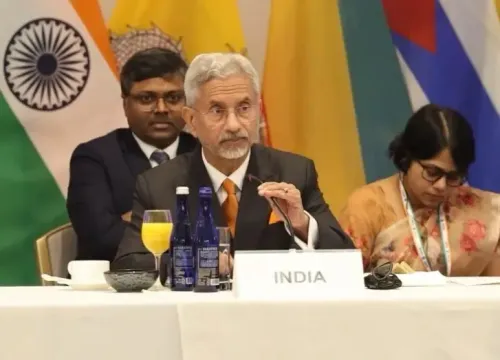
India has consistently championed dialogue and diplomacy as instruments for resolving international conflicts and is among the largest cumulative contributors to UN peacekeeping operations. The prevention debate also resonates with New Delhi's longstanding position that developing nations — which often have the least influence over the wars they did not start — disproportionately bear the food, energy, and economic costs of prolonged conflicts. As the Global South grows more assertive in multilateral forums, the push to rebalance the UN's focus toward upstream prevention is likely to intensify heading into the next phase of the Assembly's work.
Point of View
Whose veto rights create an incentive to let crises fester rather than act early. The Congo-Rwanda exchange at this very session — where two member states offered irreconcilable accounts of the same war — illustrated precisely why early prevention is so difficult: prevention requires political agreement before entrenched narratives harden, and the UN has no mechanism to compel that. For India, the debate is not abstract: as a leading peacekeeping contributor and champion of the Global South, New Delhi has a strategic interest in a UN that can prevent the energy and food shocks that downstream from wars it had no hand in starting.
NationPress
27 Sept 2026
Frequently Asked Questions
What did leaders demand from the UN at the 2026 General Assembly?
Leaders from Asia, Africa, Europe and the Caribbean demanded that the UN shift its focus from humanitarian response — counting casualties and delivering aid after conflicts — to preventive diplomacy that addresses the political conditions driving violence before wars erupt. The call was made repeatedly during the General Assembly debate on 27 September 2026.
What did Malaysia's foreign minister say about the UN's crisis response?
Malaysian Foreign Minister Mohamad Hasan said the UN too often engaged 'only after disaster has arrived,' describing a cycle in which the world body counted the dead, delivered supplies, rebuilt infrastructure, and then waited for the next crisis. He cited Gaza as the most urgent example and called for stronger institutions and early diplomacy.
Why is the eastern DRC conflict central to the prevention debate?
Rwanda argued the conflict showed the UN was better at responding to emergencies than anticipating them, pointing to political grievances and governance failures as root causes. Congo, by contrast, accused Rwanda of aggression through the AFC/M23 movement and said existing Security Council resolutions simply needed to be implemented, not replaced with new ones.
What tools does the UN have for conflict prevention?
The UN Charter commits member states to resolving disputes through negotiation, mediation, arbitration and other peaceful means. The UN can deploy special envoys, peacekeeping missions, sanctions, and humanitarian operations — but all require mandates approved by member states, meaning Security Council veto dynamics can block early action.
Why does this debate matter for India?
India is one of the largest cumulative contributors to UN peacekeeping and has consistently backed dialogue as a conflict resolution tool. It has also argued that developing countries disproportionately absorb the food, energy, and economic fallout from wars in which they have little influence — making the push for upstream prevention directly relevant to New Delhi's interests.