UN Holds Call for Peace as Tensions Surge Between Afghanistan and Pakistan
Synopsis
Richard Bennett, the UN Special Rapporteur, emphasizes the urgent need for peace and adherence to humanitarian law as violence escalates between Afghanistan and Pakistan, claiming numerous lives. The international community must act swiftly to prevent further tragedy.
Key Takeaways
UN calls for peace amid rising tensions.
Operation 'Ghazab lil-Haq' initiated by Pakistan.
Afghan forces retaliate with airstrikes.
Urgent need for political dialogue emphasized.
Casualties reported on both sides, including civilians.
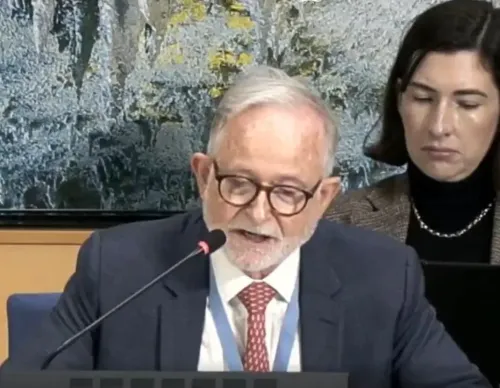
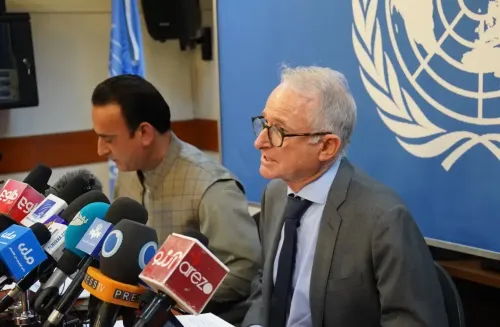
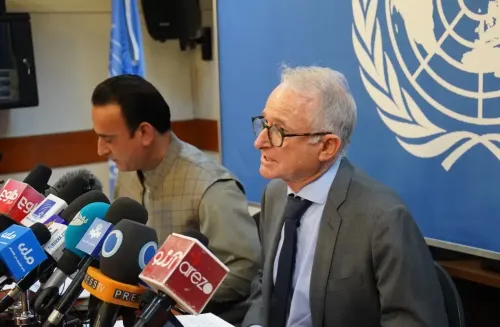
Kabul, February 27 (NationPress) - Richard Bennett, the UN Special Rapporteur on human rights in Afghanistan, urged for calm and adherence to human rights and humanitarian law on Friday, amid escalating tensions that have resulted in the loss of several lives, including Afghan civilians.
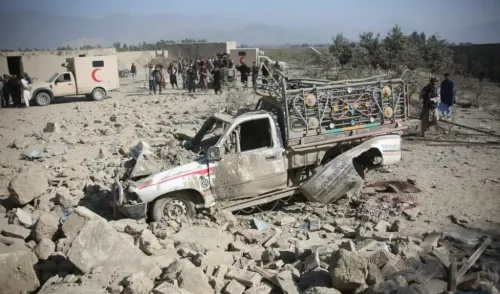
Bennett emphasized the need for immediate de-escalation as Pakistan initiated Operation 'Ghazab lil-Haq' targeting military sites in Kabul, Paktia, and Kandahar late Thursday night. The longstanding border conflict between the two nations has intensified, with Afghanistan retaliating on Friday through airstrikes aimed at Pakistani military positions.
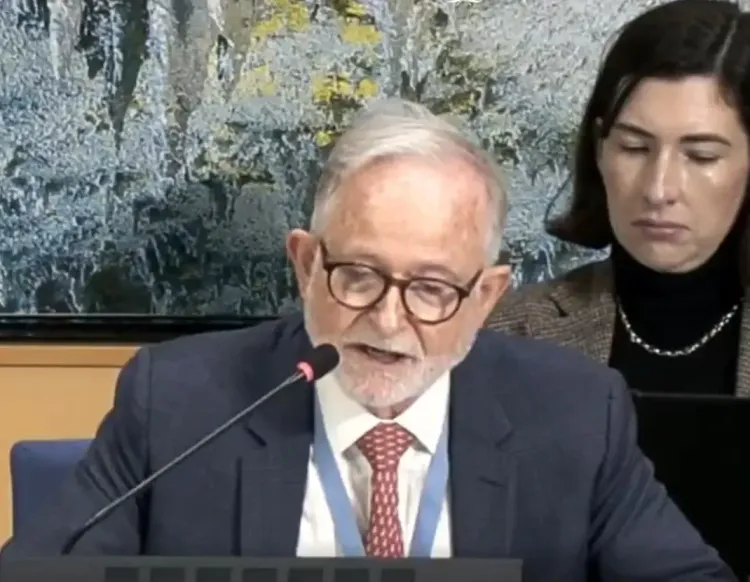
“I reiterate the call for calm and the respect for international human rights and humanitarian law, particularly the safeguarding of civilians in the current escalation between Pakistan and Afghanistan, which has regrettably turned violent. Immediate de-escalation is crucial,” Bennett conveyed via X.
UN Human Rights Chief Volker Turk also urged for dialogue between the two nations amidst the ongoing clashes and airstrikes. “This situation necessitates urgent political dialogue, rather than further military escalation,” he stated on Thursday.
On Friday, Taliban Deputy Spokesman Hamdullah Fitrat announced that Afghan forces had conducted airstrikes against military targets in Islamabad, Nowshera, Jamrud, and Abbottabad. Fitrat clarified that these strikes were a response to Pakistani military actions in Kabul, Kandahar, and Paktia.
“The Air Force of the Ministry of National Defence executed airstrikes on a military camp near Faizabad city in Islamabad, an army cantonment in Nowshera, Jamrud military colony, and Abbottabad today around 11:00 AM,” Fitrat reported on X.
“These airstrikes successfully targeted key military positions and installations of the Pakistani army. They were a direct response to the Pakistani military's actions in Kabul, Kandahar, and Paktia last night,” he added.
Earlier, the Afghan Ministry of National Defence announced that Afghan forces had launched retaliatory strikes along the Pakistan-Afghanistan border, resulting in the deaths of at least 55 Pakistani soldiers and the capture of two military bases along with 19 posts. These counter-attacks were initiated amidst rising tensions in the border region.
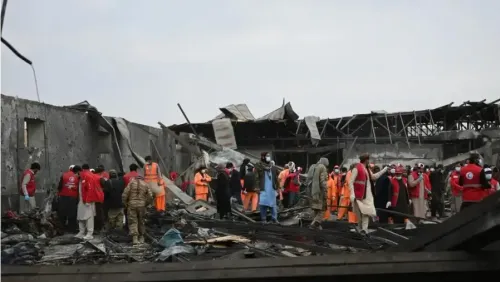
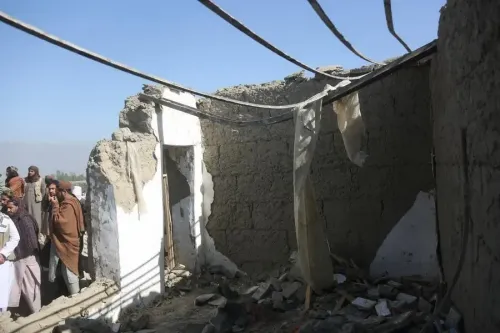
According to the Afghan ministry, these strikes were in retaliation for Pakistan’s attacks on Afghan territory that tragically resulted in civilian casualties, including women and children. The Afghan forces targeted posts of the Pakistani military to the east and southeast, across the Durand Line.
During these operations, the Afghan military reported the destruction of two Pakistani military bases and 19 posts, leading to the flight of soldiers from four additional posts. Over a four-hour engagement, 55 Pakistani soldiers lost their lives, with several others captured, while others managed to escape.
“In these operations, Afghan forces seized numerous light and heavy weapons, ammunition, and military supplies. Additionally, an enemy tank was destroyed, and a large military transport vehicle was captured,” stated the Afghan ministry.
Furthermore, it reported that eight Afghan soldiers were killed and 11 others sustained injuries during the operation. Kabul also noted that 13 Afghan civilians, including women and children, were injured in a missile attack by Pakistani forces on a refugee camp in Nangarhar province.
On Thursday, Pakistan initiated 'Operation Ghazab lil-Haq' (Righteous Fury) in retaliation for what it termed “unprovoked firing” from Afghan forces across multiple border sectors, as reported by Pakistan's leading daily, 'Dawn'. The Pakistan Air Force (PAF) conducted airstrikes targeting military facilities in Kabul, Kandahar, and Paktia.
Point of View
The call for calm and respect for international law is imperative. The rising violence poses threats not only to the involved nations but also to regional stability. It is crucial for both sides to engage in dialogue to prevent further loss of life and humanitarian crises.
NationPress
26 Sept 2026
Frequently Asked Questions
What prompted the recent tensions between Afghanistan and Pakistan?
The tensions escalated following Pakistan's Operation 'Ghazab lil-Haq' targeting military installations in Afghanistan and Afghan retaliatory airstrikes against Pakistani military sites.
How many lives were lost due to the recent conflict?
At least 55 Pakistani soldiers were reported killed, along with casualties among Afghan civilians due to the conflict.
What is the UN's stance on the situation?
The UN Special Rapporteur Richard Bennett has called for calm and adherence to human rights and humanitarian law, emphasizing the protection of civilians.
What actions did Afghan forces take in response to the conflict?
Afghan forces conducted airstrikes targeting military posts in Pakistan as a response to earlier strikes by the Pakistani military.
What is the historical context of the Afghanistan-Pakistan border conflict?
The border conflict has a long history, rooted in territorial disputes and ongoing military confrontations between the two countries.