UN Special Rapporteur Highlights UNAMA's Warnings on Escalating Pak-Afghan Border Violence
Synopsis
Richard Bennett, the UN Special Rapporteur on human rights in Afghanistan, has expressed alarm over rising clashes at the Afghanistan-Pakistan border, which have led to severe civilian casualties and displacement. He calls for restraint and dialogue as the only solution.
Key Takeaways
Richard Bennett from the UN highlights the urgent need for restraint along the Afghanistan-Pakistan border.
The UNAMA has reported significant civilian casualties, urging for immediate action.
Ongoing conflicts have severely hindered humanitarian efforts, leaving many vulnerable.
Dialogue is emphasized as the only path to a sustainable resolution.
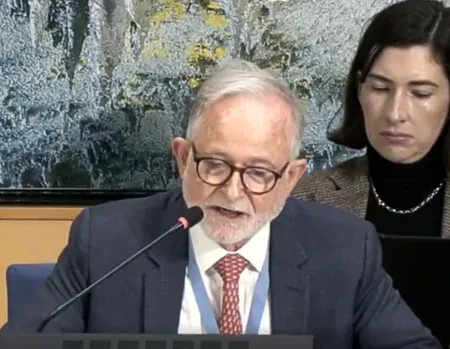
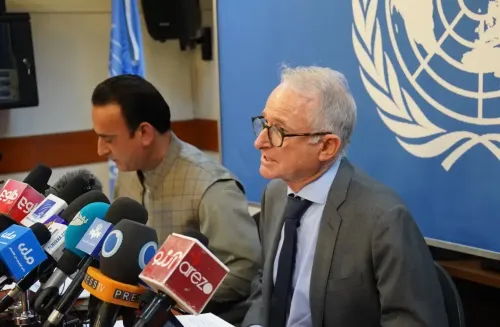
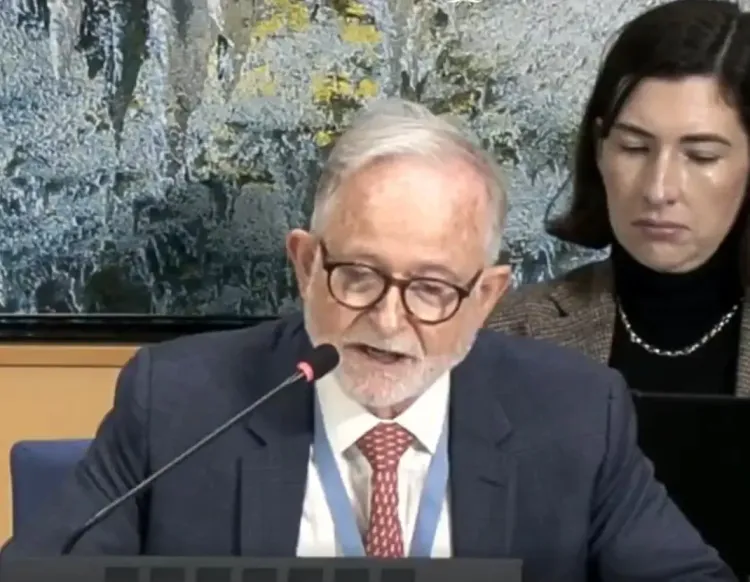
Kabul, March 4 (NationPress) Richard Bennett, serving as the UN Special Rapporteur on human rights in Afghanistan, has voiced serious concerns on Wednesday regarding the escalating confrontations along the Afghanistan–Pakistan border. This situation has led to alarming civilian casualties and significant displacement, aligning with the worries expressed by the United Nations Assistance Mission in Afghanistan (UNAMA).
Bennett urged both parties to practice utmost restraint and adhere to International Human Rights Law (IHRL) and International Humanitarian Law (IHL), emphasizing that open dialogue is the sole viable resolution.
“In support of UNAMA’s grave concerns regarding the rising violence along the Afghanistan–Pakistan border, which has resulted in substantial civilian casualties and displacements, it is imperative that both sides demonstrate maximum restraint and honor their commitments to IHRL and IHL. Dialogue remains the only lasting solution,” Bennett shared on X.
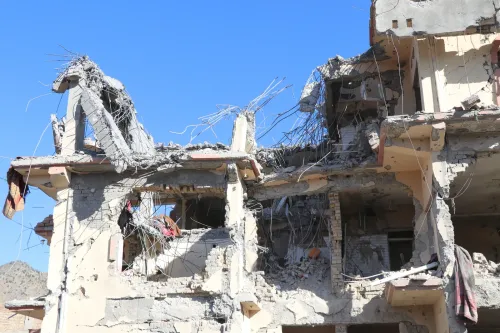
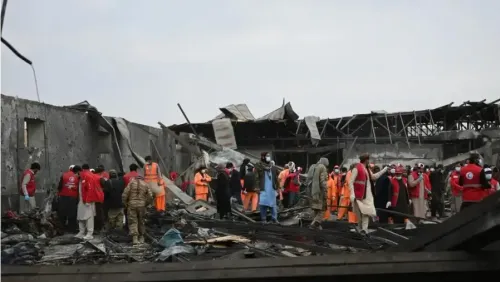
In parallel, the UNAMA reiterated its demand for an immediate cessation of cross-border hostilities, reporting a total of at least 146 civilian casualties in Afghanistan—comprising 42 fatalities and 104 injuries, including among women and children—between February 26 and March 2.
“These casualties stem from indirect fire during cross-border confrontations, affecting residential communities in the Paktya, Paktika, Nangarhar, Kunar, and Khost provinces, as well as airstrikes in Paktika and Nangarhar,” the report detailed.
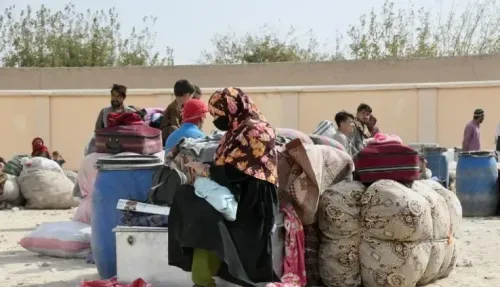
According to preliminary data from the United Nations Office for the Coordination of Humanitarian Affairs, the UNAMA has estimated that around 16,400 households have been displaced across Afghanistan’s Paktya, Paktika, Nangarhar, Kunar, and Khost provinces due to the recent clashes.
Furthermore, it was highlighted that numerous families who were displaced following the catastrophic Kunar earthquake in August 2025—Afghanistan's deadliest in nearly three decades—have been advised to either return home or seek refuge with relatives for safety.
“Movement restrictions in the border area, caused by ongoing conflict, have hindered humanitarian agencies' ability to provide vital assistance in the most affected regions, leaving Afghan returnees from Pakistan especially at risk,” the UNAMA stated.
As a result of the conflict, the World Food Programme has suspended its operations in these areas, affecting approximately 160,000 individuals due to halted food distributions. Several Afghan provinces caught in the crossfire are witnessing critical levels of acute malnutrition.
Pointing out that the hostilities have aggravated Afghanistan's already dire humanitarian crisis, the UNAMA urged all involved parties to fulfill their responsibilities under international law, particularly international humanitarian law, and to prioritize the protection of civilians.
Point of View
It is vital to highlight the urgent humanitarian crisis unfolding at the Afghanistan-Pakistan border. The rising civilian casualties and displacement underscore the need for immediate international attention and intervention. It is crucial for all parties to adhere to international laws and ensure the protection of innocent lives amidst escalating tensions.
NationPress
1 Oct 2026
Frequently Asked Questions
What are the main causes of the clashes at the Afghanistan-Pakistan border?
The clashes are primarily due to ongoing territorial disputes and tensions between the two nations, exacerbated by political instability and militant activities in the region.
How many civilian casualties have been reported?
At least 146 civilian casualties have been documented in Afghanistan, including 42 deaths and 104 injuries, in just a week of clashes.
What is the current humanitarian situation in the affected areas?
The humanitarian situation is dire, with around 16,400 households displaced and critical levels of acute malnutrition reported in several provinces due to the conflict.
What does the UNAMA recommend for resolving the conflict?
The UNAMA urges both parties to exercise restraint, adhere to international laws, and engage in dialogue as the only sustainable solution to the ongoing violence.
How has the World Food Programme responded to the situation?
The World Food Programme has paused its operations in affected areas, impacting around 160,000 individuals reliant on food distributions.