UN experts urge Thailand to halt extradition of five Uyghur men to China
Synopsis
UN human rights experts have sounded the alarm over Thailand's imminent extradition of five Uyghur men to China, warning of a real risk of torture, enforced disappearance and irreparable harm. With 40 others already returned to China in February 2025 — their fate unknown — the case has become a flashpoint for international law, refugee rights, and Southeast Asia's growing dilemma over Beijing's demands.
Key Takeaways
UN experts on 14 November 2026 urged Thailand to halt the forced extradition of five Uyghur men to China .
Two of the five have already been moved to immigration detention after completing prison sentences and await extradition.
The five are among a group of over 350 Uyghurs detained near the Thai border in 2014 ; 109 were deported to China in 2015 .
China requested the return of 45 Uyghurs in January 2025 ; Thailand returned 40 in February 2025 against their consent — their fate remains unknown.
UN experts cited the OHCHR August 2022 assessment documenting arbitrary detention, torture, and enforced disappearance of Uyghurs in China.
Experts called on Thailand and other states to cooperate in resettling the men in a safe third country.
United Nations human rights experts on 14 November 2026 issued an urgent appeal to the government of Thailand, calling on it to halt the forced extradition of five Uyghur men to China, warning that the men face a real risk of serious and irreparable harm if returned. The intervention comes amid mounting international scrutiny over Thailand's treatment of Uyghur detainees held near the Thai border.
Who Is at Risk and Why
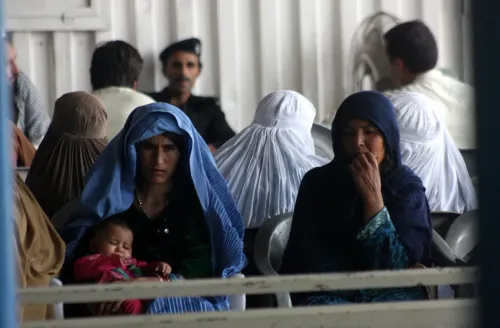
According to the UN experts, two of the five men have already been transferred to immigration detention after completing their prison sentences and are now awaiting extradition to China. The five men are part of a larger group of over 350 Uyghurs who fled China and were apprehended near the Thai border in 2014. In 2015, Thai authorities deported 109 of them to China.
The experts noted that the five men at risk have been held in de facto incommunicado detention for many years in Thailand, in poor conditions, with limited access to lawyers, family members, civil society organisations, or UN officials — a situation they described as deeply troubling.
What International Law Requires
'The mistreatment of the Uyghur minority in China is well-documented by UN human rights mechanisms, for example, in the OHCHR Assessment in August 2022, including arbitrary detention, enforced disappearance and torture based on ethnicity, culture, religion and national security,' the experts stated.
They also invoked the principle of non-refoulement, noting that 'international law prohibits transferring a person to a country where there is a real risk of serious human rights violations, including arbitrary deprivation of life, torture or cruel, inhuman or degrading treatment or punishment, enforced disappearance, and persecution.' The experts further emphasised that international law guarantees every person's right to leave their own country, challenging the basis of China's border-crossing allegations.
China's Extradition Request and Thailand's Prior Actions
In January 2025, China formally requested the return of 45 Uyghurs from Thailand, including the five men currently at risk, allegedly on grounds of illegally crossing borders. Despite objections from UN experts, Thai authorities in February 2025 returned 40 of those individuals to China without their consent. The fate and whereabouts of those 40 people remain unknown, the experts said.
This comes amid a broader pattern the UN has flagged for years — China's counter-terrorism and violent extremism measures have been cited as covers for mass arbitrary detention, enforced disappearances, torture and ill-treatment, mass surveillance, compulsory re-education, forced labour, restrictions on minority rights, and deaths in custody.
The UN's Call to Action
'We call on Thailand and other States to cooperate to resettle the men in a safe country,' the experts urged. The appeal represents one of several UN interventions on behalf of Uyghurs detained in third countries, as Beijing continues to press foreign governments for their return under bilateral and multilateral frameworks. Thailand, which has not ratified the 1951 Refugee Convention, has historically faced criticism from rights groups for its handling of asylum seekers and refugees from China.
How Thailand responds to this latest UN appeal could set a significant precedent for Uyghur cases across Southeast Asia, where dozens more individuals reportedly remain in legal limbo.
Point of View
Then 40 in February 2025 — suggest that UN appeals alone carry limited deterrent weight in Bangkok. The pattern points to a structural problem: Thailand has not ratified the Refugee Convention, leaving Uyghur detainees in a legal grey zone that China's bilateral pressure can easily exploit. What is striking is the detail that 40 people returned in 2025 have had their fate described as 'unknown' — a phrase that, in Uyghur human rights documentation, is frequently a precursor to confirmed disappearances. The five remaining men are not just a humanitarian case; they are a test of whether Southeast Asian states will inch toward compliance with non-refoulement norms or continue to treat them as bargaining chips with Beijing.
NationPress
14 Nov 2026
Frequently Asked Questions
Why are UN experts urging Thailand not to extradite the five Uyghur men?
UN experts warn that the five men face a real risk of torture, enforced disappearance, and other serious human rights violations if returned to China. International law prohibits transferring individuals to countries where such risks exist, a principle known as non-refoulement.
Who are the five Uyghur men facing extradition from Thailand?
They are part of a larger group of over 350 Uyghurs who fled China and were detained near the Thai border in 2014. Two of the five have already completed prison sentences and are now in immigration detention awaiting extradition.
What happened to the other Uyghurs Thailand previously deported to China?
Thailand deported 109 Uyghurs to China in 2015 and, in February 2025, returned a further 40 individuals against their consent following a Chinese government request. The fate and whereabouts of those 40 people remain unknown, according to UN experts.
What does international law say about extraditing people who face persecution?
International law, through the principle of non-refoulement, prohibits states from transferring a person to a country where they face a real risk of serious human rights violations, including torture, arbitrary detention, enforced disappearance, or persecution based on ethnicity or religion.
What action are UN experts calling for?
They are calling on Thailand and other states to cooperate in resettling the five Uyghur men in a safe third country, rather than returning them to China. They have also called for an end to the men's prolonged incommunicado detention and urged that they be given adequate access to lawyers, family, and civil society.