UNESCO World Heritage Committee opens 48th session in Busan, South Korea
Synopsis
South Korea is hosting the UNESCO World Heritage Committee for the first time in its history — and the 48th session in Busan is far from ceremonial. From a contentious draft decision pressing Japan over wartime Korean labour at the Sado mine, to a proposed 'Busan declaration' that could reshape UNESCO's strategic framework, this 10-day meeting carries real geopolitical and cultural weight.
Key Takeaways
The UNESCO World Heritage Committee's 48th session opened in Busan on 20 July 2025 — South Korea's first time hosting since joining the convention in 1988 .
Around 3,000 participants from 196 member states are attending the 10-day meeting at the Busan Exhibition and Convention Center .
The committee will review 33 proposals , including 30 new nominations , in plenary sessions from 20–29 July .
A draft decision calls on Japan to better reflect the forced mobilisation of over 1,500 Korean labourers at the Sado mine , inscribed in 2024 .
A proposed 'Busan declaration' would add 'collaboration' as a sixth strategic objective to UNESCO's World Heritage framework.
K-pop star G-Dragon spoke as honorary ambassador; South Korea has 17 sites on the World Heritage List.
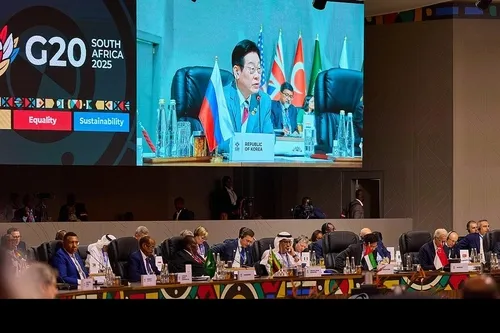
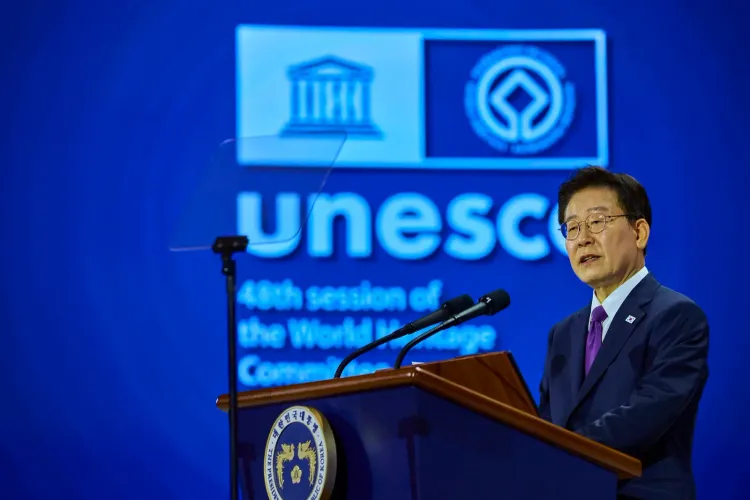
The UNESCO World Heritage Committee inaugurated its 48th annual session in Busan, South Korea on Sunday, 20 July 2025, marking the first time the country has hosted the gathering since joining the UNESCO World Heritage Convention in 1988. South Korean President Lee Jae Myung attended the opening ceremony at the Busan Exhibition and Convention Center, a port city located approximately 330 kilometres southeast of Seoul.
Scale and Participation
Around 3,000 participants from 196 member states, international organisations, and non-governmental entities are expected to attend the 10-day meeting, according to organisers. Key figures at the opening ceremony included UNESCO Director-General Khaled El-Enany, Assistant Director-General for Culture Nayef Al-Fayez, and Lazare Eloundou Assomo, director of the World Heritage Center.
What the Leaders Said
In his address, President Lee emphasised that world heritage is not merely a relic of the past but a unifying symbol for humanity. 'The world can foster mutual respect for each other's history and strengthen trust and solidarity within the global community in the process of jointly preserving and remembering world heritage,' he said. He added that South Korea would work with the international community to 'build a more peaceful and prosperous future together with UNESCO.'
El-Enany noted that South Korea has inscribed 17 sites on the World Heritage List, saying they reflect 'the diversity of Korean history.' He said the committee would spend the next 10 days working to 'revitalize the world through the living power of culture.'
K-pop star G-Dragon, serving as an honorary ambassador for the session, addressed delegates on the role of art in safeguarding heritage. 'Protecting heritage is not only about preserving the past but about building peace for the future,' he said. 'I believe art can also play a powerful role in inspiring collective action and changing the world.'
Cultural Showcase at the Opening
The opening ceremony featured performances tracing the arc of Korean culture. These included a reenactment of a traditional gate-opening ceremony by royal guards of Gyeongbok Palace — the main palace of the Joseon Dynasty (1392–1910) — followed by modern reinterpretations of classical dances: ilmu, a Confucian ritual court dance; taepyeongmu, a royal dance wishing for peace and prosperity; and ganggangsullae, a seasonal circle dance performed by women under the full moon.
Key Agenda Items: 33 Proposals and the Sado Mine Question
The session, chaired by Lee Byong-hyun, a former South Korean ambassador to UNESCO, will review 33 proposals — 30 new nominations and three requests to extend or modify existing listings — in plenary sessions scheduled from 20 to 29 July.
Among these is a proposed extension of South Korea's 'Getbol, Korean Tidal Flats' site, which would add four coastal wetlands to the property first inscribed in 2021. The International Union for Conservation of Nature (IUCN), the committee's advisory body on natural heritage, has recommended approval of the extension.
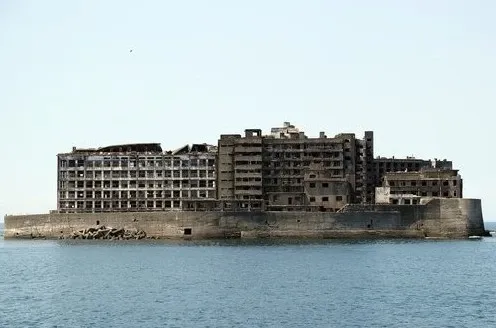
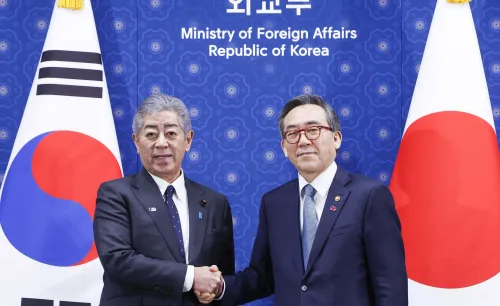
A contentious draft decision concerns Japan's Sado mine World Heritage site, inscribed in 2024. The draft recommends that Japan take further steps to adequately reflect the mine's 'whole history' regarding the wartime mobilisation of Korean labourers. More than 1,500 Koreans were reportedly mobilised to work at the mine during Japan's 1910–45 colonial rule of the Korean Peninsula. According to the draft decision, Tokyo's related efforts remain insufficient, despite Japan's earlier promise to thoroughly convey the history of forced conscription in line with UNESCO's recommendations. The draft is likely to be adopted during the session unless member states object, though its limited enforceability leaves compliance uncertain.
A Potential 'Busan Declaration' and the Sixth C
Also under discussion is a proposed 'Busan declaration' that would introduce 'collaboration' as a sixth strategic objective alongside the committee's existing five 'C' priorities — credibility, conservation, capacity-building, communication, and communities. The addition reflects growing calls within UNESCO to strengthen international cooperation in tackling increasingly complex threats to heritage sites, including climate change, according to Seoul officials. If adopted, it would represent a structural shift in how the convention frames its global mandate going forward.
Point of View
But the session's real test lies in two pressure points: whether the Sado mine draft decision translates into meaningful action from Japan, or remains another UNESCO recommendation that Tokyo can absorb without consequence. The proposed 'Busan declaration' adding 'collaboration' as a sixth C sounds procedural, but it signals a genuine institutional anxiety — UNESCO's existing framework has struggled to enforce compliance or coordinate responses to climate-driven heritage loss. The optics of G-Dragon as honorary ambassador are savvy soft power, yet the harder diplomatic work — on Japan's colonial history and on binding heritage protection — will define whether this session is remembered for more than its cultural pageantry.
NationPress
18 Oct 2026
Frequently Asked Questions
Why is the UNESCO World Heritage Committee meeting in Busan significant for South Korea?
It marks the first time South Korea has hosted the UNESCO World Heritage Committee session since joining the World Heritage Convention in 1988. The 48th session, held at the Busan Exhibition and Convention Center from 20–29 July 2025, brings together around 3,000 participants from 196 member states.
What is the Sado mine issue being discussed at the Busan session?
A draft decision at the session calls on Japan to take further steps to reflect the 'whole history' of the Sado mine, including the wartime mobilisation of more than 1,500 Korean labourers during Japan's 1910–45 colonial rule. Japan had promised to convey this history when the site was inscribed in 2024, but the draft notes Tokyo's efforts remain insufficient.
What is the proposed 'Busan declaration'?
The Busan declaration, if adopted, would introduce 'collaboration' as a sixth strategic objective alongside UNESCO's existing five 'C' priorities — credibility, conservation, capacity-building, communication, and communities. It reflects growing calls to strengthen international cooperation on heritage threats such as climate change.
How many World Heritage sites does South Korea have?
South Korea has 17 sites inscribed on the UNESCO World Heritage List, according to UNESCO Director-General Khaled El-Enany, who noted they reflect 'the diversity of Korean history.'
What proposals will the committee review during the 48th session?
The committee will review 33 proposals in total — 30 new nominations and three requests to extend or modify existing listings — during plenary sessions from 20 to 29 July 2025. These include a proposed extension of South Korea's Getbol, Korean Tidal Flats site.