UNGA votes 152-3 to let Palestine's Abbas address high-level meet via video
Synopsis
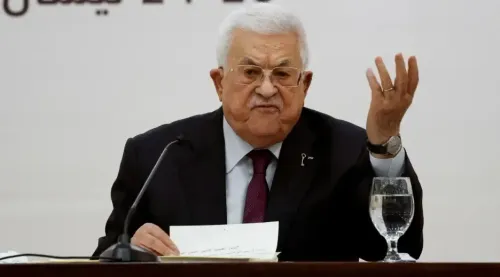
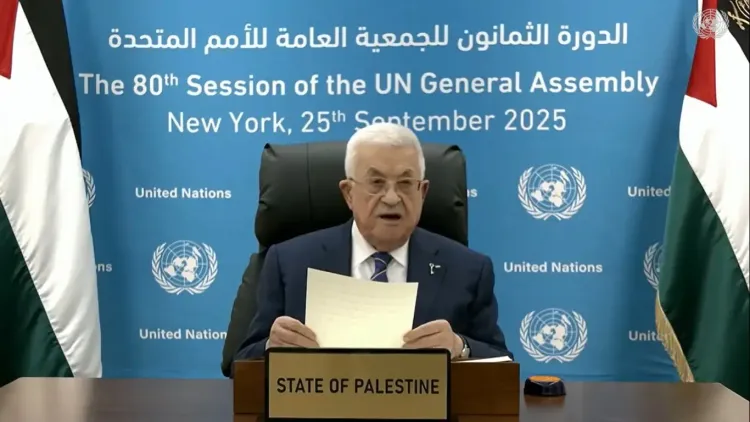
With a 152-3 landslide, the UN General Assembly overrode a US visa denial to let Palestine's Mahmoud Abbas address world leaders by video — for the second year running. Every Western country voted for the resolution, leaving Washington and Israel in rare diplomatic isolation on the global stage.
Key Takeaways
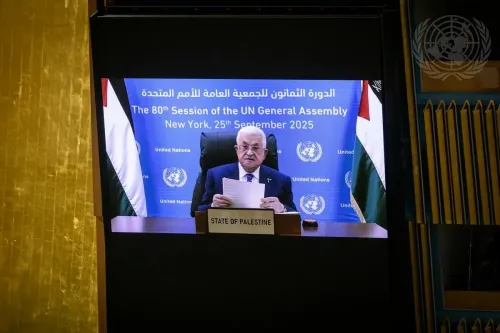
The UN General Assembly passed a resolution on 18 September 2026 allowing Palestine President Mahmoud Abbas to address the high-level meeting via video link.
The resolution passed 152-3 ; only the US , Israel , and Paraguay voted against, with four abstentions.
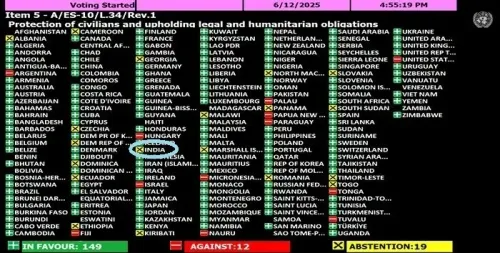
India voted in favour of the resolution; all Western countries also voted for it.
The US defended the visa denial, demanding the Palestinian Authority and PLO 'completely and unequivocally renounce terrorism.' Washington separately granted visas to Iran's President Masoud Pezeshkian and Foreign Minister Abbas Araghchi for the same session.
This is the second consecutive year Abbas has addressed the Assembly by video following a US visa refusal.
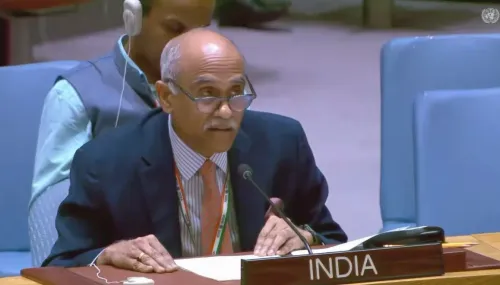
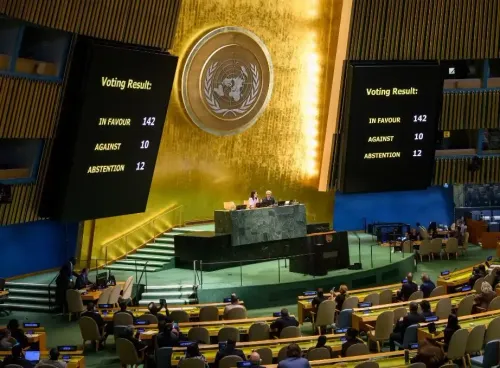
The United Nations General Assembly on Wednesday, 18 September 2026, passed a resolution by an overwhelming 152-3 margin to allow Palestine President Mahmoud Abbas to address the UN high-level meeting next week via video link, after the United States refused to grant him a visa to travel to New York. India was among the nations voting in favour of the resolution. Only the US, Israel, and Paraguay voted against, with four countries formally abstaining.
The Visa Denial and Washington's Stance
US Deputy Permanent Representative Tammy Bruce defended the decision, squarely framing it in terms of counter-terrorism policy. 'We will not relent on our insistence that the Palestinian Authority and the PLO [Palestine Liberation Organisation, which controls the Authority] completely and unequivocally renounce terrorism,' she said, adding, 'They have not yet done so.'
Notably, Washington has extended visas to Iran's President Masoud Pezeshkian and Foreign Minister Abbas Araghchi to attend the same session — even as the US-Iran war enters its seventh month. Critics have pointed to this contrast as a sign of selective application of host-country obligations.
Palestine's Response at the UN
Palestine's Permanent Observer Riyad Mansour pushed back firmly, reiterating his delegation's commitment to Israel's right to exist 'in peace and security' alongside Palestine. 'The fact that we were denied visas does not mean that the big elephant in the United Nations, the Palestinian people and their leadership, are not present,' he said. 'They are present front and centre.' Mansour went further, calling for a two-state solution based on the 1967 borders with East Jerusalem as Palestine's capital, and described the Israeli presence in Palestinian territory as an 'illegal occupation.'
International Criticism of the US Decision
China and Russia joined Palestine in criticising Washington's visa refusal, arguing that the US, as the UN host nation, holds a treaty obligation to facilitate the travel of diplomats and government officials conducting UN business. Last month, UN Secretary-General António Guterres' Spokesperson Stéphane Dujarric had publicly called on the US to fulfil those obligations: 'Our call and our hope remain that the host country will fulfil its obligations under the host treaty agreement, which is meant to facilitate the travels into New York City... for people having business, diplomats and Government officials having business in front of the United Nations,' he said. Significantly, all Western countries ultimately voted for the resolution, underscoring the diplomatic isolation of Washington and Israel on this issue.
A Recurring Pattern of Exclusion
This marks the second consecutive year that Abbas has been compelled to address the General Assembly by video after a US visa denial. Palestine holds observer status at the UN and is not recognised as a sovereign state by Washington. The episode comes against the backdrop of an intensifying international debate over Palestinian statehood, and amplifies calls — including from a large majority of the UN membership — for a negotiated two-state resolution.
What Happens Next
Abbas is now expected to address the high-level meeting via video link in the coming days. The passage of this resolution with near-universal support signals growing multilateral frustration with the US position, and is likely to feature prominently in diplomatic discourse at the sidelines of the UN General Assembly week. Whether Washington faces any formal consequences for the alleged breach of its host-country treaty obligations remains to be seen.
Point of View
But of Washington's broader credibility as the UN's host nation. That every Western ally voted against the US and Israel on this resolution reveals how far the diplomatic consensus has shifted. The contrast with Iran's visa approval is particularly difficult for Washington to explain, suggesting the refusal is less about process and more about political messaging. The repeated pattern of denying Abbas a visa two years running risks entrenching the perception that the US is no longer a neutral convenor of multilateral diplomacy.
NationPress
18 Sept 2026
Frequently Asked Questions
Why was Palestine President Mahmoud Abbas denied a US visa to attend the UN?
US Deputy Permanent Representative Tammy Bruce said Washington refused the visa because the Palestinian Authority and the PLO have not 'completely and unequivocally renounced terrorism.' The US has made this a standing condition for diplomatic engagement with Palestinian leadership.
How did India vote on the UNGA resolution for Palestine?
India voted in favour of the resolution, joining a large majority of 152 countries. The resolution passed on 18 September 2026, with only the US, Israel, and Paraguay voting against.
Is this the first time Abbas has addressed the UN General Assembly by video?
No. This is the second consecutive year Abbas has been forced to address the Assembly via video link after a US visa denial. The same situation occurred the previous year.
Why are China and Russia criticising the US over the visa denial?
China and Russia argue that as the host nation for the United Nations, the US has a treaty obligation to facilitate the travel of diplomats and government officials with legitimate UN business. They say Washington's refusal violates the host-country agreement.
What is Palestine's status at the United Nations?
Palestine holds observer status at the UN and is not recognised as a sovereign state by the United States. Palestine's Permanent Observer Riyad Mansour has reiterated the Palestinian leadership's commitment to a two-state solution based on 1967 borders with East Jerusalem as its capital.