US Congress races election clock with crypto, sanctions on agenda
Synopsis
US Congress is back in Washington — but the clock is already running out. With just days before lawmakers scatter for the November 3 midterms, a bipartisan Russia-Iran sanctions bill that passed the Senate 86–11, a teetering crypto regulation vote, college athlete NIL rights and energy permitting reforms are all competing for floor time. The session could end as early as this week, potentially setting a modern record for the earliest election-year exit.
Key Takeaways
US Congress returned on 14 September with a compressed schedule ahead of November 3 midterm elections .
The House may leave as early as this week, potentially matching the record earliest election-year departure set on 18 September 2014 .
A bipartisan Russia-Iran sanctions bill passed the Senate 86–11 and now awaits a House vote that could send it to President Trump .
The Digital Asset Market Clarity Act faces a Tuesday procedural vote ; Senate Majority Leader John Thune has said supporters may fall short of the 60 votes needed.
Treasury Secretary Scott Bessent warned that failure on crypto legislation would undermine US leadership on digital assets.
College athlete NIL rights and energy permitting reform are also on the Senate's agenda before recess.
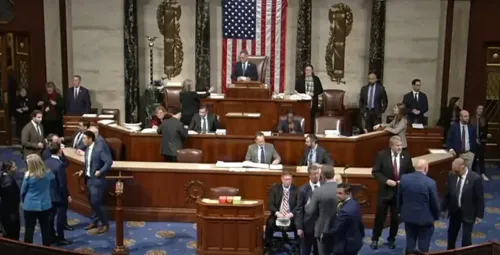
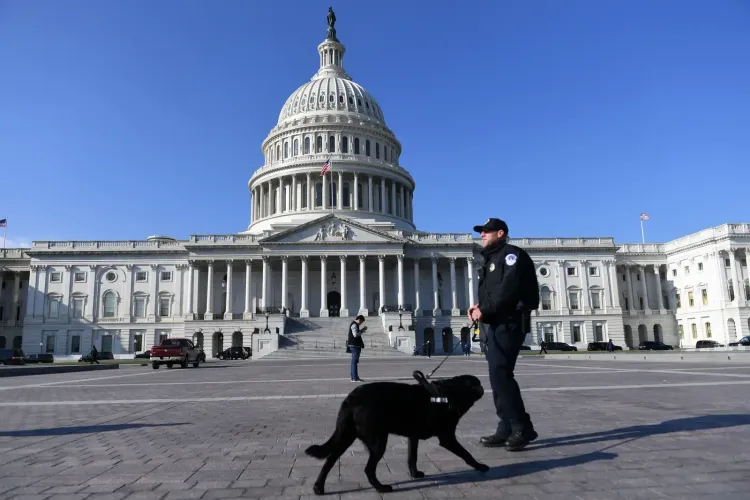
The US Congress reconvened in Washington on Monday, 14 September with a packed legislative agenda and a razor-thin window to act — lawmakers are expected to depart the capital within days to campaign for the November 3 midterm elections. The House of Representatives is slated to remain in session for just one week, while the Senate has yet to reach agreement on several Republican priorities.
Why the calendar is so compressed
The abbreviated session is partly a product of earlier legislative action: President Donald Trump has already signed a bill funding the federal government through December 11, removing the most common forcing mechanism — a looming government shutdown — that typically compels Congress to stay in session. With must-pass business largely settled, the remaining agenda is ambitious but politically contested.
Should the House leave this week, it would match or break the modern record for the earliest election-year departure, previously set on 18 September 2014. All 435 House seats and roughly one-third of Senate seats are on the ballot in November, determining which party controls each chamber for the final two years of Trump's term.
Bipartisan sanctions bill targets Russia and Iran
One of the session's most consequential items is a bipartisan sanctions measure that has already cleared the Senate by a commanding 86–11 vote. The bill would impose penalties on the Kremlin and entities doing business with it for five years, and extend certain sanctions against Iran over the same period.
The House Rules Committee was scheduled to take up the procedural rule governing debate on Monday, with House passage potentially sending the legislation to Trump for his signature. Some House Democrats have raised concerns that the measure grants the president excessive authority, though Democratic Senator Richard Blumenthal — a principal Senate backer — urged colleagues to accept what he described as 'the result of painstaking, sometimes painful, negotiations' involving both Congress and the Trump administration.
Crypto regulation faces a Senate procedural test
The Senate's immediate order of business is a Tuesday procedural vote on the Digital Asset Market Clarity Act. Republicans released a revised version on Sunday incorporating tougher ethics provisions and more than 120 changes sought by Democrats. Senate Majority Leader John Thune had previously acknowledged that supporters appeared short of the 60 votes required to advance the bill.
Treasury Secretary Scott Bessent warned that failure to pass the legislation would undermine US leadership on digital assets. 'Failing to do so would send a troubling signal to our allies and adversaries alike that America is unwilling to lead on the future of digital assets and willing to forgo enhanced national security tools to combat their misuse,' Bessent said.
NIL rights and energy permits also in the queue
Thune also flagged legislation governing college athletes' ability to profit from their name, image and likeness (NIL) as next on the Senate's agenda, followed by a vote on reforms intended to accelerate permits for energy and infrastructure projects. 'I think that's enormously important, not just as an energy policy issue, but an economic policy issue for our country,' Thune said.
With such a crowded slate and so little runway, the session's outcome will hinge on whether party leaders can build the cross-aisle coalitions that have so far proved elusive — and whether lawmakers prioritise legislation over the campaign trail.
Point of View
Leaving consequential policy — from sanctions with geopolitical stakes to digital-asset rules that global markets are watching — hostage to campaign schedules. The Russia-Iran sanctions bill's 86–11 Senate vote signals rare bipartisan will, yet it could still die in the House not on substance but on timing. The crypto bill's struggles are a different story — 120 concessions and counting, and still short of 60 votes, points to a regulatory framework that both parties want but cannot agree to own. With all 435 House seats in play, the incentive to be on the campaign trail will almost always outweigh the incentive to be on the floor.
NationPress
15 Sept 2026
Frequently Asked Questions
Why is the US Congress session so short before the November midterms?
Congress has little must-pass business left because President Trump already signed legislation funding the federal government through December 11, removing the most common deadline pressure. With the November 3 midterm elections approaching and all 435 House seats on the ballot, lawmakers are eager to return to their districts to campaign.
What is the Russia-Iran sanctions bill currently in Congress?
It is a bipartisan bill that passed the Senate by an 86–11 vote and would impose penalties on the Kremlin and entities doing business with it for five years, while also extending certain sanctions against Iran for the same period. The House Rules Committee was set to consider the measure, and passage could send it to President Trump for his signature.
What is the Digital Asset Market Clarity Act and what does it do?
The Digital Asset Market Clarity Act is a cryptocurrency regulation bill facing a Senate procedural vote. A revised version released Sunday includes over 120 Democratic-sought changes and tougher ethics provisions, but Senate Majority Leader John Thune has said supporters appear short of the 60 votes needed to advance it.
What did Treasury Secretary Scott Bessent say about the crypto bill?
Bessent warned that failing to pass the legislation would send 'a troubling signal to our allies and adversaries alike that America is unwilling to lead on the future of digital assets.' He framed the bill as a national security tool as well as a regulatory measure.
What other legislation is Congress considering before the recess?
Senate Majority Leader Thune has flagged two additional priorities: legislation governing college athletes' ability to profit from their name, image and likeness (NIL), and reforms to accelerate energy and infrastructure permitting, which Thune called important as both an energy and an economic policy issue.