Did the US Treat Pakistan Worse Than Toilet Paper?
Synopsis
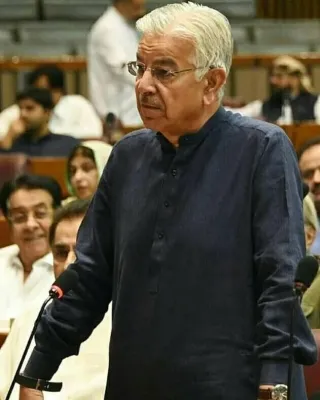
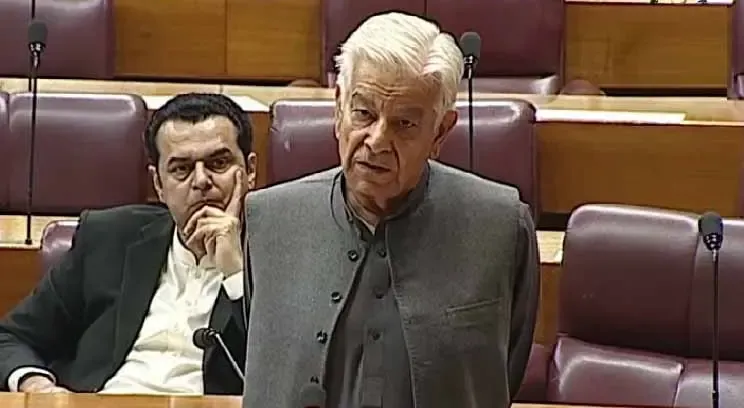
In a candid address, Khawaja Asif, Pakistan's Defence Minister, openly criticized the United States for its historical exploitation of Pakistan, claiming the country was treated 'worse than toilet paper.' He reflected on past decisions that shaped Pakistan's current challenges and emphasized the need for acknowledging historical mistakes.
Key Takeaways
Khawaja Asif's strong critique of the US highlights historical grievances.
Pakistan's past decisions regarding Afghanistan have led to ongoing challenges.
Acknowledging past mistakes is crucial for future stability.
The education system underwent changes to support military actions.
The impact of historical alliances continues to affect Pakistan today.
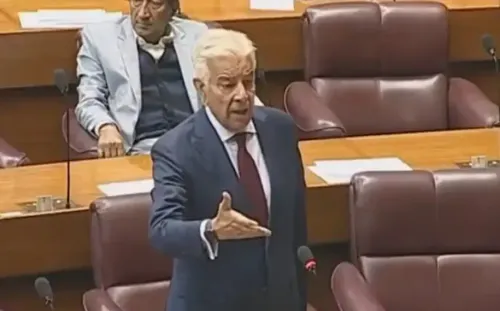
Islamabad, Feb 11 (NationPress) Pakistan’s Defence Minister Khawaja Asif has made a bold statement regarding the nation’s historical relationship with the United States, accusing Washington of taking advantage of Islamabad for its own strategic goals before discarding it once those goals were met.
During a session in Pakistan’s National Assembly, Asif recognized the nation’s contentious past connections with terrorism, labeling them as mistakes made during military rule.
He pointed out that Pakistan frequently shies away from acknowledging its own history related to terrorism, referring to it as a “blunder made by past dictators.”
The minister criticized Pakistan’s engagement in two Afghan wars, claiming that the terrorism currently plaguing the country is significantly a result of those choices.
Asif remarked on Islamabad’s strategic shift with Washington post-1999, especially regarding developments in Afghanistan, which he asserted has caused long-lasting harm to Pakistan.
He underscored the consequences of the geopolitical changes following September 11, 2001, stating that the cost Pakistan incurred for backing the United States in its global campaign against terror was immense.
“Pakistan was treated worse than a piece of toilet paper and was utilized for a purpose before being discarded,” he declared.
The Defence Minister highlighted that Pakistan allied with Washington once more during the US-led war in Afghanistan after 2001, which included a turn against the Taliban.
Despite the eventual US withdrawal, Asif stated, Pakistan was left to confront the repercussions, including ongoing violence, increased radicalization, and economic difficulties.
Asif also challenged the narrative that framed Pakistan’s involvement in the Afghan conflicts as a religious obligation.
He acknowledged that many citizens were mobilized to participate under the guise of jihad, arguing that this portrayal was misleading and harmful to the nation's long-term stability.
Addressing fellow lawmakers, Asif mentioned, “Two former military dictators (Zia-ul-Haq and Pervez Musharraf) engaged in the war in Afghanistan, not out of Islamic duty, but to appease a superpower.”
He further stated, “We ignore our history and refuse to accept our mistakes. Terrorism is a consequence of the errors made by past dictators.”
The minister stressed that the damage inflicted on Pakistan due to these policies is irreversible.
“The losses we have incurred can never be compensated,” Asif asserted, characterizing the country’s previous decisions as “irreversible” blunders.
Asif claimed that the education system in Pakistan underwent ideological transformations during these periods to rationalize involvement in the wars, noting that these shifts in narratives continue to shape the nation’s social and political landscape today.
Point of View
It is crucial to acknowledge the complex relationship between Pakistan and the United States. While Khawaja Asif's comments highlight historical grievances, they also open a dialogue about accountability and the need to learn from past mistakes for a more stable future.
NationPress
19 Sept 2026
Frequently Asked Questions
What did Khawaja Asif say about the US?
Khawaja Asif accused the US of exploiting Pakistan for its strategic interests and treating it poorly once those interests were fulfilled.
What historical events did Asif refer to?
Asif referred to Pakistan's involvement in the Afghan wars and its past connections with terrorism as significant mistakes.
What impact did the US relationship have on Pakistan?
Asif stated that the relationship resulted in ongoing violence, radicalization, and economic challenges for Pakistan.
How did Asif describe Pakistan's past leaders?
He described former military leaders as having engaged in wars not for religious reasons but to gain favor with superpowers.
What is the significance of acknowledging history according to Asif?
Asif emphasized that recognizing and accepting past mistakes is crucial for Pakistan's stability and future.