US delivers $4 million satellite system to Sri Lanka Navy for Indian Ocean security
Synopsis
Washington has handed Colombo a $4 million Fleet Broadband satellite upgrade for its entire offshore patrol fleet — a quiet but consequential move that sharpens Sri Lanka's maritime eyes across the Indian Ocean at a moment when great-power competition for influence over the region's shipping lanes is intensifying.
Key Takeaways
The United States delivered a USD 4 million Fleet Broadband satellite communications system to the Sri Lanka Navy on 22 June .
The system, manufactured by Cobham and Inmarsat , will be installed across Sri Lanka's entire fleet of offshore patrol vessels .
It provides secure ship-to-ship and ship-to-shore communications, enabling real-time connectivity with naval headquarters even far from shore.
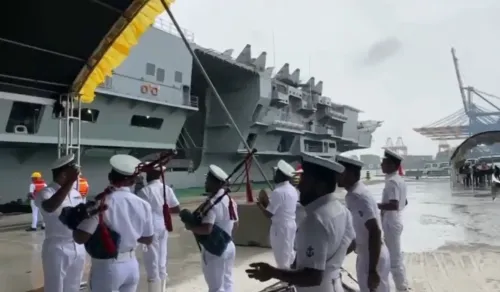
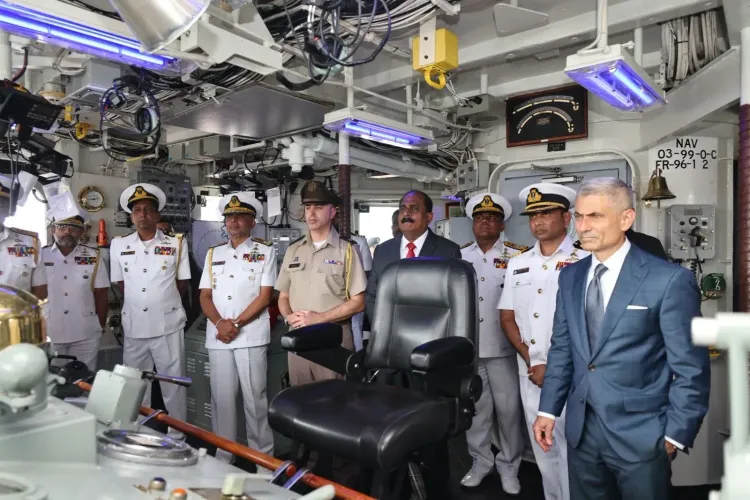
The announcement was made by US Assistant Secretary of State Paul Kapur aboard SLNS Gajabahu at the Port of Colombo .
Sri Lanka's Deputy Defence Minister Major General Aruna Jayasekara (Retd) said the upgrade would strengthen Colombo–Washington defence cooperation and regional maritime security.
The system is valued at over Sri Lankan Rupees 1.2 billion in local currency terms.
The United States has delivered a USD 4 million Fleet Broadband satellite communications system to the Sri Lanka Navy, significantly upgrading Colombo's capacity to monitor maritime activity across the Indian Ocean and safeguard some of the world's most heavily trafficked shipping lanes. The handover was announced on Monday, 22 June at the Port of Colombo aboard SLNS Gajabahu.
What the System Delivers
The Fleet Broadband system — manufactured by Cobham and Inmarsat — will be installed across the Sri Lanka Navy's entire fleet of offshore patrol vessels. The technology provides secure ship-to-ship and ship-to-shore communications, keeping naval vessels connected even when operating far from the country's coastline.
According to the US State Department, the system enables Sri Lankan vessels to maintain real-time connectivity with naval headquarters, aircraft, and other ships operating across vast stretches of the Indian Ocean. The capability is expected to strengthen maritime domain awareness, improve operational coordination, and support efforts to interdict vessels involved in illicit trafficking — including tracking sanctioned ships and protecting commercial supply chains valued at trillions of dollars annually.
What US Officials Said
Paul Kapur, US Assistant Secretary of State for South and Central Asian Affairs, made the announcement during a visit aboard SLNS Gajabahu at the Port of Colombo.
'Today we announced the delivery of US satellite communications technology to the Sri Lanka Navy, our Indo-Pacific partner,' Kapur said. 'This secure, real-time connection — representing a transformational upgrade for the Sri Lanka Navy — will be available aboard their entire fleet of offshore patrol vessels and ensures no communication gap at sea. It will allow our Sri Lanka partners to respond quickly to emergencies, protect the cargo ships that fuel our economy, and disrupt illegal activity across the Indian Ocean before it reaches our shores.'
Sri Lanka's Response
Sri Lanka's Deputy Minister of Defence, Major General Aruna Jayasekara (Retd), said the new capability would strengthen both maritime security and defence cooperation between Colombo and Washington. He noted the system would improve seamless fleet connectivity, sustain real-time situational awareness, and enable the sharing of critical information with regional partners.
Jayasekara also said the technology would support more coordinated responses to illicit activities and help reinforce the reliability of international shipping lanes passing through the Indian Ocean. The system is valued at approximately Sri Lankan Rupees 1.2 billion in local terms.
Strategic Context
The delivery comes as the United States deepens its Indo-Pacific partnerships, with Sri Lanka occupying a strategically critical position along shipping routes connecting the Persian Gulf, Southeast Asia, and global markets. Notably, this upgrade allows Sri Lankan naval vessels to work more effectively with partner countries during joint exercises and operational missions — a signal of growing defence interoperability in a region where China has also expanded its naval footprint in recent years.
This is the latest in a series of US security assistance transfers to South Asian navies aimed at reinforcing rules-based maritime order in the Indian Ocean. Officials from both countries also discussed maritime cooperation's role in supporting disaster response operations alongside countering illicit activity.
What Comes Next
With the Fleet Broadband network now committed for fleet-wide installation, regional security analysts will watch whether the upgrade translates into measurable gains in interdiction operations and joint exercises with the US Navy and other Indo-Pacific partners. The move is expected to position Sri Lanka as a more capable maritime partner in an increasingly contested ocean.
Point of View
Which once leased the Hambantota Port to Beijing, is now receiving US communications infrastructure for its entire patrol fleet; the symbolism is hard to miss. The real test is operational: whether real-time connectivity translates into actual interdiction gains or remains a capability that sits underutilised, as has happened with some previous US security assistance packages in South Asia. India, which regards the Indian Ocean as its primary strategic backyard, will be watching how deeply Colombo integrates this system into multilateral frameworks — and whether New Delhi is invited into that data-sharing loop.
NationPress
21 Sept 2026
Frequently Asked Questions
What is the Fleet Broadband system delivered to the Sri Lanka Navy?
The Fleet Broadband system is a satellite communications platform manufactured by Cobham and Inmarsat, valued at approximately USD 4 million. It will be installed across Sri Lanka's offshore patrol vessels to provide secure, real-time ship-to-ship and ship-to-shore communications across the Indian Ocean.
Why did the US deliver this system to Sri Lanka?
The US delivered the system to strengthen maritime security cooperation with Sri Lanka, a key Indo-Pacific partner positioned along critical Indian Ocean shipping lanes. Officials cited goals including faster emergency response, countering illicit trafficking, tracking sanctioned vessels, and protecting commercial supply chains.
Who announced the delivery and where?
US Assistant Secretary of State for South and Central Asian Affairs Paul Kapur announced the delivery on 22 June at the Port of Colombo, during a visit aboard the Sri Lanka Navy ship SLNS Gajabahu.
How does this affect India and the broader Indian Ocean region?
The upgrade enhances Sri Lanka's maritime domain awareness along some of the world's busiest shipping lanes, with implications for regional security frameworks in the Indian Ocean. It also signals deepening US engagement with South Asian navies at a time of heightened strategic competition in the region.
What did Sri Lanka's Deputy Defence Minister say about the system?
Deputy Minister of Defence Major General Aruna Jayasekara (Retd) said the system would strengthen both maritime security and defence cooperation between Colombo and Washington, improve fleet-wide connectivity, sustain real-time situational awareness, and support coordinated responses to illicit activities at sea.