US House passes Protecting Domestic Mining Act to cut China minerals reliance
Synopsis
The US House passed the Protecting Domestic Mining Act 218-201, a direct legislative strike at China’s stranglehold on critical minerals — where Beijing controls 90 per cent of global rare-earth processing. With the bill heading to the Senate, the vote signals Washington’s sharpest legislative push yet to rewire mineral supply chains away from China.
Key Takeaways
The US House of Representatives passed the Protecting Domestic Mining Act (H.R.
1501) by 218 votes to 201 on Wednesday .
The bill permanently includes mining and mineral processing under the FAST-41 permitting process , designed to speed up project approvals.
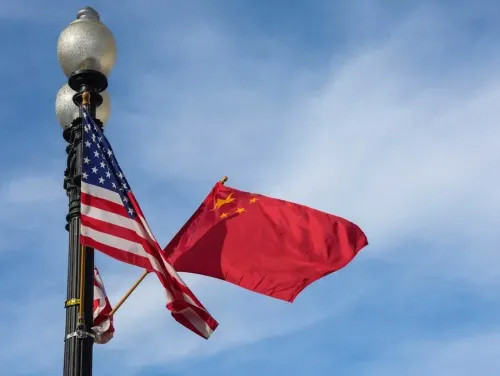
China leads production of 30 of 60 US-designated critical minerals and controls roughly 90 per cent of global rare-earth processing capacity.
The legislation blocks a Biden-era proposed rule that would have narrowed mining project eligibility under FAST-41.
Lawmakers are also exploring mineral partnerships with Uzbekistan , Kazakhstan , Mongolia , and nations in Africa .
The bill now moves to the Senate for consideration.
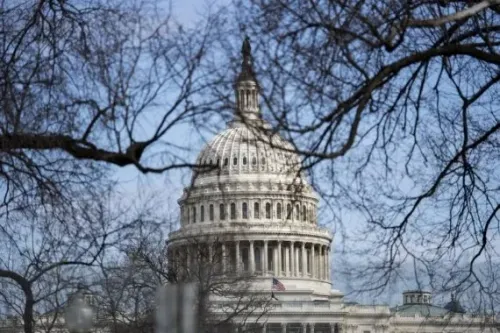
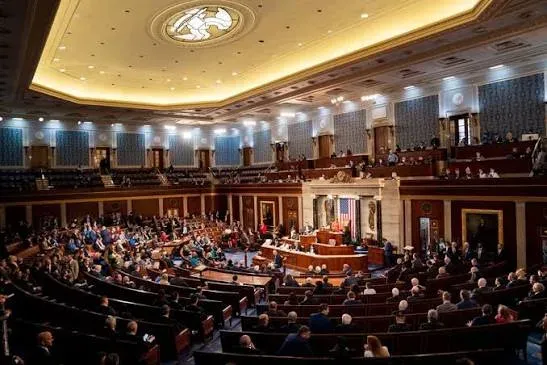
The US House of Representatives on Wednesday passed the Protecting Domestic Mining Act by a vote of 218 to 201, advancing legislation designed to expand domestic mining and reduce America's dependence on China for critical minerals that underpin its economy, military, and national security. The bill, designated H.R. 1501, now moves to the Senate for consideration.
What the Bill Does
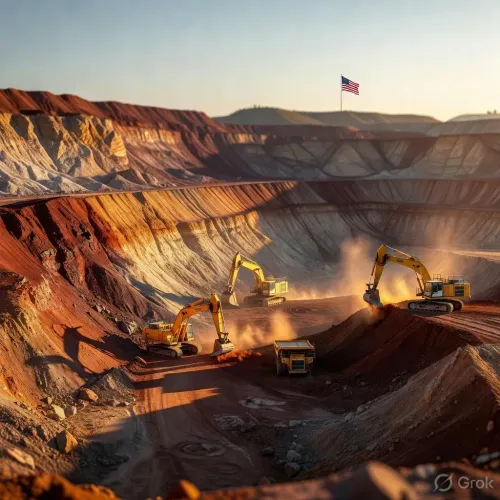
The legislation would permanently include mining and mineral-processing projects among the sectors eligible for the FAST-41 permitting process, a framework designed to provide greater coordination and predictability for major infrastructure projects. Supporters argue this would accelerate project timelines without dismantling existing federal environmental review requirements.
The bill would also block a Biden-era proposed rule that would have narrowed mining project eligibility under the FAST-41 programme, a provision Republicans framed as correcting regulatory overreach that was slowing domestic resource development.
What Lawmakers Said
Republican Congressman Jefferson Shreve of Indiana, who introduced the bill, argued that bureaucratic delays — not resource scarcity — were the primary obstacle. “America has the resources. We have the workers. What we don’t need is years of government delay and uncertainty,” Shreve said. “My bill gives qualified mining projects a clear and accountable permitting process. That will strengthen American manufacturing, support American jobs and reduce our dependence on China.”
Republican Congressman Pat Harrigan of North Carolina warned that outsourcing mineral production created strategic vulnerabilities. “Everything from our cars and power grid to our factories and weapons systems depends on minerals that have to be mined and processed somewhere,” Harrigan said. “When we make it nearly impossible to produce those resources here at home, we don’t stop mining; we simply push it overseas and become more dependent on countries like China.”
The China Dependency Problem
On the same day the House voted, the Ways and Means Committee held a hearing examining strategic partnerships to secure critical resources and supply chains. Committee Chairman Jason Smith, a Republican from Missouri, said China was the leading global producer of 30 of the 60 minerals designated as critical by the United States, and controlled approximately 90 per cent of global rare-earth processing capacity.
“Today this Committee meets to discuss how we confront a problem America has failed to address for far too long: our dangerous dependence on Communist China for the critical minerals our entire society, including our economy and our military, cannot function without,” Smith said. He noted that critical minerals are used across sectors ranging from shipbuilding and semiconductors to fighter aircraft, precision-guided weapons, medical equipment, and nuclear energy.
Looking Beyond US Borders
Lawmakers acknowledged that domestic mining alone may not be sufficient. Smith pointed to recent congressional discussions with Uzbekistan, Kazakhstan, and Mongolia as evidence of growing interest in expanding US partnerships with mineral-rich nations in Central Asia. Africa was also cited as a potential source for more diversified critical-mineral supply chains.
The Trump administration has increasingly elevated critical minerals as a pillar of its economic and national-security strategy, as competition with China extends from trade and technology into control of the raw materials essential for advanced industries. With the bill now headed to the Senate, its prospects there will test whether the bipartisan urgency around mineral security translates into legislative action.
Point of View
It signals that Washington has accepted that domestic mining alone cannot close the China gap. The 90 per cent rare-earth processing figure is the number that should unsettle policymakers most — mining more ore inside the US means little if China still refines it. The bill addresses permitting speed but leaves the processing bottleneck largely untouched.
NationPress
3 Sept 2026
Frequently Asked Questions
What is the Protecting Domestic Mining Act passed by the US House?
The Protecting Domestic Mining Act (H.R. 1501) is legislation passed by the US House of Representatives on Wednesday by 218 votes to 201, aimed at expanding domestic mining by permanently including mining and mineral-processing projects under the FAST-41 permitting process. It is designed to reduce US reliance on China for critical minerals used in defence, technology, and clean energy.
Why is the US concerned about China’s role in critical minerals?
China is the leading global producer of 30 of the 60 minerals designated as critical by the United States and controls approximately 90 per cent of global rare-earth processing capacity. Lawmakers warn this dependence leaves American supply chains for weapons systems, semiconductors, and clean-energy technology vulnerable to geopolitical disruption.
What is the FAST-41 permitting process?
FAST-41 is a federal framework designed to provide greater coordination and predictability for major infrastructure projects by streamlining inter-agency permitting. The new bill would permanently add mining and mineral-processing projects to the list of sectors eligible for this faster review process.
What happens to the bill next?
Having cleared the House, the Protecting Domestic Mining Act now goes to the Senate for consideration. Its prospects there will determine whether the legislative push on mineral security advances into law.
Is the US looking at alternatives to domestic mining for critical minerals?
Yes. Lawmakers have cited recent congressional discussions with Uzbekistan, Kazakhstan, and Mongolia as opportunities to build mineral partnerships in Central Asia, and have also pointed to Africa as a potential source for diversified supply chains, acknowledging that domestic production alone may not fully offset dependence on China.