Is US Inflation Driven by Tariffs, Not Demand?
Synopsis
In a recent statement, Federal Reserve Chair Jerome Powell highlighted the primary driver of rising US inflation: tariffs on goods. This revelation could reshape the expectations of various global trade-linked economies, raising critical questions about the future of trade policies.
Key Takeaways
Tariffs are identified as a major driver of inflation.
The Fed maintains interest rates at 3.5 to 3.75 percent.
Powell expects tariff impacts on prices to peak and then decline.
Inflation in services is showing signs of disinflation .
Long-term inflation expectations remain stable.
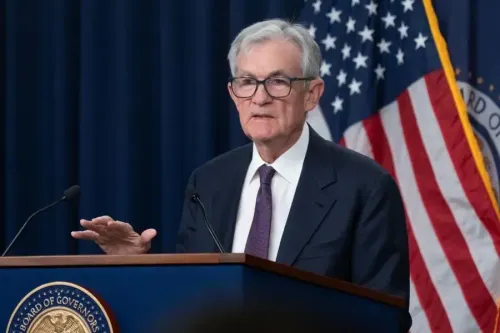
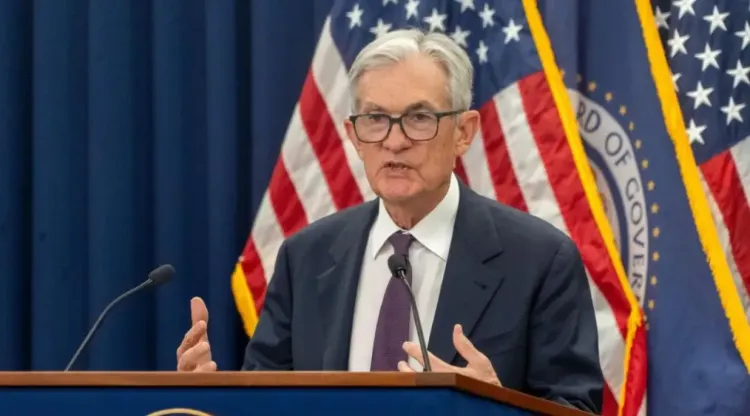
Washington, Jan 29 (NationPress) Jerome Powell, the chair of the Federal Reserve, stated that the surge in US inflation is primarily influenced by tariffs imposed on goods rather than by an excess in demand. This evaluation could significantly influence expectations for economies connected to global trade.
“These heightened levels are largely a reflection of inflation within the goods sector, which has been augmented by the repercussions of tariffs,” Powell noted on Wednesday (local time), emphasizing that price pressures in the services sector are showing signs of alleviation.
The Federal Open Market Committee opted to maintain interest rates, keeping the benchmark rate between 3.5 and 3.75 percent. Powell remarked that the current approach is “suitable” given that inflation remains above the Fed’s target of 2 percent.
Powell indicated that most of the tariff-related impacts on pricing have already permeated the economy. “Much of it has,” he stated, describing tariffs as “likely to be a one-time price increase.”
He pointed out that inflation in goods has been elevated due to trade measures, whereas the services sector is experiencing a different trajectory. “Disinflation seems to be persisting in the services sector,” he mentioned.
Powell reported that core PCE inflation increased by 3.0 percent for the 12 months ending in December, while total PCE inflation saw a rise of 2.9 percent. He expressed that inflation expectations are remaining stable.
“Most indicators of long-term expectations align with our 2 percent inflation target,” he stated.
The Fed chair conveyed that the central bank is monitoring the evolution of tariff-related price hikes. He anticipates that goods inflation associated with tariffs will peak and subsequently decrease.
“We expect to see the impacts of tariffs on goods prices reaching their maximum and then starting to decline,” Powell noted, assuming no significant new tariffs are imposed.
Powell clarified that the Fed is not bound to a specific timeline for future policy adjustments. “Monetary policy is not on a predetermined path,” he remarked, adding that decisions will be made “on a meeting-by-meeting basis.”
He stated that the US economy is expanding at a robust pace, with consumer spending remaining “resilient” and business investments continuing to grow, despite a slump in housing activity.
Powell acknowledged that inflation progress has stagnated in recent months, but he argued that the underlying situation is more complex due to the concentration of tariff effects in goods prices.
“If it weren’t for tariffs, it could mean it’s driven by demand,” he remarked, highlighting that demand-driven inflation would present “a more challenging issue to address.”
The United States ranks among India’s largest trading partners, and shifts in American trade policies and inflation trends can influence global supply chains, export pricing, and investment flows. Tariffs generally elevate prices by increasing import costs, and central banks often view such escalations as temporary if they do not instigate broader inflationary expectations.
Point of View
It's crucial to recognize the nuanced relationship between tariffs and inflation. Jerome Powell's insights shed light on the underlying economic dynamics, emphasizing that while inflation is a pressing concern, its roots may not solely lie in demand. This perspective is essential for understanding the broader implications for national and global economies.
NationPress
19 Sept 2026
Frequently Asked Questions
What is the primary cause of US inflation according to Powell?
According to Jerome Powell, the primary cause of rising US inflation is tariffs on goods rather than excess demand.
How are tariffs affecting the economy?
Tariffs are raising prices by increasing the costs of imports, which has a direct impact on inflation in the goods sector.
What is the current interest rate set by the Federal Open Market Committee?
The Federal Open Market Committee has kept interest rates unchanged, maintaining the benchmark rate in a range of 3.5 to 3.75 percent.
What does Powell say about inflation expectations?
Powell stated that most measures of longer-term inflation expectations remain consistent with the Fed's 2 percent goal.
How is the US economy performing currently?
Powell indicated that the US economy is growing steadily, with resilient consumer spending and expanding business investment.