US lawmakers warn student visa curbs threaten America's innovation edge
Synopsis
Four US Congress members — in a rare bipartisan move — have put a dollar figure on what tightening student visas could cost America: up to $481 billion a year in GDP and 11 per cent of the high-skilled STEM workforce. Their letter to the Trump administration is a direct challenge to proposals that would hit Indian doctoral students hardest.
Key Takeaways
A bipartisan group of four US lawmakers wrote to Homeland Security Secretary Markwayne Mullin and OMB Director Russ Vought on 23 May urging preservation of the Duration of Status visa framework.
The proposed four-year cap on F-1 and J-1 visas could disrupt doctoral programmes that routinely last beyond six years .
International students contribute approximately $43 billion annually to US local economies and support more than 355,000 American jobs .
A one-third decline in foreign STEM graduates could reduce US GDP by $240 to $481 billion annually within a decade , according to data cited in the letter.
Nearly half of international graduate students surveyed said they would not have chosen to study in the US under a fixed admission cap.
The lawmakers highlighted SEVIS as evidence that foreign students are already among the most monitored nonimmigrant populations in the country.
A bipartisan group of four US Congress members has urged the Trump administration to preserve the existing visa framework for international students and scholars, cautioning that proposed restrictions could erode America's technological leadership, economic competitiveness, and research capacity. The letter, sent to Homeland Security Secretary Markwayne Mullin and Office of Management and Budget Director Russ Vought, was dated 23 May.
What the Lawmakers Are Asking
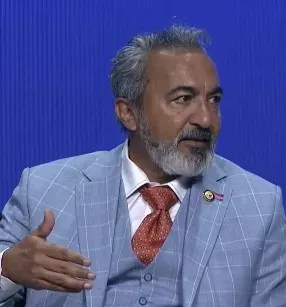
The letter — signed by Representatives Sam Liccardo, Jay Obernolte, Maria Salazar, and Raja Krishnamoorthi — urges the administration to retain the 'Duration of Status' system for F-1 and J-1 visa holders rather than replacing it with a fixed four-year admission cap. The current framework, they argue, offers the flexibility required for long-term academic programmes, particularly doctoral studies in science, technology, engineering, and mathematics (STEM), which routinely extend beyond six years.
The Economic and Workforce Stakes
The three-page letter lays out a pointed economic case. International students contribute approximately $43 billion annually to local US economies and support more than 355,000 American jobs, the lawmakers noted. A shift to fixed-term admissions, they warned, would trigger repeated visa extension requests, generating 'unnecessary administrative burdens, processing delays, and disruptions to academic continuity.'
Citing survey data, the letter states that nearly half of international graduate students and postdoctoral researchers would not have chosen to study in the United States had such a cap been in place. The lawmakers warned that even a one-third decline in foreign STEM graduates could cost the country between 6 and 11 per cent of its high-skilled STEM workforce — and reduce US GDP by $240 to $481 billion annually within a decade.
The Security Argument, Addressed Directly
'International students play a key role in driving US competitiveness in advanced manufacturing, medical research, and other emerging technologies,' the lawmakers wrote. 'If we evict them, they will return home to help foreign companies — in countries like China — compete against us.'
Acknowledging the administration's concerns about foreign adversaries exploiting American universities, the signatories countered that international students are already 'among the most thoroughly vetted and continuously monitored nonimmigrant populations.' They pointed specifically to the Student and Exchange Visitor Information System (SEVIS), which gives the Department of Homeland Security continuous, real-time monitoring of foreign students and exchange visitors.
Why This Matters for India
Indian nationals consistently rank among the largest cohorts of international students in the United States, with a heavy concentration in STEM doctoral programmes — precisely the category the proposed four-year cap would disrupt most. Any tightening of the F-1 visa framework would disproportionately affect Indian students, many of whom pursue multi-year research degrees at American universities before entering the US tech and pharmaceutical workforce. This comes amid a broader pattern of the Trump administration reviewing immigration pathways, including H-1B and OPT extensions, that form the pipeline from student to skilled worker.
What Happens Next
The letter closes with a formal request to 'preserve Duration of Status and ensure efficient visa processing policies that support a stable environment for international students and scholars.' No formal response from the administration has been reported. The outcome of this lobbying effort will be closely watched by universities, technology companies, and foreign student communities across the country.
Point of View
The lawmakers are trying to shift the debate from immigration optics to national competitiveness arithmetic. That is a harder argument for the administration to dismiss than a civil liberties one. What the letter does not address is whether SEVIS, for all its real-time monitoring, has actually prevented the security incidents the administration is concerned about — a gap that critics of the current system will exploit. The deeper tension is structural: the US simultaneously wants to dominate advanced technology and restrict the foreign-born talent pipeline that has historically powered it. India, as the largest source of STEM doctoral candidates, sits at the sharpest edge of that contradiction.
NationPress
10 Oct 2026
Frequently Asked Questions
What is the 'Duration of Status' system for F-1 and J-1 visa holders?
The Duration of Status system allows international students and exchange visitors on F-1 and J-1 visas to remain in the United States for as long as they are enrolled in and making progress toward their academic programme, rather than being tied to a fixed admission end-date. This is particularly important for doctoral students in STEM fields, where programmes routinely extend beyond six years.
What change is the Trump administration reportedly considering?
The administration is reportedly considering replacing the Duration of Status system with a fixed four-year admission period for F-1 and J-1 visa holders. The four US lawmakers argue this would force repeated visa extension applications, creating administrative delays and disrupting long-term research programmes.
How much do international students contribute to the US economy?
According to data cited in the congressional letter, international students contribute approximately $43 billion annually to local US economies and support more than 355,000 American jobs across sectors including research, technology, and higher education.
What could a decline in foreign STEM graduates mean for the US?
The letter warns that even a one-third decline in foreign STEM graduates could reduce the US high-skilled STEM workforce by 6 to 11 per cent and cut US GDP by $240 to $481 billion annually within a decade, based on survey and economic data cited by the four lawmakers.
Who signed the bipartisan letter to the Trump administration?
The letter was signed by Representatives Sam Liccardo, Jay Obernolte, Maria Salazar, and Raja Krishnamoorthi — a bipartisan group spanning both parties — and was addressed to Homeland Security Secretary Markwayne Mullin and Office of Management and Budget Director Russ Vought.