Is the US Considering a Repeal of the Jackson-Vanik Amendment in Central Asia?
Synopsis
As the U.S. looks to strengthen its foothold in Central Asia, lawmakers are advocating for the repeal of the outdated Jackson-Vanik amendment. This legislation, seen as a relic of the Cold War, is hindering U.S. investment and strategic competition with Russia and China. Discover the implications of this potential legislative change.
Key Takeaways
Lawmakers are advocating for the repeal of the Jackson-Vanik amendment.
This amendment is seen as a barrier to U.S. investment in Central Asia.
Bipartisan support highlights the urgency of this issue.
Repeal could enhance U.S. strategic presence in a geopolitically significant region.
Central Asian nations seek diversified trade partnerships.
Washington, Feb 12 (NationPress) Legislators have urged the State Department to endorse the repeal of the Cold War-era Jackson-Vanik amendment concerning Central Asian countries, contending that this outdated provision obstructs U.S. investment and undermines strategic competition with Russia and China.
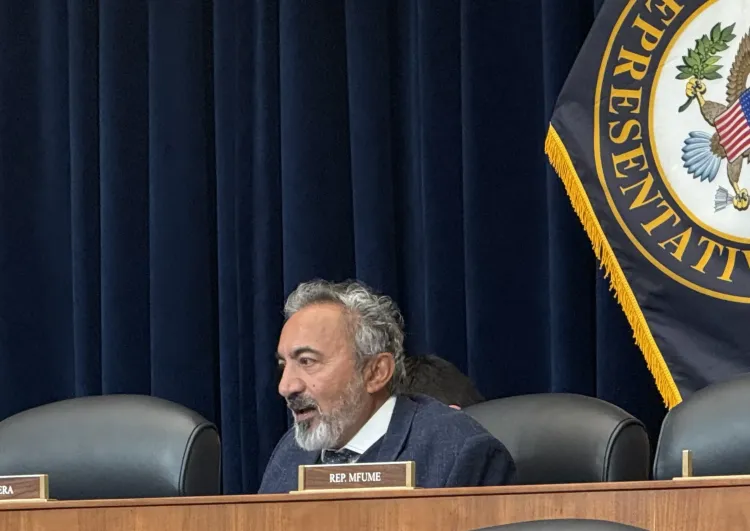
During a House subcommittee hearing focused on South and Central Asia, Democratic Representative Ami Bera pressed Assistant Secretary of State for South and Central Asian Affairs, Paul Kapur, to advocate for legislative measures aimed at lifting the trade limitation.
“Repealing Jackson-Vanik, which is essentially a relic of the Cold War that is no longer relevant today,” Bera stated, asserting that the amendment “restricts U.S. companies from fully investing in several Central Asian nations.”
He emphasized the bipartisan nature of the issue, mentioning that both Republican and Democratic administrations have recognized this measure as outdated.
“This has not been a partisan concern,” Bera noted, adding that Secretary of State Marco Rubio had also acknowledged it as “a remnant of the past.”
Bera framed the repeal as strategically essential.
“They desire our companies to invest in their critical minerals, energy resources, and more, while they navigate a challenging neighborhood between Russia and China,” he remarked.
Kapur concurred with this assessment.
“Absolutely, sir, this exemplifies a bipartisan issue,” he replied.
“We consider Jackson-Vanik to be a relic of the Cold War. As you mentioned, the Secretary has indicated the same, and we appreciate the bipartisan support here,” Kapur added.
Bera called for prompt action. “Let’s make it happen,” he urged.
This exchange underscored the increasing congressional interest in enhancing U.S. economic involvement in Central Asia, a region that is increasingly viewed through the lens of strategic competition.
Rich in critical minerals and energy resources, the Central Asian states are situated between Russia and China and are actively seeking a more diverse array of trade and investment partners.
Kapur’s broader testimony portrayed U.S. engagement as a means to assist regional partners in developing their “strategic capacity” and integrating into the global economy while maintaining their sovereignty.
By eliminating trade-era restrictions, lawmakers contended that Washington could unlock greater participation from the U.S. private sector and provide alternatives to Chinese and Russian influence.
The bipartisan character of the discussion stood out amidst a hearing otherwise characterized by more contentious exchanges regarding Afghanistan and Indo-Pacific priorities.
Enacted in 1974, the Jackson-Vanik amendment linked U.S. trade relations to freedom-of-emigration requirements in Soviet-bloc countries.
Although numerous former Soviet states have since achieved permanent normal trade relations status, the amendment’s continued application to certain areas of Central Asia is seen by policymakers as an outdated obstacle to deeper economic engagement in a region of rising geopolitical importance.
Point of View
I believe this discussion around the Jackson-Vanik amendment signifies a pivotal moment for U.S. foreign policy in Central Asia. The bipartisan support for repeal reflects a growing recognition of the geopolitical landscape and the necessity for the U.S. to adapt its approach to maintain influence. This engagement is essential not only for economic growth but also for countering the expansions of Russia and China in the region.
NationPress
30 Sept 2026
Frequently Asked Questions
What is the Jackson-Vanik amendment?
The Jackson-Vanik amendment, enacted in 1974, links U.S. trade relations to freedom-of-emigration requirements in Soviet-bloc countries. It is viewed as outdated in the current geopolitical context.
Why are lawmakers urging its repeal?
Lawmakers argue that the Jackson-Vanik amendment hinders U.S. investment in Central Asia and undermines strategic competition with Russia and China, necessitating its repeal to foster better economic engagement.
Is this a bipartisan issue?
Yes, the call for repeal has garnered bipartisan support, with lawmakers from both parties recognizing the amendment as a relic of the Cold War that no longer applies.
What are the potential benefits of repealing the amendment?
Repealing the amendment could lead to increased U.S. private sector investment in Central Asia, providing alternatives to Chinese and Russian influence in the region.
What is the current status of U.S. trade relations with Central Asia?
While many former Soviet states have achieved permanent normal trade relations status, parts of Central Asia still face restrictions under the Jackson-Vanik amendment, which lawmakers are looking to eliminate.