Are US Lawmakers Warning About Risks to Bangladesh Elections?
Synopsis
As Bangladesh approaches its February elections, US lawmakers express serious concerns over the ban on political party activities and the implications for democratic participation. They urge the interim government to prioritize free and fair elections while addressing the need for accountability and inclusivity in the political process.
Key Takeaways
US lawmakers express concerns over political party bans in Bangladesh.
They emphasize the need for free and fair elections ahead of February polls.
Inclusivity and accountability are crucial for restoring public trust.
Historical elections have faced criticism for lacking fairness.
Human rights issues highlighted in recent UN reports.
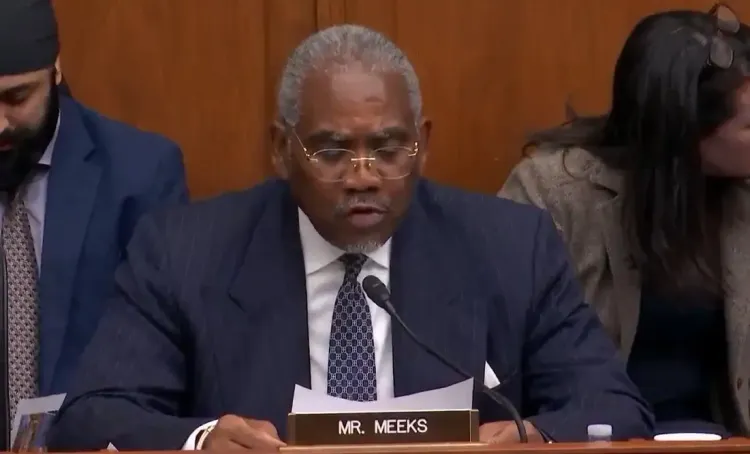
Washington, Dec 24 (NationPress) Concerned about the prohibition of political party activities, influential US legislators have communicated to Bangladesh's interim government that free and fair elections are unattainable if political engagement is curtailed before the February elections.
In a correspondence directed to Dr Mohammed Yunus, the Chief Adviser of the Interim Government of Bangladesh, Congress members Gregory W. Meeks, Bill Huizenga, and Sydney Kamlager-Dove urged cooperation among political factions to reinstate trust in democratic frameworks. The letter was co-signed by Representatives Julie Johnson and Thomas R. Suozzi.
“We appreciate your readiness to assume leadership during this critical national moment in Bangladesh as you guide an interim government ahead of the February elections,” the legislators expressed in their Tuesday letter to Yunus.
They emphasized the necessity for the interim government to collaborate with various political entities to establish an environment conducive to free and fair elections, enabling the Bangladeshi populace to express their opinions peacefully via the ballot, alongside reforms that would restore faith in the impartiality and integrity of state institutions.
Expressing serious apprehensions that such conditions might not be met “if the government curtails the operations of political parties or resumes the contentious International Crimes Tribunal,” the Congress members cautioned Yunus that these actions could jeopardize the credibility of the electoral process at a pivotal time.
Noting the US Department of State and other international observers had determined that Bangladesh's 2018 and 2024 general elections “were not free or fair,” the lawmakers articulated in their two-page letter that the legitimacy of the forthcoming election would rely on whether the interim authorities manifested a distinct departure from practices that have attracted international disapproval.
Referencing a February report by the United Nations Office of the High Commissioner for Human Rights, which estimated that security forces were responsible for the deaths of 1,400 individuals during protests in July and August 2024, the Congress members stated: “True accountability for these actions and similar ones should reflect the values of Bangladesh’s democracy, rather than perpetuate a cycle of retribution,” the letter stated.
A primary concern for the legislators was the suspension of a political party's operations. “The right to associate freely, along with the principle of individual rather than collective criminal accountability, are essential human rights,” they remarked. The lawmakers noted that completely suspending a party, instead of holding individuals accountable through due legal processes, was inconsistent with these principles.
They urged Yunus or a future elected official to reconsider this decision, highlighting that inclusive participation is crucial for regaining public trust. “Ultimately, the Bangladeshi populace deserves the opportunity to elect a government through a free and fair election, allowing all political parties to take part and ensuring their voices are heard,” the legislators emphasized.
The letter also highlighted the broader bilateral relationship, labeling Bangladesh as “a vital partner for the United States.” The lawmakers expressed their readiness to collaborate with the interim government to foster both the bilateral relationship and Bangladesh’s democratic transition in the forthcoming months.
In a related matter, Representative Thomas R. Suozzi reached out to U.S. Secretary of State Marco Rubio, requesting updates about the safety of religious minorities in Bangladesh. Citing “recent reports regarding the attacks against Hindu minorities,” Suozzi expressed concern about the misuse of blasphemy laws and requested that appropriate officials be available for briefings, to address the worries of his Bangladeshi-American constituents.
Point of View
It is paramount to recognize the significance of democratic processes in Bangladesh. The concerns raised by US lawmakers highlight not only the importance of electoral integrity but also the necessity for inclusivity and accountability. The future of democracy in any nation relies on the ability of its citizens to participate freely in political processes. It is essential for Bangladesh to address these issues in order to restore faith in its democratic institutions.
NationPress
5 Oct 2026
Frequently Asked Questions
What are US lawmakers concerned about in Bangladesh?
US lawmakers are concerned about the ban on political party activities in Bangladesh, believing it undermines the possibility of free and fair elections.
Why is political participation important ahead of elections?
Political participation is crucial for ensuring that the voices of the citizens are heard and represented in the electoral process, which is the foundation of a democratic society.
What actions did US lawmakers urge the interim government to take?
They urged the interim government to work collaboratively with all political parties to create conditions for transparent elections and restore public confidence in democratic institutions.
What historical context is provided about previous elections in Bangladesh?
US observers had previously concluded that the general elections in Bangladesh in 2018 and 2024 were not free or fair, highlighting a need for reform.
What did the UN report indicate about human rights in Bangladesh?
The UN report estimated that security services were involved in the deaths of 1,400 individuals during protests, emphasizing the need for accountability.