US-Russia Tensions Highlight UNSC's Deepening Divide
Synopsis
The ongoing dispute between the US and Russia, alongside China, over Iran's presence in the UNSC agenda underscores the escalating polarisation within the Council, hindering its capacity to function effectively.
Key Takeaways
US-Russia-China discord hampers UNSC functionality.
Iran's role in the agenda remains contentious.
1737 Committee's implications for sanctions on Iran are significant.
Melania Trump's leadership marks a notable moment in the US presidency.
Global peace and security are at stake due to Council divisions.
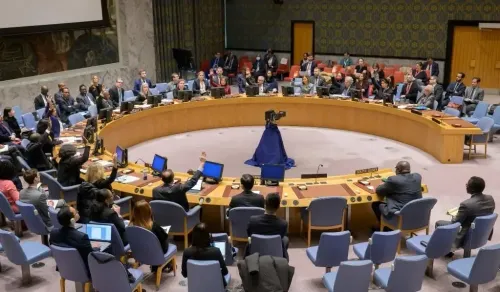
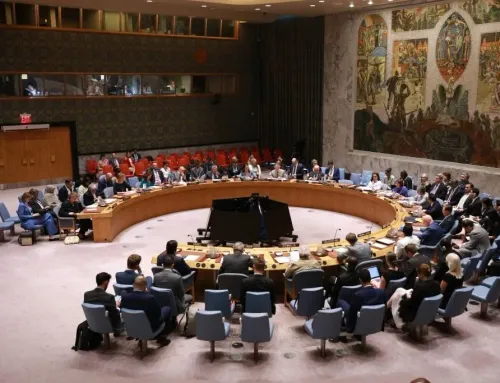
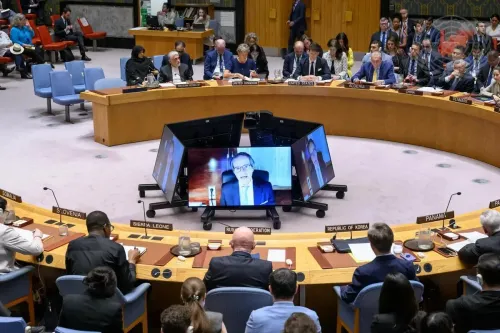
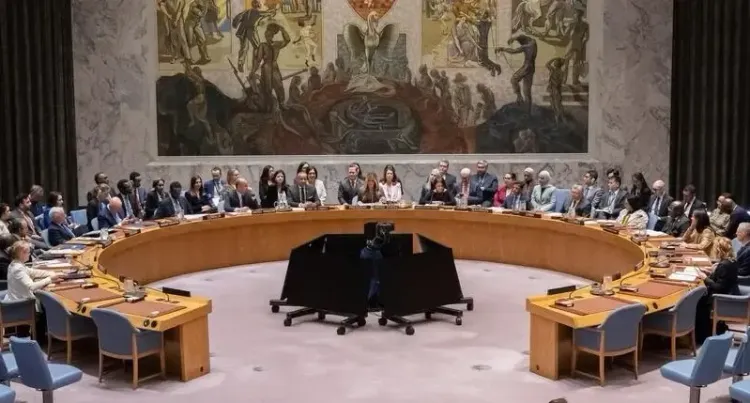
United Nations, March 5 (NationPress) A clear reflection of the polarisation within the Security Council that hampers its effectiveness is evident in the ongoing disagreement between the United States and a coalition of Russia and China regarding the inclusion of Iran in this month's agenda. This discord has delayed the approval of the Council's programme while the US holds the presidency.
Following a vibrant commencement on Monday with US First Lady Melania Trump leading the initial open session, the Council has remained inactive for the past two days, with plans to reconvene on Thursday.
In the absence of a consensus on the work programme, the US took an unconventional step by releasing what it termed a “Plan of Work”, outlining meetings for 11 out of the 21 working days of the month, leaving ten days unplanned.
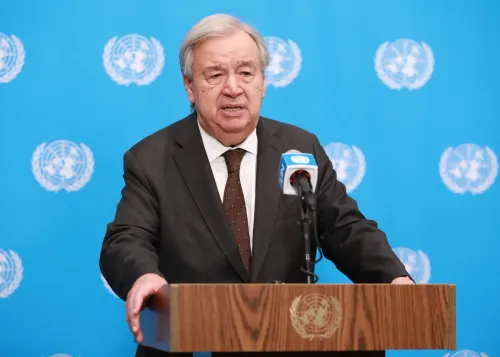
Addressing the situation, spokesperson for Secretary-General Antonio Guterres, Stephane Dujarric, expressed, “We have been worried about the lack of unity within the Security Council for quite some time, especially in addressing various issues.”
“The Security Council bears a critical responsibility for maintaining peace and security, and we urge its members to seek common ground towards this goal,” he added.
In a rare move, Russia publicly disclosed details of the dispute, posting an explanation on its mission's website regarding the reasons why Moscow and Beijing obstructed the programme's adoption.
The core of the contention lies in the US's request for a briefing regarding the sanctions committee's work on Iran on Tuesday, asserting its authority under the current alphabetical rotation of the presidency for March.
This committee is designated as the 1737 Committee, named after the resolution number pertaining to the 2015 Iran nuclear agreement, known as the Joint Comprehensive Plan of Action (JCPOA).
Although the sanctions were eased under this deal, the resolution allowed for a “snapback” of sanctions if Iran failed to adhere to the JCPOA's nuclear restrictions.
The UK, France, and Germany, all parties to the JCPOA, asserted that Iran had violated the agreement by enriching uranium beyond the agreed limits, thereby triggering the snapback mechanism.
Russia contended that the three nations had no jurisdiction to invoke this mechanism and that there was no consensus within the Security Council regarding the legality of the actions taken by the UK, France, and Germany.
Following the US's refusal to accommodate its request to exclude the 1737 Committee's work from the agenda, Russia felt compelled to block the approval of the UNSC programme for March.
This was not the first instance of Russia obstructing the work programme under US leadership, having done so earlier in 2023 as well.
Typically, Council presidents host two significant events on topics of their choice with high-level participation. The US conducted one on Monday with Melania Trump focusing on children, education, and technology, and has planned another on “Energy, Critical Minerals, and Security” for Thursday. The situations in Palestine, Syria, Myanmar, and Afghanistan are also part of the US's agenda.
Point of View
It is clear that the ongoing discord between the US and its counterparts Russia and China represents a significant challenge for the United Nations Security Council. This situation is emblematic of broader geopolitical tensions that threaten to undermine international cooperation and stability.
NationPress
6 Oct 2026
Frequently Asked Questions
What caused the US-Russia dispute in the UNSC?
The dispute arose over the US's push to include a briefing on Iran's sanctions committee in the agenda, which was opposed by Russia and China.
What is the 1737 Committee related to?
The 1737 Committee is named after the resolution regarding the 2015 Iran nuclear deal, allowing for the snapback of sanctions if Iran fails to comply.
What significant events are planned by the US during its presidency?
The US is hosting events focusing on children, education, technology, and energy security during its presidency.
How has Russia responded to the UNSC agenda?
Russia has publicly stated its opposition to the agenda due to disagreements over Iran's sanctions and has blocked its adoption.
What role does the UN Secretary-General play in this situation?
The UN Secretary-General's spokesperson has expressed concern about the lack of unity in the Security Council when addressing critical issues.