Khalistani extremists desecrate Indian flag at Madison Square Garden: Report
Synopsis
As RSS chief Mohan Bhagwat addressed Indian-Americans inside Madison Square Garden, Khalistani extremists linked to the US-active but India-designated terrorist group Sikhs For Justice tore and trampled the Indian tricolour outside. A report now challenges the US to apply the same moral clarity it shows on antisemitic vandalism and temple graffiti — or admit that 'free speech' is being selectively invoked.
Key Takeaways
Khalistani extremists tore and stomped on the Indian national flag outside Madison Square Garden , New York , on 29 August .
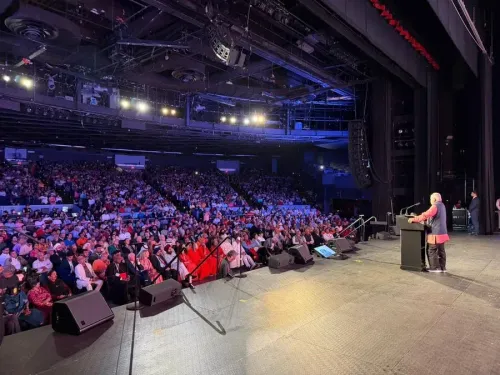
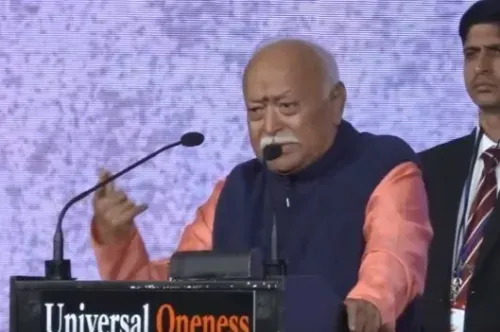
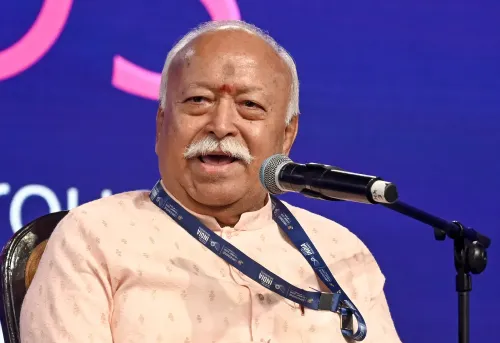
The incident occurred while RSS chief Mohan Bhagwat addressed an Indian diaspora event inside the venue.
Elements associated with Sikhs For Justice (SFJ) — designated a terrorist entity by India — were reportedly involved.
A report argues the United States must condemn the act with the same clarity it applies to antisemitic vandalism, mosque attacks, and temple graffiti.
India has designated SFJ a terrorist organisation; the US has not , a gap the report identifies as enabling such incidents.
Khalistani extremists tore and trampled the Indian national flag outside Madison Square Garden in New York on 29 August, even as Rashtriya Swayamsevak Sangh (RSS) chief Mohan Bhagwat addressed a diaspora gathering inside the venue. A report has argued that the United States must condemn the act with the same directness it applies to antisemitic vandalism, mosque attacks, and temple graffiti — or risk its 'free speech' defence appearing as deliberate indifference.
What Happened Outside Madison Square Garden
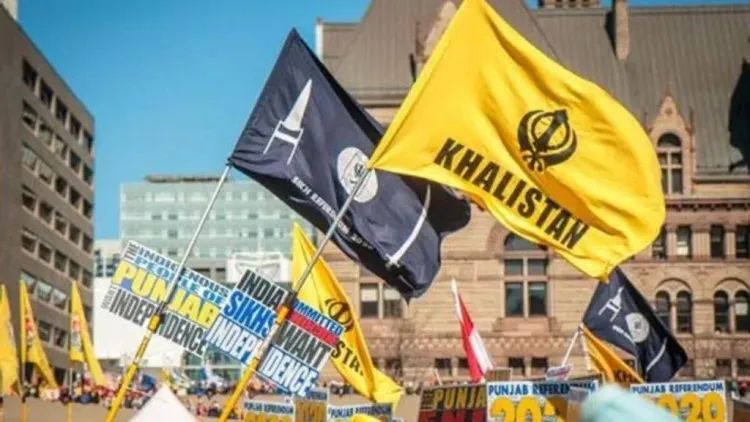
While Bhagwat spoke at an event billed as a 'Universal Oneness Celebration', a markedly different scene played out on the street. Protesters linked to Sikhs For Justice (SFJ) — a group India has designated a terrorist entity — were seen tearing, stomping on, and in one instance tying the Indian tricolour to a protester's foot for the cameras. Slogans of 'Khalistan Zindabad' and anti-India chants were raised, reportedly in the presence of New York Police Department personnel, according to a detailed account in Khalsa Vox. Indian-origin bystanders reportedly pushed back, while police largely stood by.
The Report's Core Argument
The report characterised the incident not as an act of political protest but as a deliberate insult to the national symbol of a sovereign democracy, staged on American soil against a visiting Indian public figure and the millions of Indian-Americans for whom the Tiranga carries deep significance. It drew a pointed contrast: flag-burning of the Stars and Stripes is constitutionally protected speech under the First Amendment, but extending the same posture to the 'systematic, targeted abuse' of a partner nation's emblem — while that nation is a major US security, economic, and diaspora partner — is, the report argued, 'a political choice, not a constitutional inevitability.'
A Recurring Pattern, Critics Say
The report noted that this was not an isolated provocation. Khalistan activism in Western countries has, over the years, repeatedly involved flag-burning, temple vandalism, threats against Indian diplomats, and the glorification of violence as political theatre. India has designated SFJ and its leading figure as terrorist entities; the United States has not. According to the report, that gap in designation is 'the opening through which this street theatre keeps walking.'
The Broader US Policy Question
The report's sharpest observation concerns American officialdom's response. It argued that the real issue is not the existence of a small separatist lobby, but the ease with which US authorities frame the targeted humiliation of an allied democracy's flag as simply a free-speech matter. The report contended that the US has consistently called out comparable acts of symbolic hatred against Jewish, Muslim, and Hindu communities, and that consistency demands the same clarity when India's national flag is desecrated on American streets. Whether Washington responds to that argument remains to be seen.
Point of View
The United States has not, and that gap has real consequences on American streets. The report's free-speech critique cuts to a genuine inconsistency — Washington does not treat the symbolic desecration of every allied nation's flag as a matter of constitutional indifference. The harder question it does not fully answer is whether the absence of a US designation reflects a deliberate policy calculation about South Asian diaspora politics, or simply bureaucratic inertia. Either way, New Delhi's diplomatic case grows stronger each time the pattern repeats without a meaningful American response.
NationPress
31 Aug 2026
Frequently Asked Questions
What happened outside Madison Square Garden on 29 August?
Khalistani extremists, including elements linked to Sikhs For Justice, tore, stomped on, and tied the Indian national flag to a protester's foot outside Madison Square Garden in New York on 29 August. The incident occurred while RSS chief Mohan Bhagwat addressed an Indian diaspora event inside the venue.
Who is Sikhs For Justice and why is it significant?
Sikhs For Justice (SFJ) is a pro-Khalistan separatist organisation that India has designated a terrorist entity. The United States has not made a corresponding designation, a gap that critics say allows the group to operate freely on American soil.
What does the report argue the US should do?
The report argues that the US should explicitly condemn the desecration of the Indian national flag with the same clarity it applies to antisemitic vandalism, mosque attacks, and temple graffiti. It contends that framing the incident solely as protected free speech is a political choice, not a constitutional requirement.
Is flag desecration protected under US law?
Burning or desecrating the American flag is protected speech under the First Amendment, per US Supreme Court precedent. The report acknowledges this but argues that extending the same passive posture to the targeted abuse of a partner nation's flag — without any official condemnation — is a policy decision, not a legal obligation.
Is this the first such incident involving Khalistan activists in the West?
No. According to the report, Khalistan activism in Western countries has a documented pattern of flag-burning, temple vandalism, threats against Indian diplomats, and glorification of violence. The Madison Square Garden incident is described as the latest in a recurring series of provocations.