Congress slams India's 7.8% Q1 GDP growth as 'Greatly Distorted Picture'
Synopsis
Congress is not buying India's 7.8% Q1 GDP headline — and Jairam Ramesh's broadside goes beyond politics. He points to depressed private investment, post-COVID lows in consumer confidence, a widening China trade deficit, and record household debt as evidence that the number flatters a far more stressed economic reality.
Key Takeaways
India's GDP grew 7.8 per cent in Q1 FY 2026-27 (April–June), beating the RBI's projected 7 per cent .
Congress dismissed the figure as a “Greatly Distorted Picture,” calling it “premature celebration.” Jairam Ramesh alleged consumer confidence is at its lowest since COVID-19 , declining since November 2025 .
He claimed wealth of India's five richest families rose 400 per cent while real wages of salaried workers fell.
Household savings have declined and debt has hit record highs, according to Ramesh.
The data was released amid global headwinds including the West Asia crisis and high crude oil prices.
The Indian National Congress on Monday, 31 August challenged the government's 7.8 per cent GDP growth figure for the first quarter of FY 2026-27 (April–June), calling it a “Greatly Distorted Picture” of the economy and dismissing official optimism as “a case of premature celebration.” The pushback came hours after the data — which surpassed the Reserve Bank of India's (RBI) projected 7 per cent estimate — was released publicly.
What Congress Said
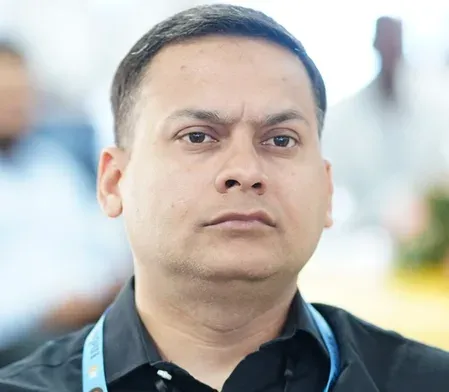
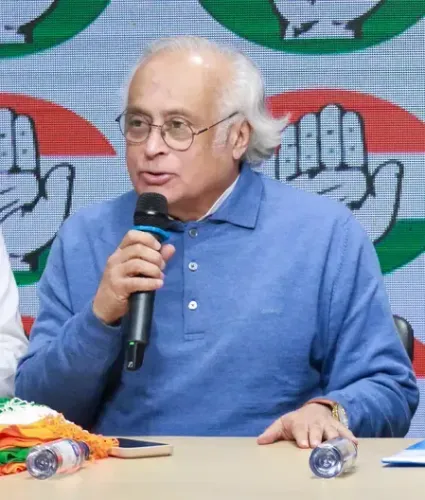
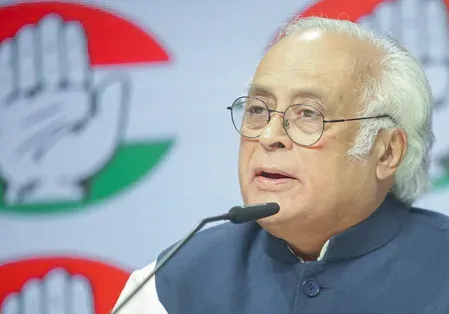
Jairam Ramesh, Congress General Secretary in charge of Communications and a Rajya Sabha MP, led the party's critique through a post on social media platform X. “The quarterly GDP numbers, such as they are reported, present a GDP — Greatly Distorted Picture — of the economy,” he alleged, arguing the headline figure masks “decidedly depressed private investment sentiment” — both domestic and foreign.
Ramesh further claimed that consumer confidence has hit its lowest point since the COVID-19 pandemic and has been on “a relentless downward trajectory since November 2025.” He also alleged that prices of household essentials are rising sharply and that unemployment among India's educated youth stands at “alarming levels.”
Trade Deficit, Wealth Inequality, and Household Debt
The Congress leader did not stop at demand-side concerns. He alleged that “the unabated trade deficit with China is wreaking havoc” and accused the government of deliberately enabling the “capture of key sectors by a couple of big conglomerates,” which he said is having “deleterious effects” on the broader economy.
Ramesh also claimed that the wealth of “India's five richest families” has grown by 400 per cent, while real wages of salaried workers have fallen. He added that household savings rates have declined and household debt has reached record highs — indicators, he argued, that the GDP print does not capture.
The Context: Global Headwinds and RBI's Forecast
The April–June 2026 growth figure of 7.8 per cent came against a backdrop of significant global stress — including the West Asia crisis, elevated crude oil prices, and ongoing supply chain disruptions. That the number beat the RBI's own 7 per cent projection has been cited by the government as a sign of economic resilience.
Notably, this is not the first time the Congress has challenged official GDP methodology. The party has repeatedly questioned the National Statistical Office's data framework, arguing that informal-sector distress is systematically undercounted in headline growth figures.
What to Watch
The political battle over growth optics is likely to intensify as the government approaches the next budget cycle. Independent economists and industry bodies are expected to weigh in on whether the Q1 figure reflects broad-based growth or is concentrated in specific sectors. Further RBI commentary on the growth-inflation trade-off will be closely watched in the weeks ahead.
Point of View
Compressed household savings, and persistent informal-sector stress is not a contradiction — it is a structural feature of how India's GDP is measured. The party's political motivations aside, the questions Ramesh raises about wealth concentration, consumer demand, and the China trade deficit are ones that mainstream economic commentary has also flagged. The real accountability test is whether the government responds with data on these sub-indicators or simply defends the headline. A growth number without a jobs, wages, and savings audit tells only half the story.
NationPress
31 Aug 2026
Frequently Asked Questions
What is India's GDP growth rate for Q1 FY 2026-27?
India's GDP grew at 7.8 per cent in the first quarter of FY 2026-27 (April–June 2026), surpassing the Reserve Bank of India's projected 7 per cent estimate. The figure was released on 31 August 2026.
Why has Congress criticised the Q1 GDP growth figure?
Congress, led by Jairam Ramesh , argues the headline number masks weak private investment, sluggish consumer confidence, rising household debt, and high youth unemployment. The party calls it a 'Greatly Distorted Picture' that does not reflect ground-level economic stress.
What did Jairam Ramesh say about consumer confidence?
Ramesh claimed consumer confidence has hit its lowest point since the COVID-19 pandemic and has been on a downward trajectory since November 2025. He also cited galloping prices of household essentials and alarming educated youth unemployment.
How does the China trade deficit factor into Congress's criticism?
Ramesh alleged that an 'unabated trade deficit with China is wreaking havoc' on the Indian economy. He also accused the government of enabling monopolistic capture of key sectors by large conglomerates, compounding the trade imbalance's impact.
What global factors surrounded the Q1 FY27 GDP data release?
The 7.8 per cent growth figure was released against a backdrop of the West Asia crisis, high crude oil prices, and global supply chain disruptions — headwinds that make the beat over RBI's forecast notable, though critics argue they also underscore fragility in the outlook.