India's 7.7% GDP growth, $682 bn reserves counter Rahul Gandhi's 'economic tsunami' claim
Synopsis
Rahul Gandhi's 'economic tsunami' warning runs headlong into some of the strongest macro numbers India has posted in years — 7.7% GDP growth, $682 billion in forex reserves, and headline inflation at a historic low of 1.7%. The BJP has weaponised the very data Gandhi questioned, but the real story is whether India's buffers are deep enough to hold if global headwinds intensify through FY27.
Key Takeaways
India's real GDP grew 7.7% in FY2025-26 , the fastest among major economies, per government and RBI data.
IMF raised India's FY26 growth forecast to 7.3% , citing strong domestic momentum.
Forex reserves stood at $682.3 billion as of late May 2026 , covering 11 months of imports and over 90% of external debt.
Headline CPI inflation averaged 1.7% during April–December 2025 — reportedly the lowest since the series began.
BJP leader Amit Malviya called the GDP data a 'tsunami' that refuted Congress leader Rahul Gandhi's economic alarm.
The RBI projects 6.6% GDP growth and 5.1% CPI inflation for FY27 , with repo rate held at 5.25% .
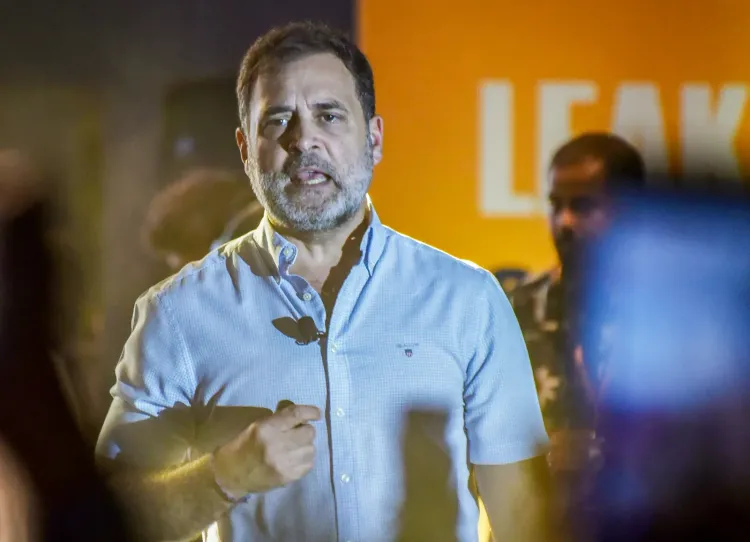
Congress leader Rahul Gandhi's assertion that India is hurtling toward an 'economic tsunami' has been challenged by a string of macro indicators from credible institutions, including the Reserve Bank of India (RBI) and the International Monetary Fund (IMF), that point to an economy consolidating its position as the world's fastest-growing major economy.
Key Economic Indicators
India's real GDP grew at 7.7% in FY2025-26, according to First Advance Estimates and subsequent revisions by the Union Ministry of Statistics and Programme Implementation. The growth was broad-based across all four quarters — 6.7% in Q1, 8.4% in Q2, 7.8% in Q3, and 7.8% in Q4. The IMF independently raised its FY26 growth forecast for India to 7.3%, citing strong domestic momentum.
For context, Germany grew at just 0.4%, Japan at 0.8%, the Euro Area at 1.3%, and the G7 collectively at 1.6% over the same period — underscoring the scale of India's relative outperformance.
Inflation Under Control, Forex Buffers Robust
Headline inflation averaged just 1.7% during April–December 2025 — reportedly the lowest since the CPI (Consumer Price Index) series began — with the RBI revising its full-year FY26 inflation forecast down to 2.0%. The RBI has since held the repo rate at 5.25% while projecting 6.6% GDP growth and 5.1% CPI inflation for FY27.
Foreign exchange reserves stood at $682.3 billion as of late May 2026, according to the RBI, providing approximately 11 months of import cover and covering over 90% of external debt. Services exports continue to post record figures, with remittances providing additional external support.
Navigating Middle East Risks
This performance comes despite geopolitical tensions in West Asia, which have pushed global oil prices higher and disrupted shipping through the Strait of Hormuz. India has actively managed these risks through import diversification — including increased sourcing from Russia and the Americas — alongside strategic reserves and measures to boost domestic energy output. Unlike many global peers, India has avoided major economic disruptions from these pressures, according to official assessments.
The RBI, while cautiously revising its FY27 growth forecast to 6.6% citing external risks, continues to highlight the resilience of domestic demand, manufacturing, and services expansion.
BJP's Political Counter
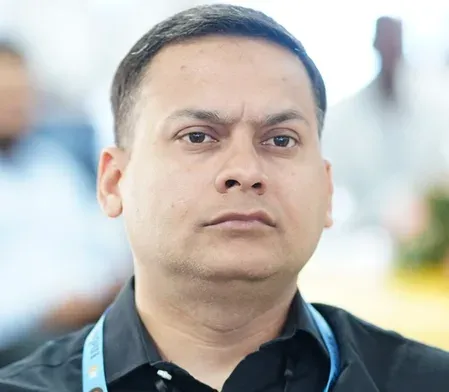
Bharatiya Janata Party (BJP) leader Amit Malviya took a pointed dig at Gandhi, describing the 7.7% GDP growth figure as a 'tsunami' that had 'washed away' what he called Gandhi's 'latest sinister attempt to malign India.' Malviya highlighted India's consistent quarterly growth trajectory and its contrast with subdued expansion across developed economies.
What the Data Shows
Taken together, the figures from the RBI, IMF, and government statistical releases describe an economy with broad-based growth, low inflation, healthy fiscal consolidation, and resilient labour markets. Critics of Gandhi's framing argue that characterising such conditions as a precursor to economic collapse ignores the available evidence. India, they contend, remains one of the few bright spots in a turbulent global landscape, underpinned by prudent monetary policy and structural economic strengths. Whether the opposition's concerns about longer-term risks — including external debt exposure and energy import dependence — gain traction will depend on how global conditions evolve through FY27.
Point of View
Sub-2% inflation, and nearly a year's worth of import cover are not the hallmarks of an economy on the edge. The BJP's counter-offensive, led by Malviya, is tactically effective but risks complacency: India's external debt coverage and energy import dependence remain structural vulnerabilities that a sustained West Asia crisis could test. The more substantive debate — whether India's growth is translating into broad-based employment and income gains — is being drowned out by the headline number war. That is the question neither side is fully answering.
NationPress
30 Sept 2026
Frequently Asked Questions
What did Rahul Gandhi say about India's economy?
Rahul Gandhi claimed that India is heading toward an 'economic tsunami.' The Congress leader's assertion has been contested by macro data from the RBI and IMF showing strong GDP growth, low inflation, and robust forex reserves.
How fast did India's economy grow in FY26?
India's real GDP grew at 7.7% in FY2025-26, according to government estimates, making it the fastest-growing major economy in the world. Growth was consistent across all four quarters, ranging from 6.7% in Q1 to 8.4% in Q2.
What is the current state of India's forex reserves?
India's foreign exchange reserves stood at $682.3 billion as of late May 2026, per RBI data. This provides approximately 11 months of import cover and covers over 90% of the country's external debt.
What is India's inflation situation in FY26?
Headline CPI inflation averaged just 1.7% during April–December 2025 — reportedly the lowest since the CPI series began. The RBI revised its full-year FY26 inflation forecast down to 2.0%.
How did the BJP respond to Rahul Gandhi's economic tsunami claim?
BJP leader Amit Malviya described India's 7.7% GDP growth as a 'tsunami' that had 'washed away' Gandhi's attempt to 'malign India.' Malviya also highlighted that India significantly outperformed G7 economies, which collectively grew at just 1.6%.