Venezuela quake death toll climbs to 4,333 after June 24 disaster
Synopsis
Venezuela's June 24 earthquakes have killed 4,333 people — a toll that keeps rising. With 18,000 still in temporary camps, 30,000 volunteers mobilised, and a government scrambling to unlock frozen foreign assets for reconstruction, this is a compounding crisis unfolding under the shadow of international sanctions.
Key Takeaways
The June 24 earthquakes in Venezuela have killed 4,333 people , as confirmed on 12 July .
16,740 people were injured and 6,462 rescued; 94 temporary camps shelter more than 18,000 displaced residents.
Around 30,000 volunteers have registered to assist with relief and are being directed toward home construction and repair.
The government launched a Unified Housing Registry to track displaced families and coordinate financial assistance.
Acting President Delcy Rodriguez thanked 28 countries for aid; more than 2,000 tonnes of international supplies are being distributed from Caracas .
Venezuela has requested release of funds frozen abroad under international sanctions to help finance reconstruction.
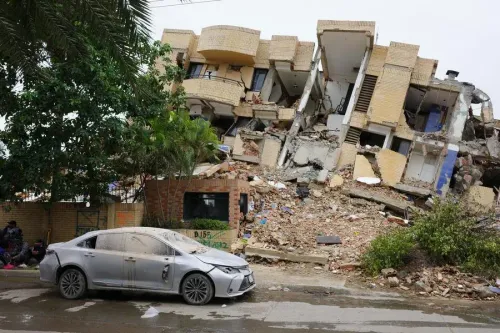
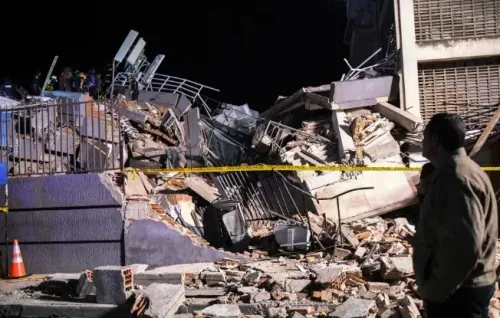
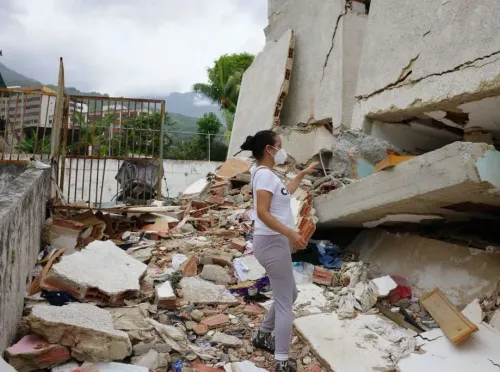
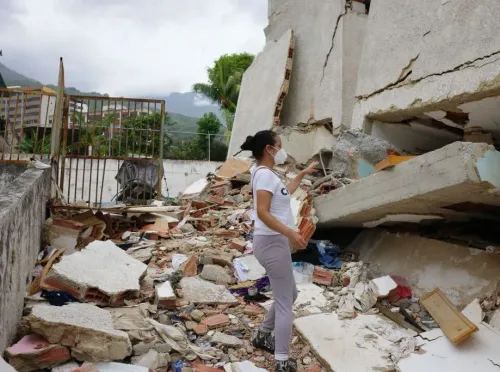
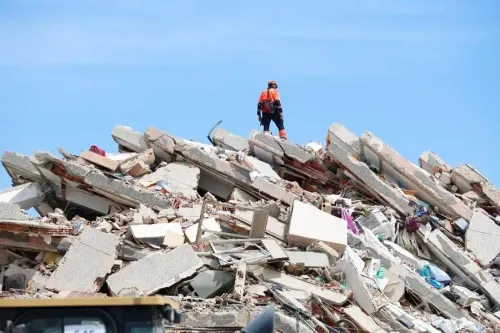
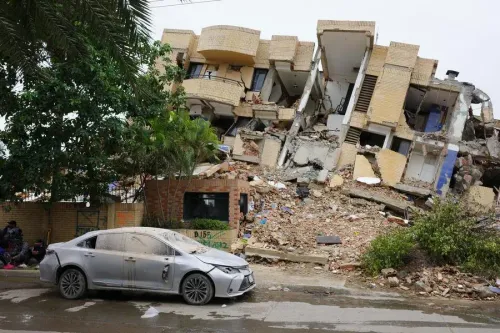
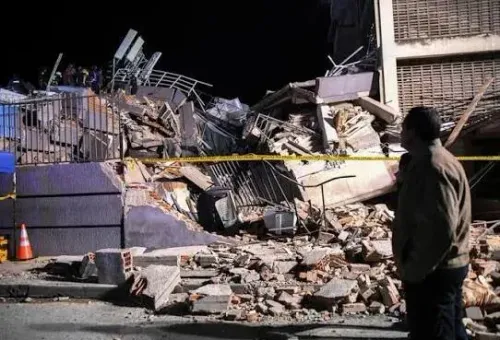
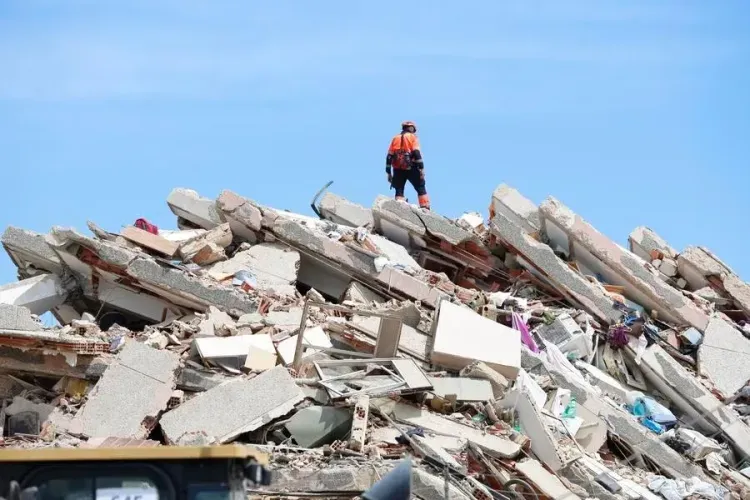
The death toll from the June 24 earthquakes in Venezuela has climbed to 4,333, National Assembly President Jorge Rodriguez confirmed on Saturday, 12 July. The figure underscores the scale of one of the deadliest seismic disasters in the country's modern history, with tens of thousands still displaced and reconstruction efforts only beginning.
Scale of the Disaster
According to Rodriguez, 16,740 people were injured in the earthquakes, while 6,462 have been rescued. Authorities have established 94 temporary camps currently sheltering more than 18,000 displaced residents. The sheer volume of casualties has stretched Venezuela's emergency infrastructure to its limits.
Notably, around 30,000 volunteers have registered to assist victims during the critical relief phase. The government has proposed channelling this volunteer force into home construction and repair work — a sign that the recovery effort is already pivoting from immediate rescue toward longer-term rebuilding.
Housing Crisis and Government Response
With many families rendered permanently homeless, Rodriguez announced the launch of a Unified Housing Registry — a dual-purpose system that will function both as a population census of quake-affected households and as a database for state-ordered financial assistance. The government has said it needs to act swiftly to provide permanent housing for those who lost their homes entirely, while also repairing properties that sustained partial damage.
Transitional single-family camp housing is also planned as an interim measure 'while permanent homes are being built,' Rodriguez said. The National Assembly is additionally set to reform rental legislation and introduce a credit and subsidy scheme to help quake-affected families purchase homes.
Frozen Assets and International Aid
Rodriguez noted that acting President Delcy Rodriguez has written to multiple foreign governments requesting the release of Venezuelan funds frozen abroad under economic sanctions imposed by the United States and other countries. The government has framed access to these assets as critical to financing reconstruction.
On the international front, acting President Delcy Rodriguez expressed gratitude for humanitarian assistance received from 28 countries. She made the remarks after inspecting a collection centre in Caracas, where more than 2,000 tonnes of international aid are being sorted for distribution to the temporary camps. 'Venezuela never tires of thanking the countries, the peoples of the world, and the governments of the world that have offered a helping hand,' she said.
Path to Recovery
Delcy Rodriguez stressed that each donor country would be able to track how its aid is being deployed, a transparency measure aimed at sustaining international goodwill. 'The most important thing is to look to the future, how we are going to recover, how we are going to rebuild the affected areas,' she said. Venezuela's dual challenge — managing an acute humanitarian crisis while operating under international financial sanctions — makes the reconstruction timeline deeply uncertain. How quickly frozen assets can be unlocked, and whether the volunteer-driven housing push can be sustained, will be the defining questions in the months ahead.
Point of View
333 places this among the most lethal earthquakes in Latin America in recent decades, yet Venezuela's recovery capacity is uniquely constrained. The government's simultaneous plea for frozen foreign assets reveals a structural problem: international sanctions, whatever their intent, now complicate disaster response in real time. The Unified Housing Registry is a sensible step, but Venezuela's pre-existing housing deficit — deepened by years of economic contraction — means the reconstruction target is far harder than the announcement implies. The 30,000-volunteer pipeline is an asset, but converting goodwill into verified construction at scale requires logistics and materials that sanctions-hit supply chains struggle to deliver.
NationPress
10 Oct 2026
Frequently Asked Questions
What is the current death toll from the Venezuela earthquakes?
The death toll from the June 24 earthquakes in Venezuela has risen to 4,333, according to National Assembly President Jorge Rodriguez on 12 July. An additional 16,740 people were reported injured.
How many people are sheltering in temporary camps in Venezuela?
More than 18,000 people are currently housed across 94 temporary camps set up by Venezuelan authorities following the June 24 earthquakes. The government also plans transitional single-family camp housing while permanent homes are built.
What is Venezuela's Unified Housing Registry?
The Unified Housing Registry is a government-launched database that serves as both a census of quake-affected households and a platform for coordinating state financial assistance to victims. It was announced by National Assembly President Jorge Rodriguez as a key tool in the reconstruction effort.
How many countries have sent humanitarian aid to Venezuela?
Acting President Delcy Rodriguez confirmed that 28 countries have provided humanitarian aid to Venezuela. More than 2,000 tonnes of international supplies are being sorted at a collection centre in Caracas for distribution to displaced communities.
Why has Venezuela requested the release of frozen foreign assets?
Venezuela's government says funds frozen abroad under US and international sanctions are needed to finance earthquake reconstruction. Acting President Delcy Rodriguez has sent letters to multiple governments requesting the release of those assets.