White House Blames Russia-Ukraine War, Green Policies for Diesel Price Surge
Synopsis
The White House has blamed restricted global diesel supply — driven by the Russia-Ukraine war and refinery closures in Democrat-led states under Green Energy policies — for rising US fuel prices, and signalled that further federal relief action is forthcoming.
Key Takeaways
The White House officially identified the Russia-Ukraine war as a primary driver of restricted global diesel supply.
Democrat-led states that shut down refineries in the name of 'Green Energy' policies were directly blamed for compounding domestic supply constraints.
The administration stated that 'further action is necessary' to provide Americans with fuel-price relief, though specific measures were not named.
Diesel shortages affect freight, agriculture, and industrial supply chains, meaning price spikes ripple across the broader economy.
The statement signals a supply-side policy response is being prepared, potentially including strategic reserve releases or refining infrastructure support.
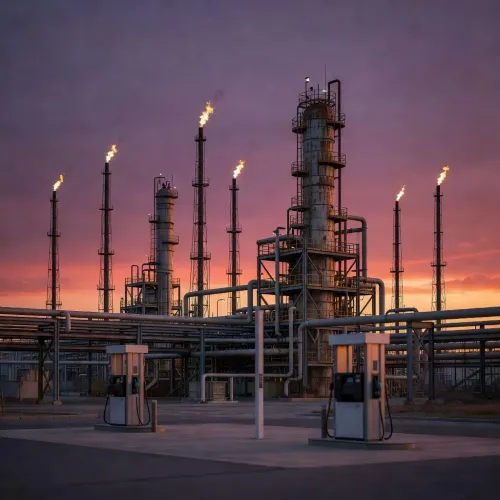
Global diesel markets are under severe strain — and the White House is pointing fingers in two directions at once. On Tuesday, October 6, 2026, the White House officially flagged that restricted global diesel supply, compounded by the ongoing Russia-Ukraine war and a worldwide shortfall in refining capacity, is driving fuel prices higher — and that further federal action is now necessary to give Americans relief at the pump.
War, refinery closures, and a supply squeeze
The post identifies two interlocking causes for the supply crunch. First, the Russia-Ukraine war has disrupted one of the world's largest diesel-exporting corridors. Russia historically supplied a significant share of Europe's diesel, and sanctions-driven displacement of that supply has rippled through global markets, tightening availability and pushing prices upward across continents.
Second, the White House directs pointed criticism at Democrat-led states that it says chose to shut down refineries in pursuit of 'Green Energy' policies — arguing that domestic refining capacity has been deliberately curtailed at precisely the moment the global market needed it most. The framing is explicitly political, casting environmental policy decisions as a direct contributor to consumer pain.
Why diesel prices hit harder than gasoline
Diesel is the backbone fuel of freight, agriculture, and industrial supply chains — which means price spikes don't stay at the truck stop. They move through the entire economy: higher diesel costs translate into costlier food delivery, more expensive manufactured goods, and elevated construction costs. For ordinary Americans, the pain is diffuse but real, embedded in the price of nearly everything that moves by road or rail.
Unlike gasoline, diesel refining capacity is harder and slower to restore once shuttered. The White House's framing acknowledges this structural reality, signalling that a supply-side response — not just a demand-management approach — is being considered as part of the relief package.
Federal action signalled, specifics pending
The statement stops short of naming which specific measures are under consideration, saying only that 'further action is necessary.' That language typically precedes announcements involving strategic reserve releases, temporary fuel tax adjustments, permitting relief for refining infrastructure, or diplomatic outreach to major producing nations. The urgency of the framing suggests a policy announcement is imminent rather than distant.
With midterm-cycle political pressures always present and energy costs consistently ranking among voters' top concerns, the White House's decision to go public with this framing — before spelling out the relief — is itself a signal: the administration is staking ground on who is responsible and who is acting.
Diesel costs don't wait for policy debates to conclude. The question now is whether the relief comes fast enough to matter at the invoice, the checkout counter, and the kitchen table.
Point of View
So the relief lands with maximum political credit. The invocation of Green Energy refinery closures is particularly sharp, designed to make environmental policy feel directly culpable for kitchen-table costs. Whether the 'further action' actually moves diesel prices will determine whether the framing sticks or backfires.
NationPress
6 Oct 2026
Frequently Asked Questions
Why are diesel prices rising in the US in 2026?
The White House cites two main factors: the Russia-Ukraine war disrupting global diesel supply, and the closure of refineries in Democrat-led states under Green Energy policies, which reduced domestic refining capacity.
How does the Russia-Ukraine war affect diesel prices in America?
Russia was a major global diesel exporter, particularly to Europe. Sanctions and war-driven supply disruptions displaced that supply, tightening global diesel availability and pushing prices higher worldwide, including in the United States.
What action is the White House planning to lower diesel prices?
The White House has signalled that 'further action is necessary' but has not yet specified the measures. Possibilities typically include strategic petroleum reserve releases, refining capacity support, or diplomatic engagement with producers.
How do high diesel prices affect ordinary Americans?
Diesel powers freight trucks, farm equipment, and industrial machinery. When diesel costs rise, the price increase flows through supply chains into food, manufactured goods, and construction costs — effectively raising prices across the broader economy.
Did Green Energy policies cause the diesel shortage?
The White House argues that Democrat-led states closing refineries under Green Energy policies reduced US refining capacity, worsening the domestic impact of global supply tightness. This framing is contested politically, as refinery closures also reflect market economics and long-term energy transition decisions.