White House Backs Freedom Haulers to Put Veterans in Trucking
Synopsis
The White House on August 2, 2026 backed 'Freedom Haulers,' a Trump Administration initiative to ease veterans' transition into commercial trucking, drawing support from both veterans' groups and the trucking industry by linking military skills to civilian driving careers.
Key Takeaways
The White House officially endorsed the Freedom Haulers initiative on August 2, 2026 .
The program is designed to ease the transition for US military veterans into commercial trucking careers.
Both veterans' organisations and trucking industry groups have publicly backed the initiative.
The White House framed the program as delivering jobs for veterans and improving road safety for the public.
The US has a long policy lineage on veteran civilian transition dating to the Servicemen's Readjustment Act of 1944 .
Congressional action on commercial driver's license reform would determine whether the initiative achieves lasting structural impact.
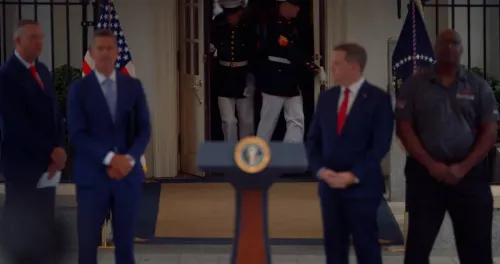
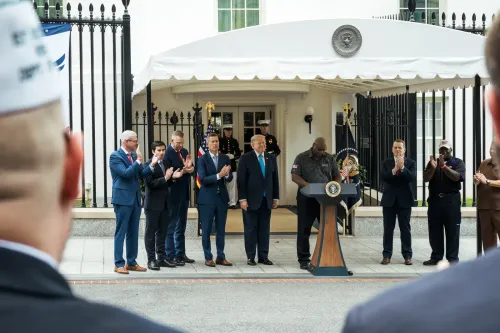
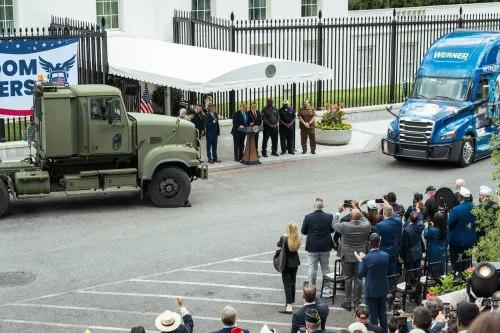
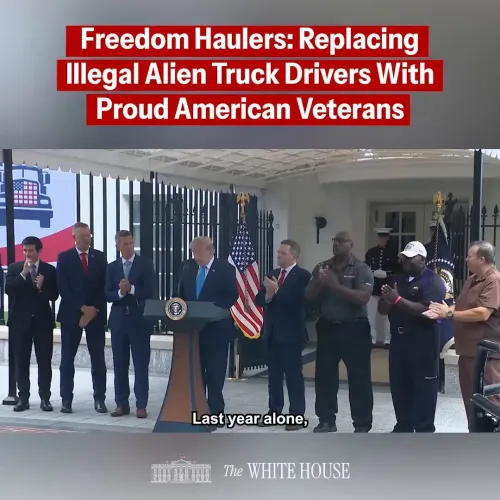
A new White House initiative is turning military service records into commercial driving credentials — and both veterans' groups and the trucking industry are on board. The White House on Sunday, August 2, 2026 publicly endorsed 'Freedom Haulers,' a program designed to ease the path for veterans leaving the armed forces into careers behind the wheel of commercial trucks.
Posting on X, the official White House account quoted a supporter's message: 'We're appreciative to the Trump Admin for this initiative that will make it easier for veterans to transition out of military service and into the trucking industry.' The post added that veterans and trucking groups are backing the program, framing it as delivering 'jobs for heroes and safer roads for everyone.'
What Freedom Haulers Is Trying to Solve
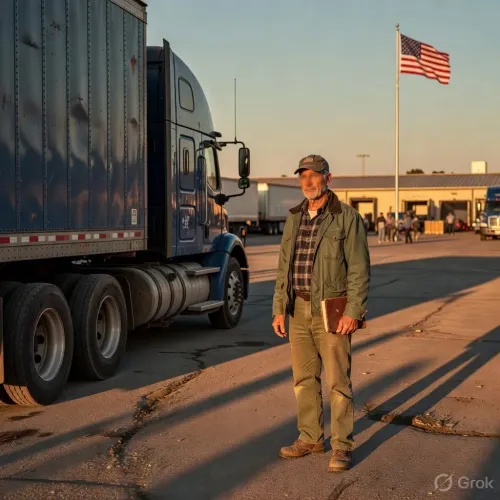
The gap between military service and civilian employment has been a persistent challenge for returning veterans. Service members often operate heavy vehicles, logistics systems, and complex machinery during their years in uniform — skills that map directly onto commercial trucking — yet civilian licensing requirements can create costly, time-consuming barriers. Programs like Freedom Haulers aim to bridge that gap through licensing accommodations, streamlined training pathways, and formal partnerships between the Department of Defense and the trucking sector. The United States has a long legislative history of addressing this problem. The Servicemen's Readjustment Act of 1944 — the original GI Bill — established the foundational principle that military service deserves structured civilian transition support. Successive administrations have returned to that principle repeatedly, particularly for regulated industries such as commercial transportation where federal licensing standards intersect with state-level requirements.Industry and Veterans' Groups Add Their Weight
The White House post specifically highlights that both veterans' organisations and trucking industry associations are backing Freedom Haulers — a coalition that gives the initiative political durability beyond any single administration. Industry support matters here: the US trucking sector has faced persistent driver shortages, and veterans represent a disciplined, safety-trained talent pool that operators are eager to recruit. The 'safer roads' framing in the White House post is deliberate. It ties veteran employment directly to a public-benefit argument — that drivers with military-grade vehicle training are a net safety gain for civilian highways — making the program easier to defend in Congress and harder to oppose politically.The Broader Push on Commercial Driver Licensing
What to watch next is whether Freedom Haulers triggers legislative or regulatory follow-through — specifically, reforms to commercial driver's license rules that would formally credit military driving experience toward civilian certification. Without that structural change, individual transition programs remain dependent on administrative goodwill rather than durable law. Congressional action on CDL reform would be the real test of whether this initiative has lasting teeth. For India, which is deepening its own veteran welfare architecture through schemes like the Agniveer transition framework, the American model of industry-government partnership for veteran employment offers a template worth watching.Point of View
Particularly in federally regulated sectors. The Trump Administration's move to brand and amplify this initiative reflects a broader political calculus: veteran employment is one of the few domestic policy areas that commands near-universal approval across party lines. The dual endorsement from veterans' groups and the trucking industry signals that this is not merely symbolic — the sector has a genuine labour need that aligns with the political objective. The real policy test will come if and when CDL reform legislation moves through Congress, turning an administrative initiative into durable statutory protection for transitioning service members.
NationPress
17 Sept 2026
Frequently Asked Questions
What is the Freedom Haulers initiative?
Freedom Haulers is a Trump Administration program aimed at making it easier for US military veterans to transition out of military service and into careers in the commercial trucking industry, typically through licensing accommodations and training partnerships.
Why are veterans well-suited for commercial trucking?
Military service members frequently operate heavy vehicles, logistics equipment, and transportation systems during their service — skills that translate directly to commercial truck driving — but civilian licensing requirements can create barriers that Freedom Haulers aims to remove.
Which groups support Freedom Haulers?
According to the White House, both veterans' organisations and trucking industry associations have backed the Freedom Haulers initiative.
How does Freedom Haulers affect road safety?
The White House has argued that veterans, trained to military-grade vehicle operation standards, bring strong safety credentials to civilian highways, framing the program as a public safety benefit alongside an employment benefit.
What would make Freedom Haulers a lasting policy rather than a temporary program?
Congressional action to reform commercial driver's license rules — formally crediting military driving experience toward civilian CDL certification — would embed the initiative in statute rather than leaving it dependent on administrative decisions.