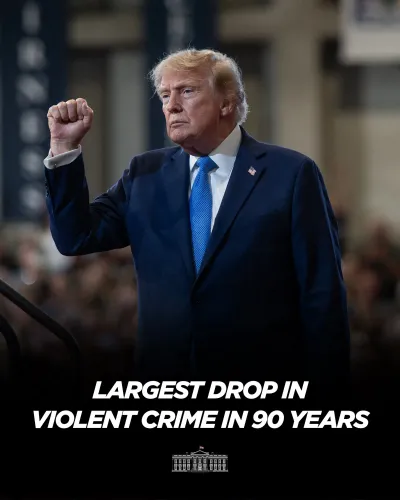
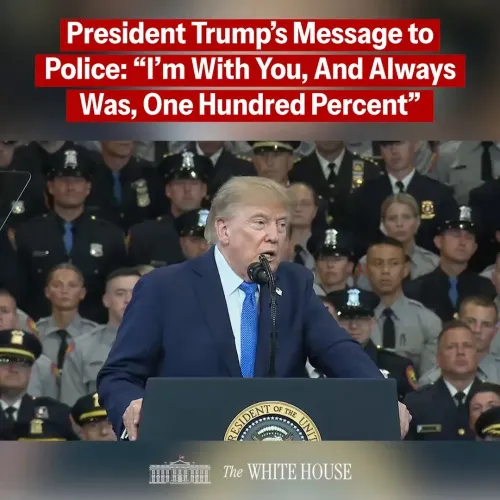
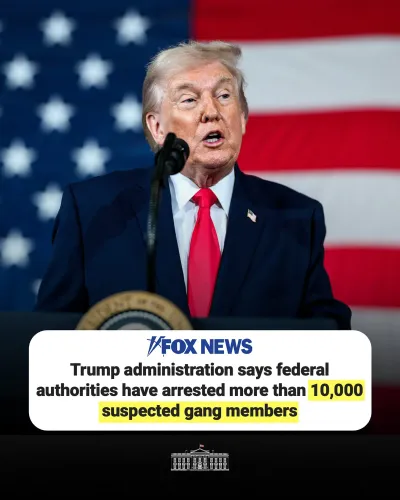
White House Credits Trump Policies for Drop in US Crime
Synopsis
The White House posted on October 20, 2026, crediting President Trump's policies with ending Democrat-era 'cashless bail, soft-on-crime, and open-border' practices, directing users to TrumpTV.Gov to review the administration's public-safety record.
Key Takeaways
The White House officially credited President Trump with reducing crime across America in a post dated October 20, 2026 .
The post attributes rising crime to Democratic 'cashless bail, soft-on-crime, and open-border policies.' Followers are directed to TrumpTV.Gov , a government-domain streaming platform, to view a curated record of the administration's public-safety policies.
Trump's first-term record includes border enforcement executive orders from 2017 and the bipartisan First Step Act of 2018 .
The use of a .gov domain for what reads as a partisan highlight reel is likely to attract scrutiny over the boundary between official communication and political messaging.
The White House is making a sweeping claim about public safety in America — and putting it on a streaming platform. In a post on Tuesday, October 20, 2026, the official White House account on X attributed a national reduction in crime directly to President Donald Trump's policies, pointing to what it described as a reversal of Democrat-era 'cashless bail, soft-on-crime, and open-border policies.'
The post directs followers to TrumpTV.Gov, a government-hosted streaming destination, to view what it describes as 'the policies and moments that made America safe again.' The framing is unambiguous: the White House is presenting crime reduction as a signature Trump achievement, drawing a direct line from Democratic governance to elevated crime, and from Trump's election to its reversal.
The Policy Debate Behind the Claim
The argument is not new — it is the latest chapter in a long-running American political fault line. Enforcement-focused Republicans have for years contrasted their approach to crime and immigration with Democratic-led reforms, particularly changes to cash bail systems adopted in several US states and cities. Cash bail reform, which allows accused persons to be released before trial without posting money, was framed by proponents as a racial- and economic-equity measure, but drew fierce criticism from law enforcement groups who argued it returned dangerous individuals to communities before trial. On immigration, the Trump administration's record includes a series of executive orders on border enforcement issued in 2017, and the broader policy debate over the US-Mexico border has remained one of the most polarising issues in American politics across successive administrations. The First Step Act, signed into law in 2018 during Trump's first term, also forms part of his criminal-justice legacy — a bipartisan sentencing reform measure that reduced mandatory minimums for certain federal offences and expanded early-release programmes.A Government Streaming Platform Enters the Picture
Perhaps the most striking element of this communication is its destination: TrumpTV.Gov, a .gov-domain streaming service. The use of an official government domain to host what is framed as a political highlight reel representing one party's record is notable, and will almost certainly draw scrutiny about the line between government communication and partisan advocacy. The White House has not, in this post, acknowledged or addressed that distinction. Federal crime statistics — the objective measure against which such claims will ultimately be tested — remain the authoritative benchmark. The release of comprehensive federal crime data will determine how widely the White House's characterisation is accepted beyond its existing base.Point of View
Trump ended it — compresses a highly contested empirical debate into a clean electoral message. The deployment of a .gov streaming domain raises genuine institutional questions about where government communication ends and political broadcasting begins. For observers of American democratic norms, this post is less about crime statistics than about how executive power chooses to tell its own story.
NationPress
20 Oct 2026
Frequently Asked Questions
What did the White House post about crime on October 20 2026?
The White House posted on X on October 20, 2026, claiming that Democratic 'cashless bail, soft-on-crime, and open-border policies' drove crime across America and that President Trump's policies ended it, directing users to TrumpTV.Gov.
What is TrumpTV.Gov?
TrumpTV.Gov is a government-domain streaming platform referenced in the White House post where the administration says viewers can watch 'the policies and moments that made America safe again.'
What is cashless bail and why is it controversial in the US?
Cashless bail, also called bail reform, allows accused individuals to be released before trial without paying money. Supporters say it reduces inequality; critics, including many law enforcement groups, argue it can allow dangerous individuals back into communities before their cases are heard.
What were Trump's key criminal justice and border policies?
During his first term, Trump issued executive orders on border enforcement in 2017 and signed the bipartisan First Step Act in 2018, which reformed federal sentencing and expanded early-release provisions for certain offenders.
How will Trump's crime reduction claims be verified?
The authoritative measure will be comprehensive federal crime data released by agencies such as the FBI. Independent analysis of those statistics will determine whether the White House's characterisation holds up to scrutiny.