White House Releases FBI UAP File on 'Orbs Over the Pond'
Synopsis
The White House on June 12, 2026 released FBI-UAP-PR003, titled 'Orbs Over the Pond' (2024), marking the latest step in a multi-year US government effort to declassify and publicly share Unidentified Aerial Phenomena records with national-security and aviation implications.
Key Takeaways
The White House released declassified document FBI-UAP-PR003 , titled 'Orbs Over the Pond' , on June 12, 2026 .
The document is dated 2024 and originates from the Federal Bureau of Investigation 's UAP records series.
The release continues a transparency arc that began in 2017 and accelerated with the establishment of AARO in 2022 .
The document title implies a transatlantic or international scope, consistent with Five Eyes intelligence-sharing on aerial anomalies.
Congress, the intelligence community, and the aviation sector are the primary institutional stakeholders watching for follow-on disclosures.
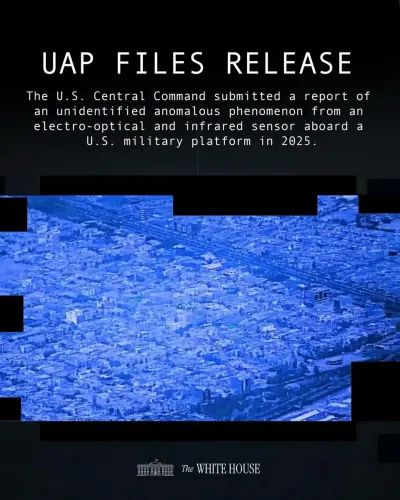
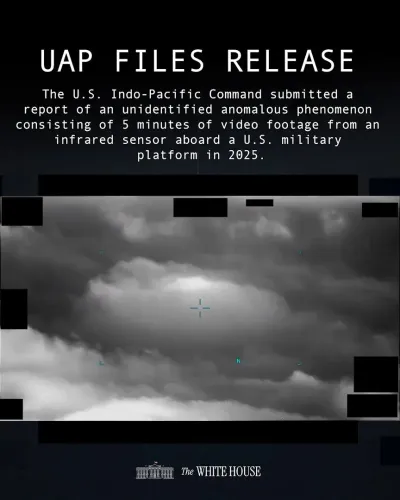
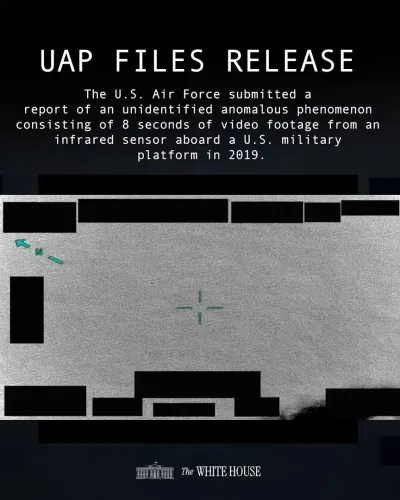
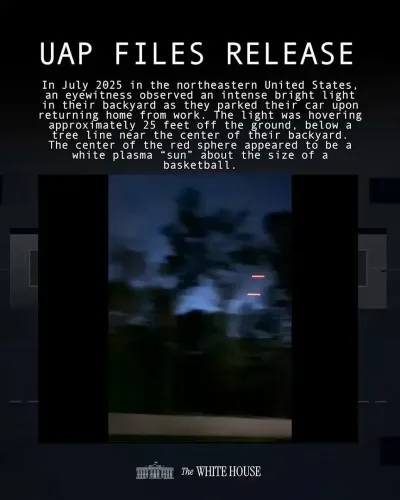
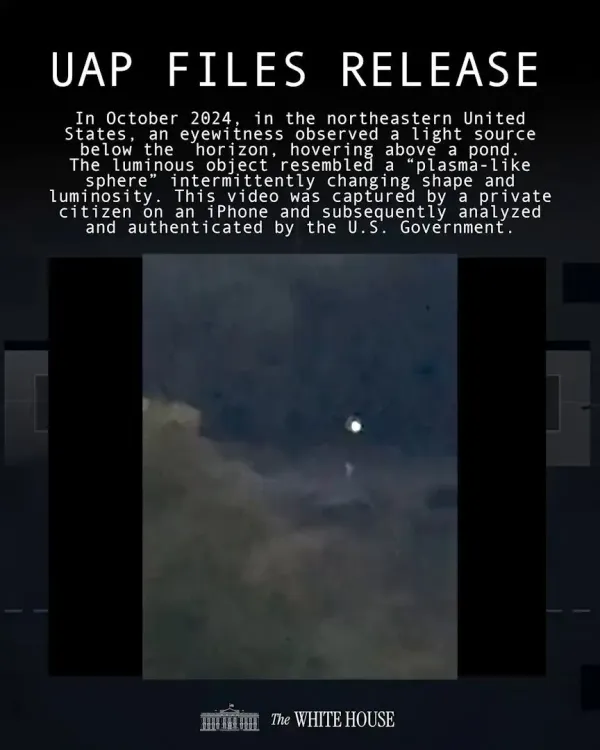
The White House on Friday, June 12, 2026, released what it labelled a 'new drop' — a declassified document identified as FBI-UAP-PR003, titled 'Orbs Over the Pond', dated 2024. The release, shared via the official White House account on X, continues a multi-year pattern of incremental executive-branch transparency on Unidentified Aerial Phenomena (UAP).
Context
The document reference FBI-UAP-PR003 places the release within the Federal Bureau of Investigation's UAP records series. The FBI has historically maintained files on UAP reports submitted by the public and has released select records under Freedom of Information Act requests. The phrase 'Over the Pond' in the document title is consistent with a transatlantic or international scope, reflecting long-standing intelligence-sharing arrangements with allied partners on aerial anomaly data.
The White House framed the release informally — 'New drop' — signalling a deliberate effort to engage broader public interest rather than limiting distribution to specialist national-security audiences.
Policy Backdrop
UAP transparency has evolved significantly since 2017, when the first wave of declassified military footage prompted sustained public and congressional attention. In 2021, the Office of the Director of National Intelligence issued a preliminary assessment cataloguing UAP incidents reported by US military personnel. The following year, 2022, the Department of Defense formally established the All-domain Anomaly Resolution Office (AARO) to centralise UAP analysis across air, sea, and space domains.
Open congressional hearings in 2023 featured testimony from former intelligence officials and raised questions about data collection gaps, national-security implications, and the need for mandatory reporting frameworks. Successive administrations have continued this incremental declassification trajectory through agency reports and legislative mandates.
Stakeholders and Impact
The primary institutional stakeholders include the intelligence community, the aviation sector, and Congress, which has pushed for expanded UAP reporting requirements and dedicated funding for AARO. For India and other US partners, the international dimension implied by the document title — referencing activity 'over the pond,' broadly understood as the Atlantic Ocean or transatlantic corridor — may carry implications for allied aerial-surveillance coordination under Five Eyes frameworks.
Public interest in UAP disclosures has grown substantially, and releases of this kind tend to generate significant civic engagement as well as scrutiny from independent researchers and aviation-safety advocates.
What's Next
Attention will now turn to the full contents of FBI-UAP-PR003 and whether additional documents in the same series will follow. AARO's next annual historical review is anticipated to provide a broader assessment of UAP incidents, and any follow-on legislation expanding reporting requirements or AARO's funding mandate will be closely watched. The White House's decision to frame the release as a 'new drop' suggests further disclosures may be planned as part of a structured public-engagement strategy on UAP matters.
Point of View
Not merely compliance with FOIA or congressional mandates. This release fits a broader pattern in which successive administrations have used incremental transparency on UAP matters to manage public expectations while retaining control over the pace and framing of disclosures. The international dimension embedded in the document title — 'Over the Pond' — quietly signals that UAP data-sharing with allied partners is part of the picture, a detail that carries weight for India and other US security partners. For analysts tracking the UAP policy arc, the informal tone of the release suggests the executive branch is now treating UAP transparency as a communications asset, not merely a national-security obligation.
NationPress
13 Sept 2026
Frequently Asked Questions
What is FBI-UAP-PR003 'Orbs Over the Pond'?
FBI-UAP-PR003, titled 'Orbs Over the Pond,' is a declassified document from the Federal Bureau of Investigation's UAP records series, dated 2024, released publicly by the White House on June 12, 2026.
Why is the White House releasing UAP documents?
The White House release is part of a multi-year US government transparency effort on Unidentified Aerial Phenomena, accelerated by congressional mandates and the 2022 establishment of the All-domain Anomaly Resolution Office (AARO).
What does 'Orbs Over the Pond' mean in the FBI UAP document?
The phrase likely refers to UAP incidents observed over the Atlantic Ocean or in the transatlantic corridor, consistent with US intelligence-sharing arrangements with allied nations on aerial anomaly data.
What is AARO and what does it do?
AARO, the All-domain Anomaly Resolution Office, is a Department of Defense body established in 2022 to centralise the investigation and reporting of UAP incidents across air, sea, and space domains.
What happens next after the White House UAP document release?
Analysts and Congress will scrutinise the full contents of FBI-UAP-PR003, and attention will shift to AARO's next annual historical review and any new legislation expanding UAP reporting requirements or funding.