White House Honors US Veterans on November 11
Synopsis
On Veterans Day, November 11, 2026, the White House honored US military veterans with a message of gratitude, continuing a presidential tradition rooted in the 1918 World War I armistice. No new policy was announced; the post offered a direct, unadorned 'thank you' to those who served.
Key Takeaways
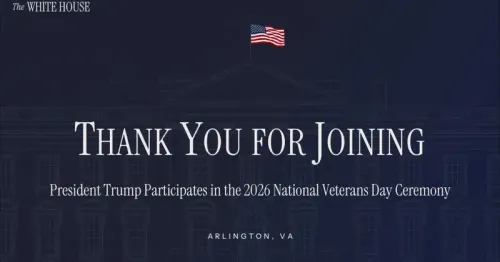
The White House posted a Veterans Day tribute on November 11, 2026 , saying 'Thank you for your service' to US military veterans.
Veterans Day was originally established as Armistice Day in 1938 , commemorating the end of World War I on November 11, 1918.
Congress renamed the holiday Veterans Day in 1954 to honor all military veterans, not only those of a single war.
Annual presidential Veterans Day messages have been issued since the holiday's formal recognition — a bipartisan tradition spanning decades.
No new policy announcements or legislative proposals were attached to the 2026 message.
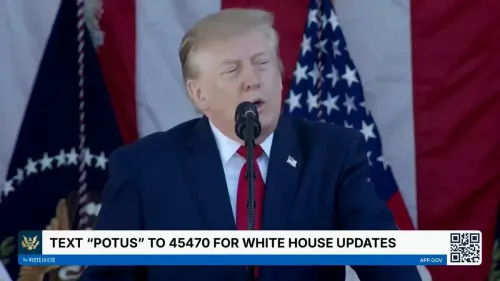
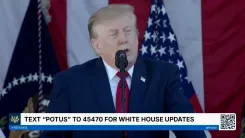
On Veterans Day, November 11, 2026, the White House delivered a message of gratitude to the men and women who have served in the United States Armed Forces — speaking directly to those whose sacrifices are, as the post put it, too often met with silence.
The message was characteristically brief and unadorned: 'Thank you for your service.' But behind those five words sits more than a century of American history — and a federal holiday that began not as a celebration, but as a ceasefire.
From Armistice to Annual Tribute
November 11 marks the moment in 1918 when the guns of World War I fell silent — the armistice signed at the 11th hour of the 11th day of the 11th month. The United States formally recognized the date as Armistice Day in 1938, and by 1954, with two more wars reshaping American life, Congress renamed it Veterans Day to honor all who had served, not just those of a single conflict.
Every administration since has carried the tradition of a presidential statement on this date — a symbolic continuity that persists regardless of which party holds the White House or what policy debates divide Washington, DC.
A Moment Above the Political Noise
The 2026 message follows the same spare, non-partisan register that has defined Veterans Day communications across decades. There are no new policy announcements attached, no legislative agenda embedded in the salute — just the acknowledgment that service members answered a call most never face.
It is a deliberately human moment in a news cycle rarely short of friction. The Department of Veterans Affairs remains the federal body charged with turning that gratitude into tangible support — through healthcare, benefits administration, and transition programs for the roughly 18 million veterans living across the United States.
Words on a holiday are easy. The harder work — closing gaps in veteran healthcare access, reducing homelessness among former service members, speeding benefits processing — happens in committee rooms and agency offices long after the flags are folded. Today, at least, the nation paused to say what ought to be said more often.
Point of View
Regardless of political alignment. Its brevity is not a gap; it reflects the deliberate separation of symbolic tribute from policy debate. What the message quietly underscores is the persistent distance between public gratitude and institutional follow-through on veteran welfare — a gap that advocacy groups and congressional oversight committees have flagged across administrations. For Indian audiences tracking US affairs, the post signals no new diplomatic or policy direction, but it does illustrate how American executive communications use federal holidays as soft-power moments of national cohesion.
NationPress
12 Nov 2026
Frequently Asked Questions
What is Veterans Day and why is it on November 11?
Veterans Day is a US federal holiday observed on November 11 each year to honor all American military veterans. The date marks the armistice that ended World War I on the 11th hour of the 11th day of the 11th month in 1918 . It was originally called Armistice Day, formally recognized in 1938 , and renamed Veterans Day in 1954 .
What did the White House post on Veterans Day 2026?
The White House posted a brief message on November 11, 2026 , saying: 'Today, to every veteran, we say the words too often left unsaid: Thank you for your service.' No specific policy announcements accompanied the post.
Is Veterans Day the same as Memorial Day in the US?
No. Veterans Day (November 11) honors all living and deceased military veterans who have served in the US Armed Forces. Memorial Day , observed on the last Monday of May, specifically commemorates those who died while serving. The two holidays are distinct in purpose and calendar placement.
How many veterans are there in the United States?
The United States has approximately 18 million veterans across the country. They are supported through the Department of Veterans Affairs , which administers healthcare, benefits, and transition programs.
Does the White House issue a Veterans Day message every year?
Yes. Annual Veterans Day statements and proclamations have been a consistent White House tradition since the holiday's formal recognition, issued by presidents across both major political parties as a non-partisan expression of national gratitude.