White House Marks 82nd D-Day Anniversary, Honours Normandy Heroes
Synopsis
The White House on June 6, 2026, marked the 82nd anniversary of D-Day, honouring American troops who landed on Normandy's beaches in 1944. The post cited their 'extraordinary courage and sacrifice' in defeating tyranny, echoing a long-standing tradition of presidential commemoration that underscores U.S. commitment to transatlantic alliance and democratic values.
Key Takeaways
The White House issued a formal tribute on June 6, 2026 , marking the 82nd anniversary of D-Day .
American forces stormed Omaha Beach and Utah Beach in Normandy, France , on June 6, 1944 , as part of Operation Overlord .
The operation was commanded by General Dwight D.
Eisenhower , Supreme Allied Commander of the Allied Expeditionary Force.
U.S. presidents have issued annual D-Day commemorations every June 6 since the end of World War II .
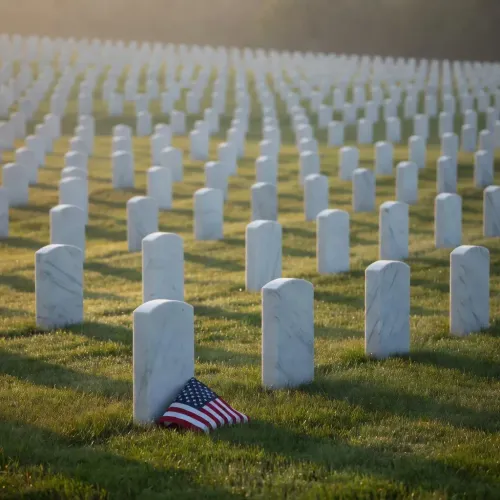
The Normandy American Cemetery holds the graves of more than 9,000 American service members killed in the campaign.
Annual D-Day tributes are closely watched as signals of U.S. commitment to NATO and transatlantic security alliances.
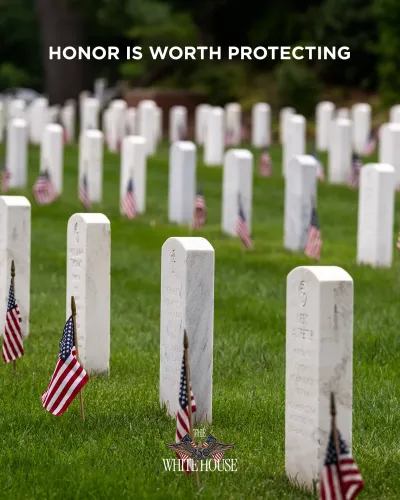
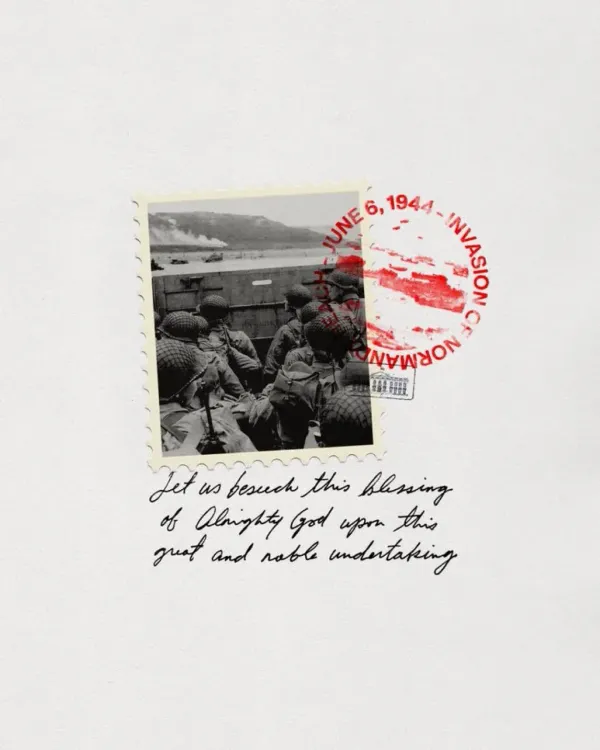
The White House on Saturday, June 6, 2026, marked the 82nd anniversary of D-Day, paying tribute to the American troops who stormed the beaches of Normandy, France, on June 6, 1944, in one of the most consequential military operations in modern history.
Context
D-Day, formally part of Operation Overlord, saw Allied forces — led by the United States, the United Kingdom, and Canada — launch a massive amphibious assault on the Nazi-occupied coastline of northern France. The White House post stated: 'Through extraordinary courage and sacrifice, American troops stormed the beaches of Normandy, defeated tyranny, and helped secure freedom for generations to come.'
American forces were assigned to two primary landing sectors: Omaha Beach and Utah Beach. Omaha Beach in particular saw some of the heaviest casualties of the entire operation, as soldiers advanced under intense German fire across exposed terrain.
Policy Backdrop
The annual presidential commemoration of D-Day is a long-standing tradition of the U.S. executive branch, maintained by successive administrations regardless of political affiliation. The operation was planned and directed by General Dwight D. Eisenhower, who served as Supreme Allied Commander of the Allied Expeditionary Force, and who would later become the 34th President of the United States.
In 1984, President Ronald Reagan delivered a landmark address at the 40th anniversary ceremonies in Normandy, cementing the commemorations as a symbol of enduring transatlantic alliances. Since the end of World War II, U.S. presidents have issued formal statements and proclamations every June 6, underscoring the event's place in American national memory.
Stakeholders and Impact
The tribute carries significance for World War II veterans and their families, as well as for transatlantic allies including France, the United Kingdom, and Canada — nations that fought alongside American forces during the Normandy landings. International ceremonies are typically held at the Normandy American Cemetery near Colleville-sur-Mer, France, which holds the graves of more than 9,000 American service members.
The message also resonates with NATO member states, for whom the Normandy landings represent the foundational act of collective democratic defence that underpins the postwar security order. Annual commemorations serve as a reaffirmation of that alliance architecture.
What's Next
Observers will watch for any planned visits by senior U.S. officials to Normandy in connection with this year's anniversary, as well as whether the administration links the D-Day legacy explicitly to ongoing NATO commitments or European security discussions. Presidential D-Day statements have increasingly been read as signals of U.S. posture toward its transatlantic partnerships, making the tone and content of such communications a matter of diplomatic interest beyond their ceremonial function.
Point of View
Even a standard commemorative post functions as a reaffirmation of alliance solidarity. The invocation of soldiers who 'defeated tyranny' and 'secured freedom' draws a direct, if implicit, line from 1944 to present-day collective defence obligations. How the current administration chooses to amplify or contextualise this message in the days ahead will be watched closely in Paris, London, and Ottawa.
NationPress
26 Oct 2026
Frequently Asked Questions
What is D-Day and why is it commemorated every year?
D-Day refers to the Allied amphibious invasion of Normandy, France, on June 6, 1944, which marked a decisive turning point in World War II against Nazi Germany. It is commemorated annually because it represents one of the largest and most consequential military operations in history, involving forces from the United States, United Kingdom, Canada, and other Allied nations.
What did the White House say about D-Day in 2026?
The White House posted a tribute on June 6, 2026, stating that American troops 'stormed the beaches of Normandy, defeated tyranny, and helped secure freedom for generations to come,' and affirmed that 'America remains forever grateful.'
Which beaches did American troops land on during D-Day?
American forces were assigned to two primary landing sectors during the Normandy invasion: Omaha Beach and Utah Beach. Omaha Beach saw the heaviest American casualties of the operation.
Who commanded the D-Day operation?
General Dwight D. Eisenhower served as Supreme Allied Commander of the Allied Expeditionary Force and planned and directed the D-Day landings. He later became the 34th President of the United States.
Why do U.S. presidents issue D-Day statements every year?
Annual presidential D-Day statements are a long-standing tradition maintained by successive U.S. administrations since the end of World War II. They serve to honour fallen soldiers, reinforce national memory, and signal continued U.S. commitment to transatlantic alliances and democratic values.