White House Invokes WWII Fallen in Sharp Rebuke
Synopsis
The White House issued a stark all-caps rebuke on 14 August 2026 — the eve of V-J Day's 81st anniversary — declaring an unspecified act the greatest possible insult to the more than 400,000 Americans who died in World War II.
Key Takeaways
The White House posted an all-caps statement on 14 August 2026 calling an unnamed act 'the greatest insult' to Americans who died in World War II .
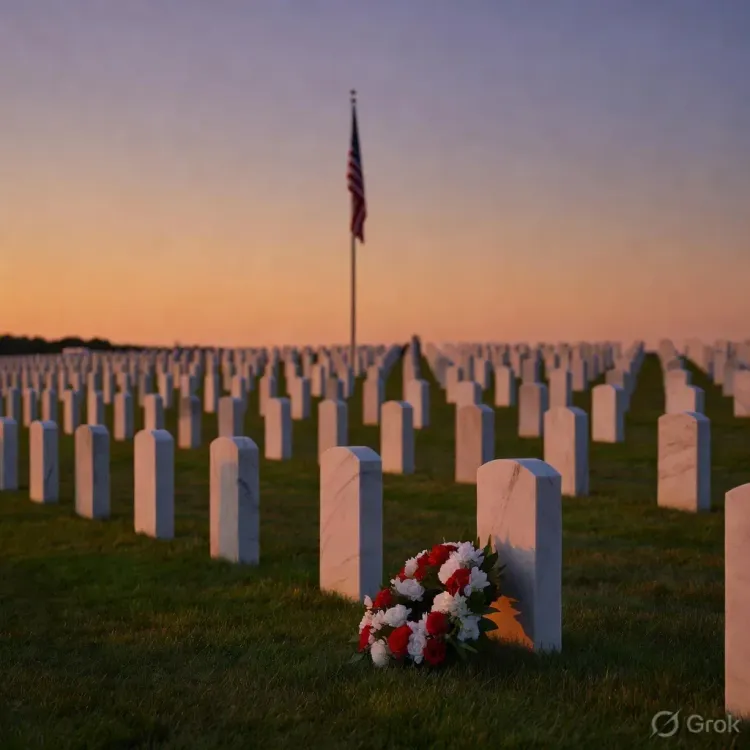
More than 400,000 US service members died in World War II between 1941 and 1945 .
The post arrived on the eve of the 81st anniversary of V-J Day (15 August 1945) , a key commemorative date in American history.
The specific trigger or target of the rebuke was not identified in the post itself.
The all-caps register signals a sharp political rebuke, not a ceremonial tribute.
A single sentence — all capitals, no qualifier — landed from the official White House account on Friday, 14 August 2026, and it carried the full moral weight of over 400,000 American lives lost in the deadliest conflict in human history. The White House declared: 'THERE CAN BE NO GREATER INSULT TO THOSE AMERICAN HEROES WHO DIED IN WORLD WAR II.'
The weight behind the words
The United States entered World War II after the attack on Pearl Harbor on 7 December 1941, and fought across two theatres until Victory in Europe (VE-Day) on 8 May 1945 and Victory over Japan (V-J Day) on 15 August 1945 — the 81st anniversary of which falls the day after this post. More than 400,000 American service members died in that war. Their sacrifice sits at the very centre of American national identity, invoked across generations as the benchmark of ultimate civic duty.
The post arrives in the window of V-J Day commemorations, a period when presidential and congressional accounts traditionally honour the fallen. But the tone here is not ceremonial — it is accusatory. The all-caps register signals a rebuke directed at something or someone, even if the specific trigger remains unspecified in the post itself.
Why invoking WWII dead carries maximum political voltage
In American political culture, the men and women who died in World War II occupy near-sacred rhetorical territory. To frame any act as the 'greatest insult' to them is to reach for the highest moral condemnation available in the national lexicon. It is language designed to end debate, not open it — a full stop, not a comma.
US political accounts have long used WWII memory in both solemn and partisan contexts, particularly around major anniversaries. The choice to deploy it in this register — stripped of ceremony, stripped of context, maximally blunt — signals that the White House is responding to something it considers a direct affront to the nation's foundational sacrifice.
What remains unknown — and why it matters
The immediate trigger for the post has not been specified. Without knowing what act, statement, or decision the White House is characterising as the 'greatest insult,' the rebuke hangs in the air — powerful in feeling, open in target. That ambiguity is itself a political fact: the statement was made, the moral charge was levelled, and the families of WWII veterans and the broader American public are left to read the context around it.
As V-J Day's 81st anniversary arrives on 15 August 2026, any follow-up statement from the White House or congressional leaders will clarify what, exactly, was deemed unforgivable enough to invoke the war dead.
Point of View
All-caps language — without naming a target — is a calculated political move: it claims the highest moral ground available in American civic memory while leaving the specific accusation deliberately open. This pattern of using WWII sacrifice as a rhetorical ceiling has appeared across administrations, but the absence of context here transforms a tribute into a weapon. The timing on the eve of V-J Day's 81st anniversary amplifies the charge, ensuring the statement lands in a moment of national remembrance when the moral stakes feel highest.
NationPress
29 Sept 2026
Frequently Asked Questions
What did the White House post about World War II on 14 August 2026?
The White House posted an all-caps statement declaring 'THERE CAN BE NO GREATER INSULT TO THOSE AMERICAN HEROES WHO DIED IN WORLD WAR II,' signalling a sharp rebuke against an unspecified act or statement.
How many Americans died in World War II?
More than 400,000 American service members died during World War II, which the United States fought from 1941 to 1945 across the European and Pacific theatres.
Why did the White House post this on 14 August 2026?
The post arrived on the eve of the 81st anniversary of V-J Day (15 August 1945) , a major commemorative date marking Japan's surrender and the end of World War II. The specific trigger for the rebuke was not stated in the post.
What is V-J Day and why does it matter in 2026?
V-J Day (Victory over Japan Day) falls on 15 August and marks Japan's surrender in 1945 , ending World War II. In 2026 , it marks the 81st anniversary of that moment, making it a significant commemorative occasion in the United States.
Who is the White House X account?
The White House account on X is the official communications channel of the Executive Office of the President of the United States , used to issue statements, policy positions, and public communications on behalf of the administration.