White House Posts U.S. Flag Emoji in Minimal Official Message

Synopsis
The White House, the official handle of the Executive Office of the President of the United States, posted a lone U.S. flag emoji on X on 4 June 2026, with one image and no caption. The minimal, symbol-only message is consistent with routine patriotic markers used across U.S. government accounts.
Key Takeaways
The White House posted a single U.S. flag emoji on X on 4 June 2026 (IST).
The post was a self-reply to the @WhiteHouse handle, with one image attached and no text.
Such national-symbol posts are routine on official U.S. government accounts.
No specific policy, bilateral or diplomatic signal is discernible from the post alone.
Indian observers track the handle for India-U.S. strategic and trade cues.
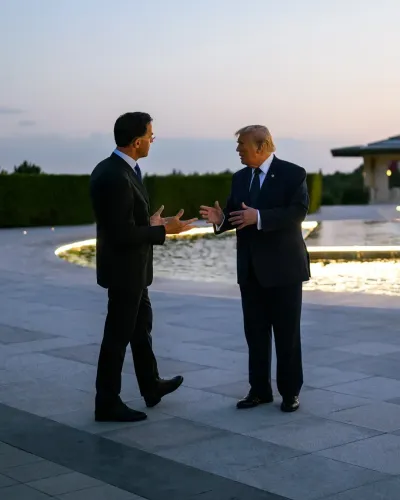
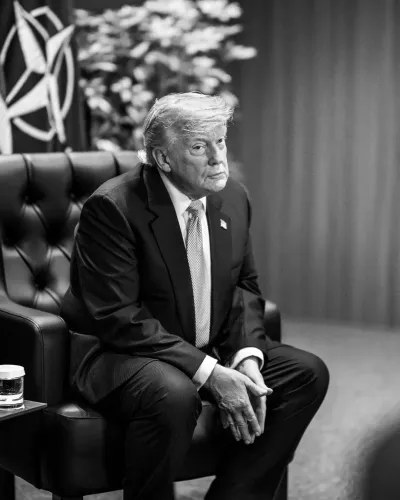
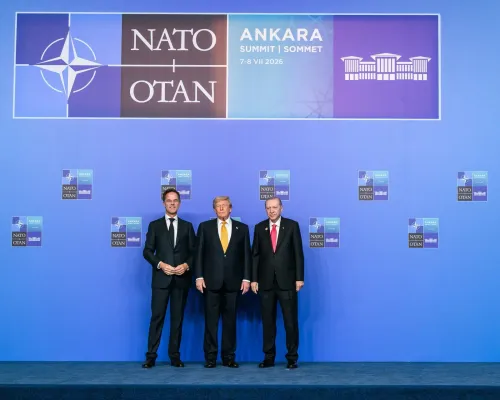
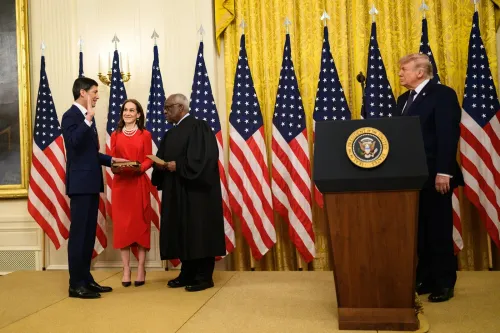
The White House, the official communications account of the Executive Office of the President of the United States, posted a single United States flag emoji on its X handle in the early hours of 4 June 2026 (India Standard Time). The post, a reply addressed to the same @WhiteHouse handle, carried no accompanying text and was paired with a single image.
The message, in its entirety, was the national flag symbol — '🇺🇸' — with no policy statement, link or caption attached. Such minimal national-symbol posts are a recurring feature of official U.S. government social media activity and typically accompany broader messaging threads or imagery.
Context
The @WhiteHouse handle is one of the most-followed government communication channels globally and is used by the Executive Office to amplify presidential remarks, policy roll-outs, ceremonial occasions and official imagery. Posts confined to a single national emoji are usually patriotic flourishes, often timed to commemorations, official visits, or as a sign-off to longer threads or events.
In this instance, the post was structured as a self-reply, suggesting it was appended to a preceding message or media item from the same account. Without further text, the substantive purpose of the flag emoji is not independently discernible from the post itself.
Policy backdrop
Official U.S. government accounts operate under federal records and communications guidelines, and posts from @WhiteHouse are treated as official statements of the Executive Office. National symbols such as the flag are regularly deployed across administrations of both parties as neutral markers of state communication, distinguishing official handles from personal or campaign accounts of office-holders.
The use of an emoji-only post is also consistent with a broader trend across major government communications offices worldwide — including in New Delhi, London and Canberra — where short, symbol-led posts are used to punctuate longer narrative threads or to react to ceremonial moments without issuing formal text statements.
Stakeholders and impact
For audiences in India, posts from the @WhiteHouse handle are closely watched given the depth of the India-U.S. strategic partnership spanning trade, defence, technology and the Indo-Pacific architecture. Diplomatic observers, market analysts and diaspora communities routinely parse the account for cues on summits, visits and bilateral announcements.
A standalone flag emoji, however, carries no specific bilateral or policy signal on its own. It is most usefully read in conjunction with the image or preceding post it accompanies, neither of which adds verifiable substantive content in this case.
What's next
Attention will now turn to any follow-up posts, official readouts or media advisories from the White House that may contextualise the message. Should the flag emoji prove to be a sign-off to a larger announcement — such as a presidential address, a foreign visit or a national observance — subsequent official communications are expected to clarify the context.
Until such context emerges, the post stands as a routine patriotic marker on an official government channel, illustrating how national symbols continue to anchor state communications in the social-media era.
Point of View
But they reflect a deliberate communications style in which national symbols stand in for formal text. For the White House, such posts typically punctuate larger narrative arcs rather than initiate them. Indian readers and policymakers, attuned to every signal from Washington given the density of the bilateral agenda, will likely await the surrounding context before reading meaning into it. In isolation, it is best treated as routine official messaging, not a policy event.
NationPress
20 Oct 2026
Frequently Asked Questions
What did the White House post on X on 4 June 2026?
The White House posted a single United States flag emoji, with one image attached and no accompanying text, on its official X handle.
Does the White House flag emoji post carry a policy message?
No specific policy message is discernible from the post itself. It appears to be a routine national-symbol post common to official U.S. government communications.
Is the @WhiteHouse account an official U.S. government handle?
Yes, @WhiteHouse is the official communications account of the Executive Office of the President of the United States.
Why do government accounts post only emojis sometimes?
Symbol-only posts are typically used to punctuate longer threads, mark ceremonial moments, or accompany imagery without issuing a formal text statement.
How does this post affect India-U.S. relations?
There is no direct impact on India-U.S. relations from this post, as it contains no substantive content. Bilateral signals would require accompanying text or context.