White House Pushes Digital Govt Overhaul via USA.gov
Synopsis
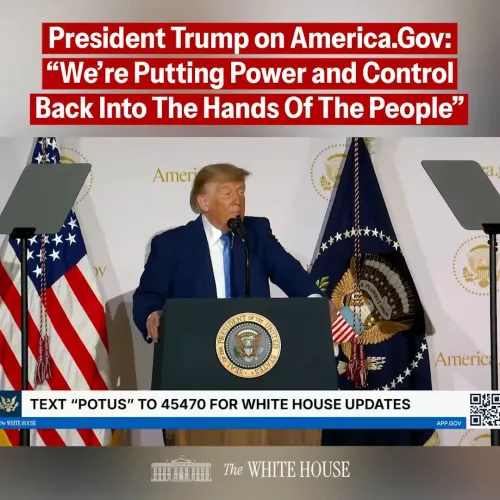
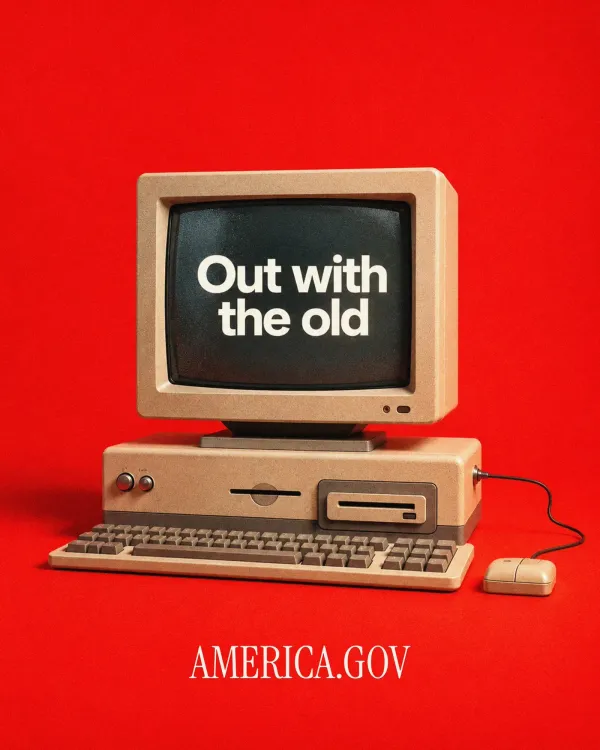
The White House on September 29, 2026, spotlighted USA.gov as the unified gateway for all U.S. federal services, reinforcing a years-long push to modernize government digital infrastructure under the 21st Century Integrated Digital Experience Act.
Key Takeaways
The White House promoted USA.gov on September 29, 2026 as the central hub for all federal government services.
The post framed the effort as modernizing government to work 'FOR Americans,' with deliberate emphasis on citizen-first service.
USA.gov provides centralized access to services across dozens of federal agencies, from Social Security to veterans' benefits.
The 21st Century Integrated Digital Experience Act (2018) legally mandated federal agencies to modernize websites and digitize services.
Federal digital service delivery has historically been fragmented, with agencies operating on different technology platforms and standards.
The White House push signals that closing the gap between citizen expectations and government digital delivery remains an active priority.
The United States government is making a pointed statement about how it wants to serve its citizens — and it is starting with a single web address. The White House on Tuesday, September 29, 2026, promoted USA.gov as the central hub for all federal services, framing the push as a deliberate effort to modernize how government works 'for Americans.'
The post, brief but pointed, read: 'Modernizing how government works FOR Americans. Whatever you need from government, start here.' The capitalized 'FOR' signals an intentional rhetorical emphasis — a government that serves, not one that burdens.
USA.gov and the Long Road to a One-Stop Federal Portal
USA.gov is the official web portal of the U.S. federal government, designed to give citizens centralized access to information and services spanning dozens of agencies — from Social Security and immigration to tax filing and veterans' benefits. The idea is deceptively simple: instead of navigating a maze of agency-specific websites, Americans can begin any government interaction in one place. The push did not emerge in a vacuum. The 21st Century Integrated Digital Experience Act, passed in 2018, laid the legal groundwork by requiring federal agencies to modernize their websites, digitize paper-based forms, and improve the overall online experience for users. That legislation set a compliance timeline and standards framework that agencies have been working against ever since — with uneven results across departments.Why 'Modernization' Is Still Unfinished Business
For all the legislative ambition of the 2018 Act, federal digital services have remained notoriously fragmented. Different agencies operate on different technology stacks, with varying degrees of accessibility and mobile-friendliness. The gap between what citizens expect from a digital service — think the speed and clarity of a private-sector app — and what government portals have historically delivered has been a persistent source of frustration. By publicly amplifying USA.gov, the White House is essentially signaling that closing that gap remains a live priority. Whether this post accompanies a specific new feature rollout, a redesign, or a broader executive push is not confirmed — but the timing and framing suggest an active campaign to drive traffic and awareness toward the unified portal. The stakes are not trivial. Millions of Americans interact with federal services annually, and friction in those interactions — a form that cannot be found, a benefit that takes months to process because paperwork got lost — has real consequences for real households. Streamlining that experience is not just a technology problem; it is a governance one.Point of View
Meaning compliance has been slow and uneven; this post may be an attempt to inject fresh political momentum into a bureaucratically sluggish process. For Indian observers, the parallel is instructive: India's own Digital India push and the UMANG app reflect a similar aspiration to consolidate citizen-government touchpoints, with similar implementation challenges. The real test for USA.gov will not be the post's reach, but whether agency-level compliance follows.
NationPress
29 Sept 2026
Frequently Asked Questions
What is USA.gov and what can Americans use it for?
USA.gov is the official web portal of the U.S. federal government, offering centralized access to services and information across federal agencies including Social Security, immigration, tax filing, and veterans' benefits — all from a single starting point.
What did the White House post about USA.gov in September 2026?
On September 29, 2026, the White House posted on X promoting USA.gov as the go-to starting point for any government service, describing the effort as 'modernizing how government works FOR Americans.'
What is the 21st Century Integrated Digital Experience Act?
The 21st Century Integrated Digital Experience Act, passed in 2018, requires U.S. federal agencies to modernize their websites, make services mobile-friendly, and digitize paper-based forms to improve the citizen experience online.
Why is federal digital modernization taking so long in the US?
Federal agencies operate on different legacy technology systems with varying budgets and technical capacity. The 2018 Act set standards but enforcement has been limited, resulting in uneven progress across departments.
How does USA.gov compare to India's digital government portals?
USA.gov is conceptually similar to India's UMANG app and Digital India portal — both aim to consolidate citizen-government interactions in one digital space, though both face challenges of agency-level fragmentation and uneven implementation.