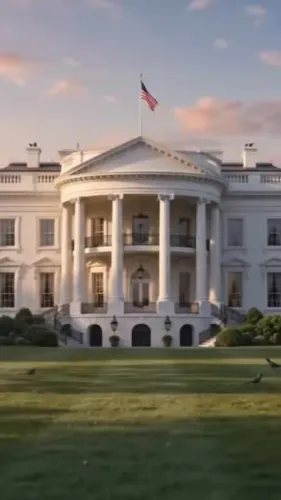
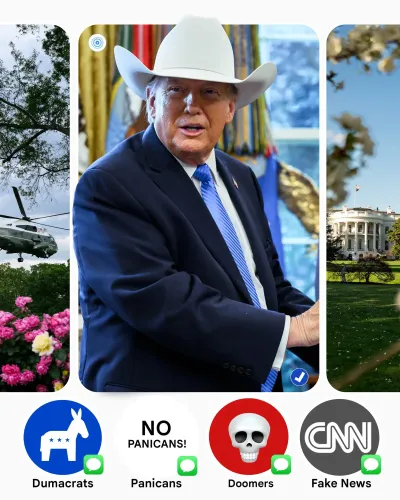
White House Dares Critics: 'Keep Doubting. Keep Watching.'
Synopsis
The White House posted a sharp, two-line challenge to its critics on June 5, 2026 — 'Keep doubting. Keep watching.' — signalling administration confidence in its governance record and continuing its pattern of direct, media-bypassing communication on official social channels.
Key Takeaways
The White House posted 'Keep doubting.
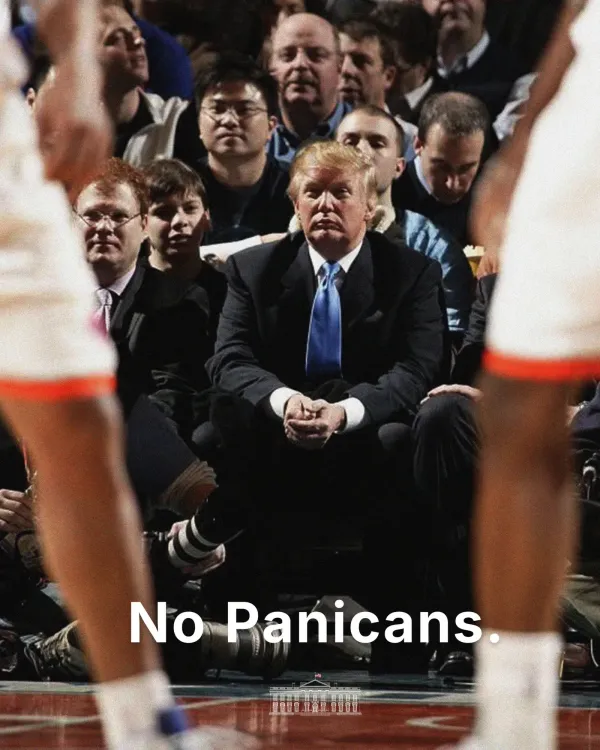
Keep watching.' on June 5, 2026 , accompanied by one image.
The post is a direct challenge to political critics of the current U.S. administration.
No specific policy, metric, or event was named in the post.
The message fits a broader pattern of U.S. administrations using official social media to bypass traditional media and shape narratives directly.
Analysts will watch for follow-up data releases or policy announcements that may reveal what the post was referencing.
The post originates from the official Executive Office of the President account, giving it institutional rather than merely partisan weight.
The White House, the official communications account of the Executive Office of the President of the United States, posted a pointed two-line challenge to its critics on Friday, June 5, 2026, accompanied by an image, signalling confidence in the current administration's record and daring sceptics to observe outcomes for themselves.
Context
The post, reading simply 'Keep doubting. Keep watching.', is brief but deliberately combative in tone. Paired with an image — the contents of which have not been independently verified — the message is a direct address to political critics who have questioned the administration's performance or policy outcomes. The White House did not specify which policy, metric, or development the post refers to.
Such terse, defiant messaging has become a recognisable feature of how the current administration uses its official digital channels. Rather than issuing detailed press releases, the White House has increasingly relied on short, punchy social media posts to shape public perception and engage critics head-on.
Policy Backdrop
U.S. administrations have long leveraged official social media to bypass traditional media gatekeepers and communicate directly with citizens and global audiences. This strategy, which accelerated significantly through the 2010s and 2020s, allows the executive branch to frame its own narrative around governance achievements without depending on editorial intermediaries.
The phrase 'Keep doubting. Keep watching.' fits a well-established pattern of confidence signalling — implying that forthcoming data, events, or policy results will vindicate the administration's positions. It is a rhetorical device that simultaneously dismisses critics and invites public scrutiny on the administration's own terms.
Stakeholders and Impact
The post is aimed squarely at two audiences: political critics and opposition voices who have challenged the administration's record, and the administration's own supporters, for whom the message serves as a rallying signal. For the former, it is a provocation; for the latter, a reassurance.
Indian observers and international audiences following U.S. governance will note that such posts, originating from an official White House account rather than a campaign handle, carry the institutional weight of the Executive Office. This distinction matters: it frames the administration's confidence as a matter of official record, not merely partisan rhetoric.
What's Next
The post's implicit promise — that doubters will be proven wrong — sets up an expectation of forthcoming evidence. Analysts will watch for follow-up data releases, congressional actions, or policy announcements from the White House in the coming days and weeks that may clarify what specific achievement or outcome the post was referencing.
If a significant policy result or economic metric is released shortly after this post, it would confirm the administration's use of social media as a pre-emptive narrative tool — building anticipation before delivering what it considers proof of its governance record.
Point of View
The post underscores how the Executive Office of the most powerful democracy increasingly governs its image through social media provocation rather than policy detail. The real test will come when the referenced outcome — whatever it is — is made public, at which point the post either becomes a prescient boast or an awkward hostage to fortune.
NationPress
24 Oct 2026
Frequently Asked Questions
What did the White House post on June 5 2026?
The White House posted 'Keep doubting. Keep watching.' on June 5, 2026, along with one image, as a direct challenge to critics of the current U.S. administration.
What policy is the White House referring to in this post?
The White House did not specify any particular policy or metric in the post. The referenced content in the attached image has not been independently verified.
Why does the White House use social media for such messages?
U.S. administrations have increasingly used official social media channels to communicate directly with the public, bypassing traditional media to shape narratives around executive performance and policy outcomes.
Is this post from an official US government account?
Yes, the post is from the White House's official X account, which is the verified communications channel of the Executive Office of the President of the United States.
What should we watch for after this White House post?
Analysts recommend watching for follow-up data releases, economic metrics, or policy announcements from the White House that may clarify what achievement or outcome the post was signalling.