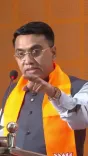
Nadda highlights Ayushman Bharat's role in easing health costs
Synopsis
Union Health Minister J. P. Nadda invoked beneficiary experiences under Ayushman Bharat PM-JAY, Jan Aushadhi Kendras, and expanded immunisation to argue that India's health security architecture is delivering tangible relief to economically vulnerable families.
Key Takeaways
Ayushman Bharat PM-JAY provides up to Rs 5 lakh annual cashless hospitalisation cover per eligible family, launched in 2018 .
Jan Aushadhi Kendras supply quality generic medicines at 50–90 percent below branded prices, reducing routine out-of-pocket spending.
Mission Indradhanush , launched in 2014 , accelerated routine immunisation in historically underserved districts.
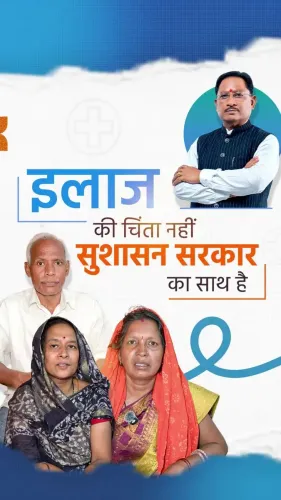
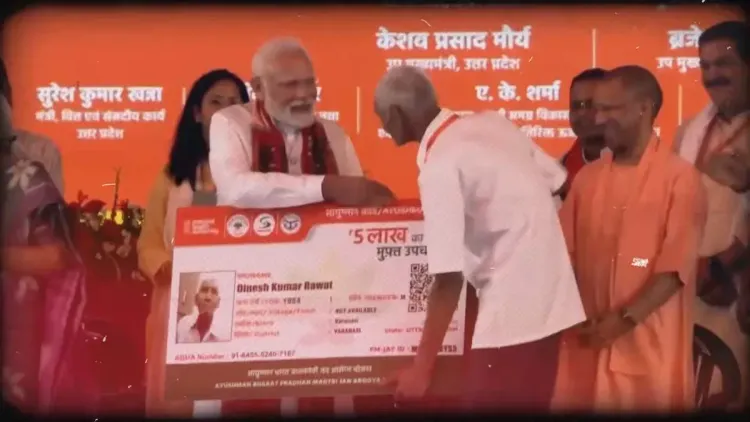
Nadda shared a video of beneficiaries describing how the Ayushman card eased financial strain during medical emergencies.
The post is tagged under #SevaSankalpAbhiyan , a government campaign foregrounding direct beneficiary experiences over scheme statistics.
Next policy milestones include expanded hospital empanelment under PM-JAY and additional Jan Aushadhi store rollouts at the state level.
When a family in rural India faces a medical emergency, the difference between catastrophe and care can come down to a single laminated card. Union Health Minister J. P. Nadda underscored exactly that reality on Tuesday, 29 September, sharing beneficiary voices that illustrate how the Ayushman Bharat PM-JAY scheme has softened the financial blow of serious illness for enrolled households.
Posting under the hashtags #SevaSankalpAbhiyan and #सेवा_संकल्प_अभियान (Seva Sankalp Abhiyan — 'Service and Resolve Campaign'), Nadda framed the message around Prime Minister Narendra Modi's stated goal of a 'healthy and empowered India,' calling PM-JAY 'a significant initiative to ensure access to better healthcare for eligible families.' The post accompanies a video featuring beneficiaries describing how the Ayushman card made treatment accessible and reduced the economic burden on their families during difficult times.
What Ayushman Bharat PM-JAY actually does for a family
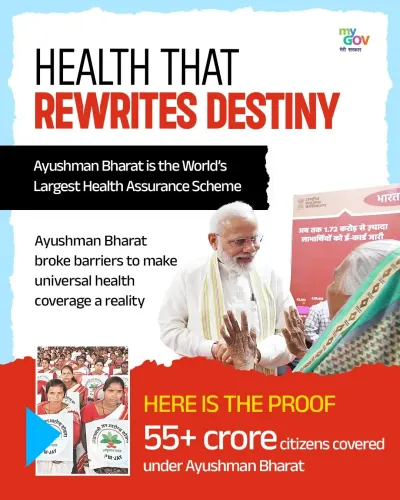
Launched in 2018, Ayushman Bharat PM-JAY provides annual health coverage of up to Rs 5 lakh per family for secondary and tertiary hospitalisation — targeting India's most economically vulnerable households. The scheme operates through empanelled public and private hospitals, meaning a cardholder can walk into a network facility and receive cashless treatment without upfront payment.
The design directly attacks out-of-pocket expenditure, which has historically pushed millions of Indian families below the poverty line in the wake of a single hospitalisation. Nadda's post situates PM-JAY within a broader quartet of interventions: Jan Aushadhi Kendras (generic medicine outlets priced 50–90 percent below branded equivalents), an expanded immunisation drive, and a scale-up of health infrastructure — together described as writing 'a new chapter of health security' in the country.
Jan Aushadhi and Mission Indradhanush: the wider architecture
The Pradhan Mantri Bhartiya Janaushadhi Pariyojana, scaled up significantly after 2014, has grown into a nationwide network of affordable generic pharmacies — a parallel track to insurance that keeps routine medicine costs low even for families who never need hospitalisation. Alongside it, Mission Indradhanush, launched in 2014, accelerated routine immunisation coverage across districts that had historically lagged, addressing the preventive end of the health spectrum.
Together these programmes form what the central government has positioned as an integrated welfare architecture: digital cards for cashless hospital access, subsidised medicines for daily needs, and vaccines to prevent the illnesses that drive people to hospitals in the first place.
Seva Sankalp Abhiyan and the politics of beneficiary testimony
The communication strategy on display here — centring real beneficiary voices rather than scheme statistics — has become a signature feature of government health messaging. By letting cardholders describe their own experiences, the campaign attempts to translate policy numbers into human terms that resonate beyond policy circles.
Nadda, who oversees both the Health Ministry and the Ministry of Chemicals and Fertilizers, also serves as BJP national president — a dual role that makes health scheme visibility a natural political as well as administrative priority heading into the campaign cycle. The next phase of PM-JAY will likely focus on expanding hospital empanelment and rolling out additional Jan Aushadhi stores at the state level, with parliamentary scrutiny of health budget allocations expected to sharpen the debate.
For the families in that video, the argument is simpler: a card that meant they did not have to sell land or borrow at ruinous interest rates to survive a health crisis. That is the story the government wants told — and the one Nadda is amplifying.
Point of View
Jan Aushadhi, and immunisation into a single 'health security' narrative, the BJP is constructing a welfare legacy argument ahead of electoral cycles, positioning the party as the architect of a systemic shift rather than a one-off subsidy. The Seva Sankalp Abhiyan framing also signals a coordinated outreach effort, suggesting the party machinery is being mobilised to amplify ground-level scheme uptake stories. The dual role Nadda holds — Health Minister and BJP national president — means the line between administrative communication and campaign messaging is deliberately thin.
NationPress
29 Sept 2026
Frequently Asked Questions
What is Ayushman Bharat PM-JAY and who is eligible?
Ayushman Bharat PM-JAY is a national health insurance scheme launched in 2018 that provides up to Rs 5 lakh per year in cashless hospitalisation cover to economically vulnerable families identified through government databases. Eligible families receive an Ayushman card that can be used at empanelled public and private hospitals.
What is the Seva Sankalp Abhiyan campaign?
Seva Sankalp Abhiyan is a government outreach campaign that highlights the experiences of direct beneficiaries of welfare schemes, including Ayushman Bharat PM-JAY, to communicate the human impact of health and social programmes.
How much cheaper are Jan Aushadhi Kendra medicines compared to branded drugs?
Jan Aushadhi Kendras supply quality generic medicines at prices that are 50 to 90 percent lower than branded equivalents, significantly reducing out-of-pocket medicine costs for ordinary households.
What is Mission Indradhanush?
Mission Indradhanush is a government immunisation programme launched in 2014 aimed at accelerating routine vaccination coverage, particularly in districts that had historically low immunisation rates, covering diseases such as diphtheria, polio, and tuberculosis.
What is J. P. Nadda's role in the Indian government?
J. P. Nadda serves as Union Minister of Health and Family Welfare and Minister of Chemicals and Fertilizers. He also holds the position of national president of the Bharatiya Janata Party (BJP).