White House Hosts China's Xi Jinping for Military Review
Synopsis
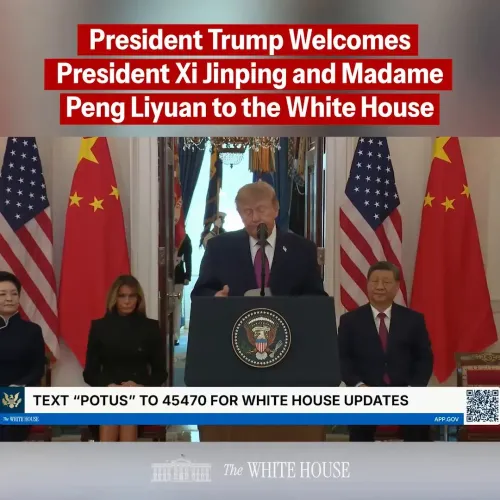
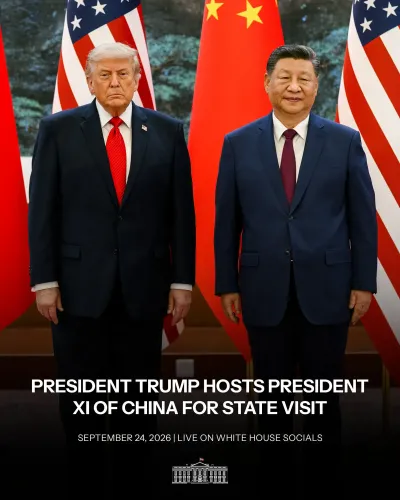
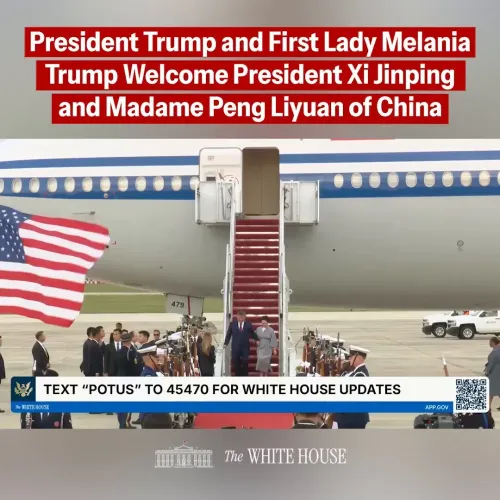
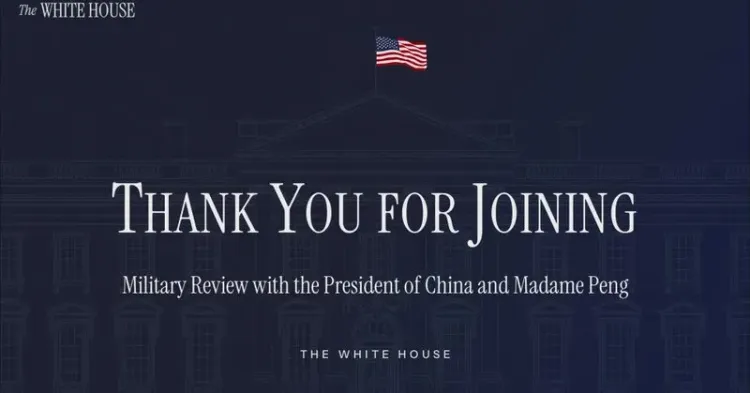
The White House hosted Chinese President Xi Jinping and Madame Peng Liyuan for a ceremonial military review on 24 September 2026, in a high-stakes diplomatic gesture between the world's two largest economies, with substantive bilateral outcomes closely watched by global capitals.
Key Takeaways
The White House hosted President Xi Jinping and Madame Peng Liyuan for a formal military review on 24 September 2026 .
Xi Jinping has led China as President and CPC General Secretary since 2013 ; Peng Liyuan is a prominent figure on Chinese state visits abroad.
Military reviews are a standard ceremonial element of US state visits for foreign heads of state, carrying significant symbolic weight.
The visit fits within a long-standing framework of US-China diplomatic exchanges covering economic, security, and strategic matters.
Follow-on joint statements, defence consultations, or summit commitments will determine the substantive impact of this engagement.
The trajectory of US-China ties carries direct strategic implications for India and other Indo-Pacific partners.
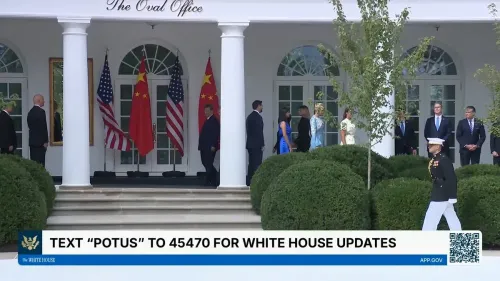
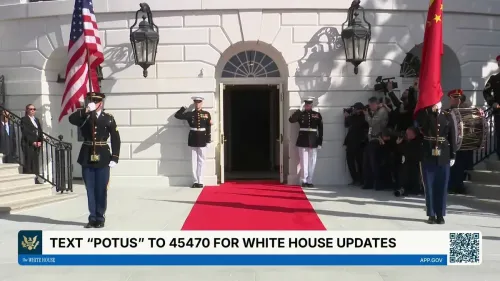
A ceremonial military review brought together the leaders of the world's two largest economies on Thursday, 24 September 2026, as the White House hosted President Xi Jinping of China and Madame Peng Liyuan for one of diplomacy's most choreographed rituals — and one of its most consequential signals.
Pomp, Protocol, and Power: What a Military Review Signals
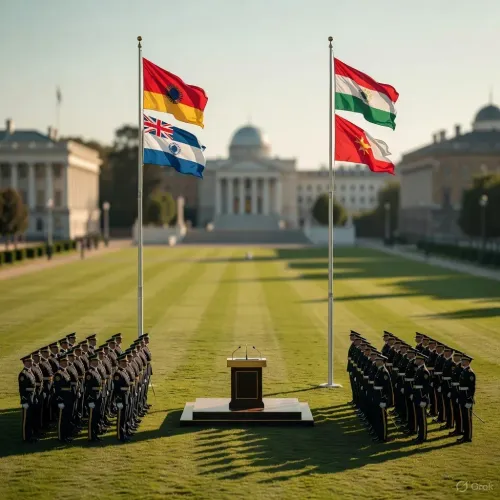
Military reviews are far more than dress-uniform pageantry. When a US president stands alongside a visiting head of state as troops march and colours are presented, the message to the world is deliberate: this relationship commands the full weight of state ceremony. For a US-China encounter, that symbolism is amplified many times over — two nuclear powers, two competing visions of global order, sharing a parade ground.
Xi Jinping has served as President of the People's Republic of China and General Secretary of the Communist Party of China since 2013. Peng Liyuan, a celebrated folk singer and public-health advocate, is a regular fixture on high-profile state visits, bringing significant soft-power presence to the Chinese delegation.
The Long History of US-China Ceremonial Diplomacy
State visits involving Chinese leaders and the United States have carried ceremonial military elements as standard protocol across decades and multiple administrations. These moments sit at the intersection of strategic competition and managed engagement — Beijing and Washington have long maintained formal diplomatic channels even through periods of sharp disagreement on trade, Taiwan, and security architecture in the Indo-Pacific.
A military review at this level signals that both sides have chosen, at least for this moment, the language of protocol over the language of pressure. What follows — joint statements, defence consultations, or follow-on summit commitments — will tell the real story of where the relationship stands.
What Comes After the Salute
The world's attention now turns to whether the ceremonial warmth translates into substantive outcomes. Any bilateral statements on trade, technology controls, or regional security flashpoints will be parsed with extraordinary care in New Delhi, Tokyo, Brussels, and every capital navigating the US-China dynamic. For India in particular, the trajectory of Washington-Beijing ties carries direct implications for its own strategic positioning.
A military review opens the door. What walks through it is what matters.
Point of View
But a managed signal that both powers can still share the same parade ground. For an administration navigating domestic pressure on China policy alongside Indo-Pacific alliance commitments, hosting Xi Jinping with full ceremonial honours is a high-wire act. India, which has consistently sought to balance its own ties with both Washington and Beijing, will watch whether this diplomatic warmth yields concrete bilateral outcomes — particularly on technology, trade, and Taiwan — that shift the strategic calculus in Asia.
NationPress
24 Sept 2026
Frequently Asked Questions
Why did the White House host a military review for Xi Jinping?
A military review is standard diplomatic protocol when the US hosts a foreign head of state, serving as a ceremonial gesture of respect and a public signal of the bilateral relationship's significance.
Who is Madame Peng Liyuan?
Peng Liyuan is the wife of Chinese President Xi Jinping and a celebrated folk singer in China. She regularly accompanies Xi on official international visits and is considered a significant soft-power presence for Beijing.
What is the significance of a US-China military review in 2026?
Given years of strategic competition over trade, technology, and Indo-Pacific security, a formal military review signals that Washington and Beijing are choosing managed diplomatic engagement, though the real test is any substantive agreements that follow.
How does the US-China summit affect India?
India closely monitors US-China diplomatic developments because shifts in Washington-Beijing relations directly affect India's own strategic positioning in the Indo-Pacific, including on border security, trade, and alliance frameworks.
What happens after a US-China state visit military review?
Following a ceremonial military review, state visits typically produce joint statements, bilateral consultations on trade or security, and sometimes framework agreements. These outcomes reveal the true substance behind the ceremony.