White House Task Force Targets H-1B Visa Fraud, Corporate Layoffs
Synopsis
The White House announced its Fraud Task Force is targeting corporations that lay off American workers and replace them with cheaper H-1B visa holders, framing the long-contested practice as outright fraud and signalling aggressive federal enforcement.
Key Takeaways
The White House officially accused corporations of systematically laying off American workers and replacing them with cheaper H-1B visa labour.
The White House Fraud Task Force (WHFraudTF) has been tasked with investigating and stopping this practice.
The administration frames the conduct as 'fraud,' a label that opens the door to criminal and civil liability for companies involved.
The H-1B programme, originally designed to fill genuine skill shortages, is at the centre of a long-running debate over wage suppression and worker displacement.
Indian nationals represent the largest share of H-1B holders in the US, making the policy shift significant for the Indian diaspora and for India-US relations.
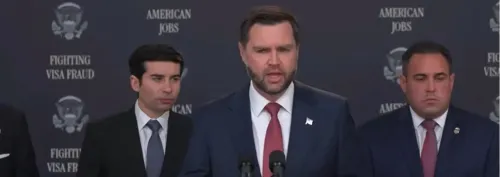
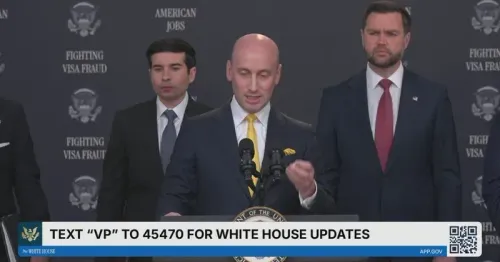
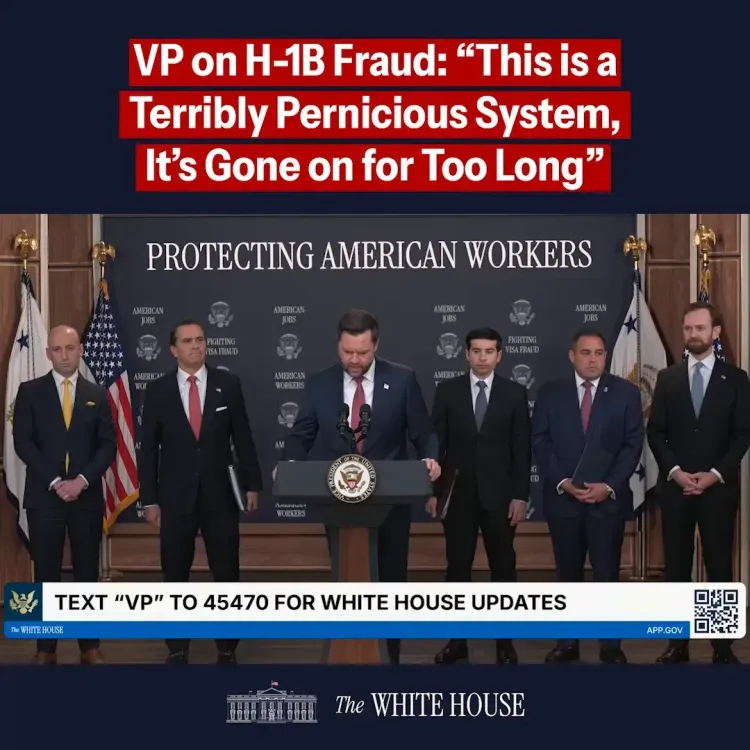
A direct confrontation with corporate America is now official White House policy. The White House declared on Thursday, October 8, 2026, that American corporations have been systematically laying off domestic workers and replacing them with cheaper H-1B visa holders — and that a dedicated federal task force is now moving to stop it.
The post pulled no punches: 'Corporations are laying off American workers and replacing them with cheap H-1B Visa labor, undercutting the wages of American workers. This system has been going on for years.' The statement frames the practice not merely as a policy disagreement but as outright fraud — a framing with significant legal implications.
The WHFraudTF: A Task Force Built for This Fight
At the centre of the announcement is the White House Fraud Task Force (@WHFraudTF), which the post credits with 'fighting for American workers instead of cheap foreign labor.' The task force's mandate, as the White House presents it, is to investigate and prosecute the misuse of work-visa programmes that critics say have long been exploited to displace qualified American employees at lower cost.
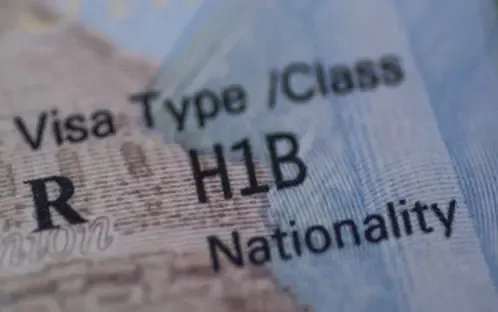
The H-1B programme was originally designed to fill genuine skill gaps in specialised fields — technology, engineering, medicine — where qualified domestic talent was scarce. The White House's framing directly challenges that rationale, asserting that companies are not filling gaps but manufacturing them by first eliminating American jobs.
Why the H-1B Debate Has Never Really Gone Away
The tension over H-1B visas is one of the most durable fault lines in American immigration and labour policy. For years, worker-advocacy groups have documented cases where large corporations — particularly in the technology and outsourcing sectors — have required departing American employees to train their H-1B replacements as a condition of receiving severance. Courts and federal agencies have periodically scrutinised these practices, but critics argue enforcement has remained inconsistent.
The scale matters too. Hundreds of thousands of H-1B visas are issued annually, with the technology sector accounting for a large share. When companies cycle through visa holders at lower salary bands, the wage-suppression effect extends well beyond those directly displaced — it sets a floor that pulls down compensation across entire job categories.
What a 'Fraud' Label Actually Does
Calling the practice 'fraud' — and routing enforcement through a task force that carries that word in its name — signals the executive branch is pursuing criminal and civil remedies, not just regulatory ones. That distinction matters enormously for corporate legal exposure. Companies that have structured workforce transitions around H-1B cost arbitrage could face investigation, penalties, or debarment from federal contracts.
For the roughly 4 million Indian nationals who make up the largest share of H-1B holders in the United States — many of them highly skilled professionals who entered through legitimate channels — the political moment is freighted with uncertainty. The White House post makes no distinction between fraudulent displacement schemes and lawful visa employment, a conflation that has drawn concern from immigrant-worker advocates.
The task force has now put every major employer of H-1B talent on notice. Whether that pressure produces accountability for bad actors — or becomes a broad chilling effect on a legal visa category — will define what this announcement actually means in practice.
Point of View
Where consequences are far harder to manage with a legal team and a lobbying budget. This fits a broader executive pattern of using task forces and emergency framing to move faster than Congress, bypassing the slow grind of visa-reform legislation that has stalled for decades. For India, whose nationals dominate H-1B rosters, the announcement lands in an already sensitive bilateral moment — any sweeping enforcement action risks straining the tech-sector ties that underpin a significant slice of the India-US economic relationship. The key political question is whether 'WHFraudTF' becomes a serious enforcement mechanism or a messaging operation — the answer will arrive in the form of the first corporate subpoena.
NationPress
8 Oct 2026
Frequently Asked Questions
What is the White House Fraud Task Force (WHFraudTF)?
The White House Fraud Task Force, identified by the handle @WHFraudTF, is a federal body created to investigate and prosecute fraudulent practices in programmes like the H-1B visa system, with a stated mission of protecting American workers from displacement.
How does the H-1B visa programme work?
The H-1B is a US non-immigrant work visa that allows companies to employ foreign nationals in speciality occupations, primarily in technology, engineering, and medicine. It was designed to fill domestic skill gaps but has been criticised for enabling wage suppression when misused.
Can companies legally replace American workers with H-1B visa holders?
Employers are technically required to pay H-1B workers prevailing wages and not displace domestic workers, but enforcement has historically been inconsistent. The White House is now framing systematic replacement practices as fraud, which could trigger criminal and civil action.
How does this affect Indian H-1B workers in the United States?
Indian nationals hold the largest share of H-1B visas annually. While many are employed through entirely lawful channels, a broad crackdown could create uncertainty for Indian tech professionals and affect the pipeline of talent between India and the United States.
What happens to companies found guilty of H-1B fraud?
Companies found to have fraudulently displaced American workers through H-1B abuse can face civil penalties, debarment from federal contracts, and potentially criminal charges against executives, depending on how the Justice Department and the task force choose to pursue cases.