White House Touts 'Trump Accounts' in Lifestyle Campaign Post

Synopsis
The White House promoted 'Trump Accounts' on X on 22 July 2026, using lifestyle messaging to highlight a financial initiative under President Donald Trump. Specific programme details remain unconfirmed pending Congressional or Treasury action.
Key Takeaways
The White House posted about ' Trump Accounts ' on X on 22 July 2026 , using lifestyle framing to promote the initiative.
No specific legislative text or Treasury Department rules for 'Trump Accounts' have been publicly confirmed at the time of publication.
The initiative targets American middle-class households and taxpayers as its primary audience.
The Trump administration has previously used savings and tax policy — including the Tax Cuts and Jobs Act of 2017 — as major retail political tools.
Formal programme details, including contribution limits and tax treatment, are pending Congressional or Treasury action .
The White House's social media strategy under President Trump consistently prioritises direct, accessible messaging over technical policy detail.
The White House, the official communications account of the Executive Office of the President of the United States, posted on X on 22 July 2026 promoting what it described as 'Trump Accounts,' framing the initiative in personal, lifestyle terms with the caption: 'How life feels with Trump Accounts.'
Context
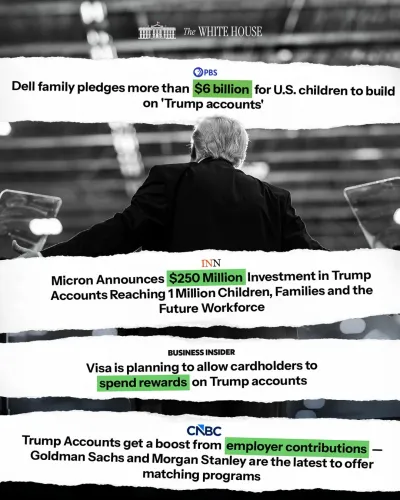
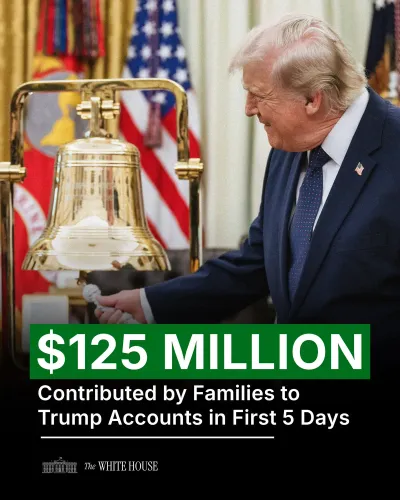
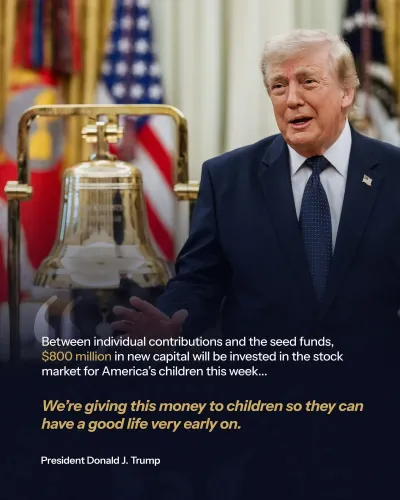
The post, accompanied by an image, is part of a broader White House social media strategy under President Donald Trump that frames economic and financial policy initiatives in accessible, everyday language aimed directly at American households. The messaging sidesteps technical policy detail in favour of emotional resonance — a hallmark of the administration's direct-to-public communication style.
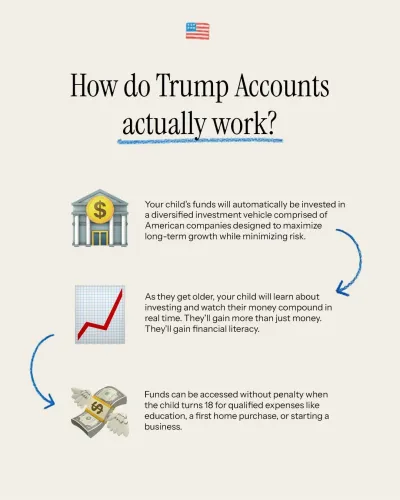
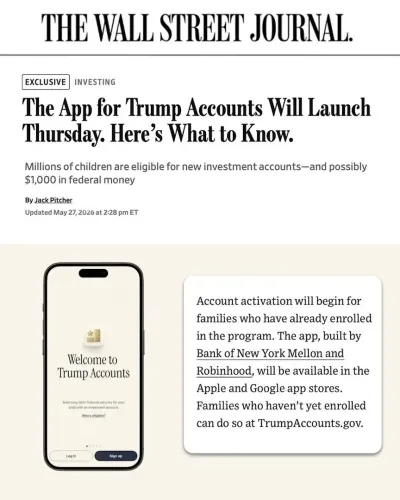
The phrase 'Trump Accounts' appears to refer to a savings or financial account programme being promoted under the current administration. Specific legislative or regulatory details of the programme had not been independently confirmed at the time of publication.
Policy Backdrop
The Trump administration has a documented history of using savings and tax policy as retail political tools. During Trump's first term (2017–2021), the Tax Cuts and Jobs Act of 2017 lowered individual and corporate tax rates and introduced changes to retirement and savings vehicles, benefiting a wide range of American taxpayers.
Any new savings account programme branded under the Trump name would require either Congressional legislation or Treasury Department implementation guidance to take formal effect. As of this report, no final legislative text or official Treasury rules specific to 'Trump Accounts' have been publicly confirmed.
Stakeholders and Impact
American middle-class households and taxpayers are the stated target audience of the initiative, according to the White House's framing. If realised as a structured savings vehicle, such accounts could affect decisions around retirement planning, emergency savings, or investment for millions of families.
Financial advisers and consumer advocacy groups are likely to scrutinise the terms, contribution limits, tax treatment, and eligibility criteria of any such programme before recommending it to clients or members. The branding of a financial product with a sitting president's name is itself unusual and may draw regulatory and political commentary.
What's Next
Observers will be watching for formal announcements from the Treasury Department or the White House Office of Economic Policy that provide statutory or regulatory grounding for 'Trump Accounts.' Congressional committees with jurisdiction over tax and financial services legislation will also be a key venue to watch.
The administration's use of lifestyle-oriented social media to preview or popularise policy initiatives suggests further promotional content is likely as any formal programme moves closer to implementation.
Point of View
The administration maximises emotional reach while minimising political exposure to technical scrutiny. For Indian observers, the episode underscores how major democracies are increasingly using direct-to-citizen digital communication to shape economic narratives ahead of formal announcements. The durability of 'Trump Accounts' as a policy initiative will depend entirely on what Congress and the Treasury ultimately codify.
NationPress
23 Jul 2026
Frequently Asked Questions
What are Trump Accounts?
'Trump Accounts' is the name used by the White House to describe a financial or savings initiative being promoted by the Trump administration in 2026. Specific details — including contribution limits, tax treatment, and eligibility — have not been officially confirmed through legislation or Treasury rules as of this report.
Did Congress pass a law creating Trump Accounts?
No confirmed Congressional legislation specifically creating 'Trump Accounts' has been publicly verified. Any formal programme would require either a law passed by Congress or Treasury Department implementation guidance.
How does this affect Indians or NRI investors?
If 'Trump Accounts' are structured as US-based savings or investment vehicles, Non-Resident Indians (NRIs) holding US financial accounts or green cards could potentially be affected, depending on eligibility rules that have not yet been publicly detailed.
Why is the White House promoting financial accounts on social media?
The Trump administration has consistently used direct social media communication to promote its economic agenda in accessible, lifestyle-oriented terms, bypassing traditional media channels to reach voters and households directly.
What should I watch for next on Trump Accounts?
Watch for formal announcements from the US Treasury Department, Congressional committee hearings on tax or savings legislation, and any White House fact sheets that provide specific programme rules and eligibility criteria.