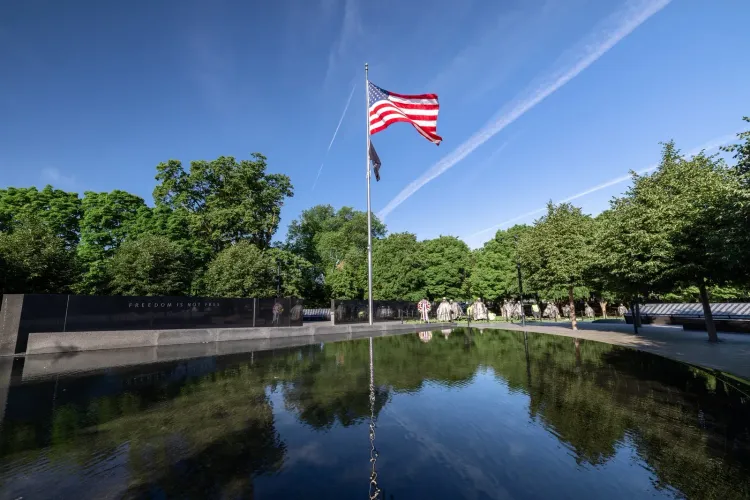
White House Highlights Korean War Veterans Memorial Fountain
Synopsis
The White House spotlighted the Korean War Veterans Memorial Fountain on June 1, 2026, drawing attention to the National Mall tribute honouring service members of the 1950-1953 Korean War. The memorial, dedicated in 1995, features 19 statues and a reflective wall, and remains central to U.S. military remembrance and the enduring U.S.-South Korea alliance.
Key Takeaways
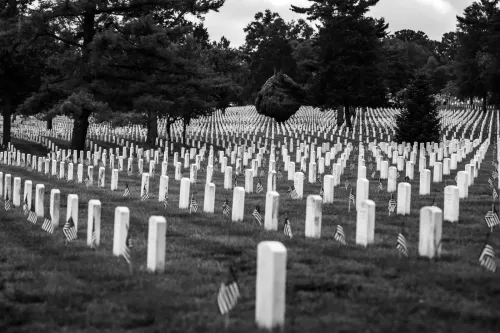
The White House posted an image of the Korean War Veterans Memorial Fountain on June 1, 2026 .
The memorial is located on the National Mall, Washington, D.C. , and was dedicated on July 27, 1995 by President Bill Clinton .
It was authorised by U.S.
Congress in 1986 and honours service members of the Korean War (1950–1953) .
The memorial features 19 stainless-steel statues , a granite wall with over 2,500 faces , and a Pool of Remembrance.
Troops from 16 nations under the United Nations Command are honoured, giving the site international significance.
The 75th anniversary of the 1953 armistice in 2028 is expected to prompt expanded commemorative programming.
The White House, the official communications account of the Executive Office of the President of the United States, shared an image of the Korean War Veterans Memorial Fountain on Monday, June 1, 2026, drawing attention to one of Washington D.C.'s most visited military tributes on the National Mall.
Context
The post, carrying no accompanying text beyond the memorial's name and a link to the image, reflects the White House's ongoing practice of spotlighting national monuments associated with 20th-century U.S. military service. The Korean War Veterans Memorial stands on the National Mall in Washington, D.C., honouring the men and women who served during the Korean War (1950–1953).
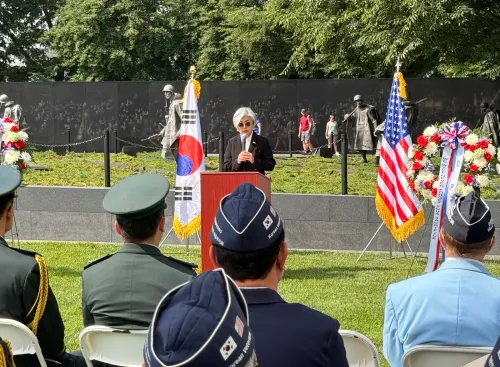
The memorial complex includes 19 stainless-steel statues of soldiers on patrol, a reflective granite wall etched with the faces of more than 2,500 service members, and a Pool of Remembrance. The fountain element forms a central part of the memorial's contemplative design, drawing visitors year-round.
Policy Backdrop
The Korean War Veterans Memorial was authorised by the U.S. Congress in 1986 and formally dedicated on July 27, 1995, by President Bill Clinton, on the 42nd anniversary of the armistice that halted active fighting. The armistice, signed in 1953, left the Korean Peninsula divided — a status that technically persists to this day, as no formal peace treaty was ever concluded.
The U.S.–South Korea security alliance, forged in the crucible of that conflict, remains one of Washington's most enduring bilateral defence partnerships. Official commemorations of the Korean War thus carry diplomatic resonance beyond domestic remembrance, reinforcing the alliance's historical foundation.
Stakeholders and Impact
Korean War veterans — sometimes referred to in the United States as survivors of the 'Forgotten War' — and their families are the primary stakeholders of such tributes. The dwindling number of living veterans from the conflict makes institutional memory and federal commemoration increasingly significant.
For the Indian-American community and international observers, the post underscores the United States' continued commitment to honouring multilateral military service: the United Nations Command that fought alongside South Korea included troops from 16 nations, making the memorial a site of global significance. Indian visitors to Washington D.C. frequently include the National Mall memorials in their itineraries, giving such posts broad international resonance.
What's Next
Looking ahead, 2028 will mark the 75th anniversary of the 1953 armistice, a milestone likely to prompt expanded federal programming at the memorial and renewed diplomatic engagement with South Korean counterparts. Veterans' organisations and the National Park Service, which administers the site, are expected to plan commemorative events as that anniversary approaches.
Routine observances such as Veterans Day and Memorial Day will continue to draw official attention to the National Mall sites, with the Korean War Veterans Memorial remaining a focal point of federal tribute in the years ahead.
Point of View
Image-led post on the Korean War Veterans Memorial Fountain is a textbook example of federal soft diplomacy — using institutional social media to reinforce collective memory without advancing a specific policy agenda. At a moment when the U.S.-South Korea alliance faces periodic stress-testing over burden-sharing and North Korean provocations, such gestures serve a subtle but real function: reaffirming the historical and moral foundation of the partnership. The framing of the Korean War as a cause worth memorialising also pushes back against its 'forgotten war' reputation, a narrative the U.S. government has worked to correct for decades. For observers tracking Washington's posture toward the Korean Peninsula, even routine commemorative posts are worth noting as markers of continuity.
NationPress
16 Sept 2026
Frequently Asked Questions
Where is the Korean War Veterans Memorial located?
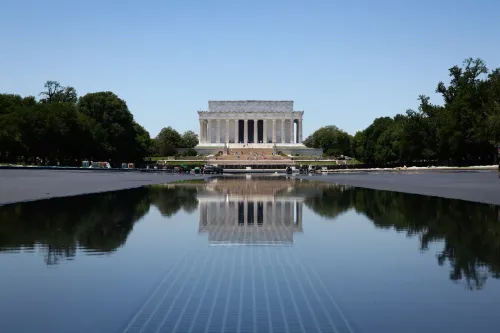
The Korean War Veterans Memorial is located on the National Mall in Washington, D.C. , near the Lincoln Memorial Reflecting Pool. It is administered by the National Park Service .
When was the Korean War Veterans Memorial dedicated?
The memorial was dedicated on July 27, 1995 , by President Bill Clinton , marking the 42nd anniversary of the Korean War armistice signed in 1953 .
What does the Korean War Veterans Memorial include?
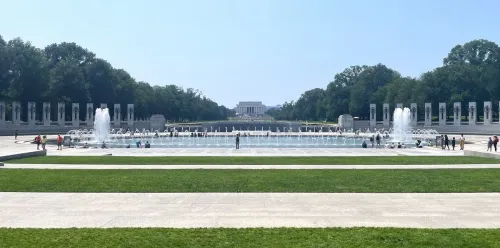
The memorial features 19 stainless-steel statues of soldiers on patrol, a granite wall etched with over 2,500 faces of service members, a Pool of Remembrance, and a fountain.
Why is the Korean War called the 'Forgotten War'?
The Korean War ( 1950–1953 ) earned the label 'Forgotten War' because it occurred between World War II and the Vietnam War and received comparatively less public and media attention in the United States, despite significant casualties.
Which countries fought alongside the United States in the Korean War?
A total of 16 nations contributed troops under the United Nations Command alongside the United States and South Korea, making the Korean War a multinational conflict whose legacy the memorial honours.