White House Unveils New Unified Federal Government Portal
Synopsis
The White House has announced a new unified federal government portal, calling it a 'national front door' for all US public services. The launch continues decades of American e-government consolidation efforts, aiming to give citizens one trusted digital starting point regardless of which agency they need.
Key Takeaways
The White House announced a new unified federal government portal on September 29, 2026 .
The portal is described as a 'national front door' — a single trusted online destination for all US government services and information.
The initiative builds on the launch of USA.gov in 2000 , the original unified US government web portal.
Successive US administrations have pursued e-government consolidation to reduce fragmentation across hundreds of individual federal agency websites.
Key tests ahead include federal agency adoption rates and whether future budgets sustain the digital service standards underpinning the portal.
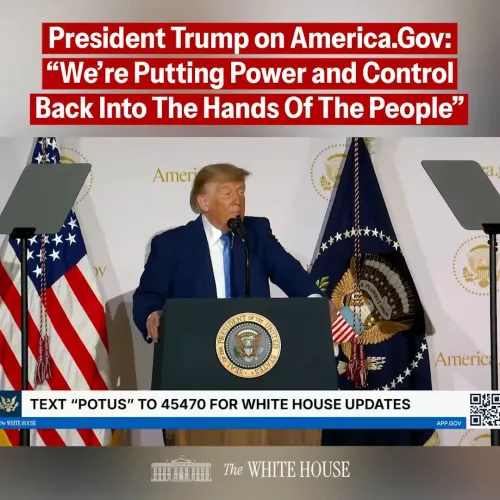
The United States government just got a single front door. The White House on Tuesday, September 29, 2026, announced the launch of a new unified federal web portal — a 'national front door' designed to give every American one trusted starting point for any government service or information they need.
One Address for Every Federal Question
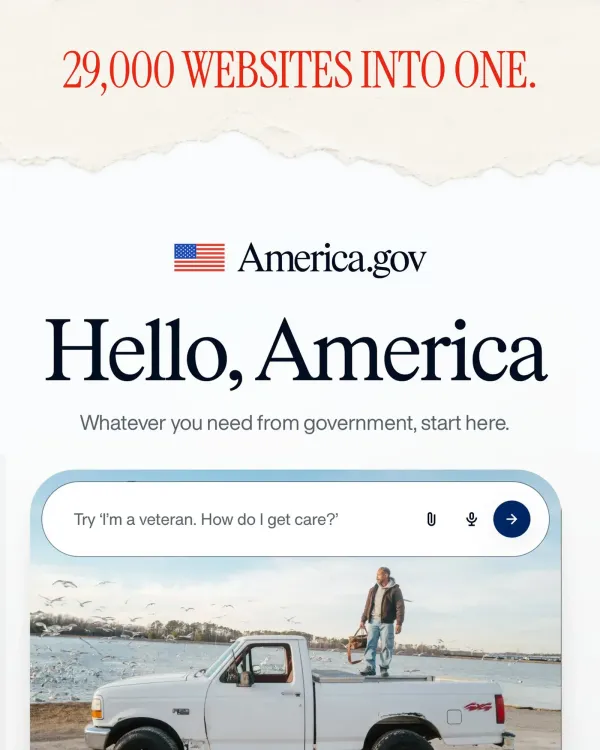
The announcement frames the portal as a definitive consolidation: 'One trusted place to help people find answers. Whatever you need from government, start here.' The premise is simple — rather than navigating a sprawl of individual agency websites, citizens can now arrive at a single digital destination and find what they need from there.
The effort builds on a long lineage of US e-government reform. USA.gov was launched in 2000 as the first major attempt to create an official unified web presence for the federal government, and successive administrations have iterated on that model — consolidating fragmented agency pages, standardising digital service delivery, and reducing duplication across hundreds of federal operations. This latest launch signals the current administration's intent to push that consolidation further.
Why a Unified Portal Still Matters in 2026
The challenge of government digital fragmentation is not new — the federal government operates hundreds of distinct agency websites, each with its own architecture, search function, and navigation logic. For ordinary citizens — navigating benefits, permits, passports, or disaster relief — the cognitive load of knowing which agency door to knock on has always been the first, often unseen, barrier to access.
A unified portal, if well-executed, reduces that barrier to zero. The ambition is equity as much as efficiency: the less digitally confident a citizen is, the more a single, clearly signposted entry point matters. The key test ahead is adoption — how thoroughly federal agencies integrate their services into the new platform, and whether future budget cycles back the initiative with sustained funding and updated digital standards.
Point of View
Meaning a vague launch promise is harder to sustain without rapid, visible integration. For global observers, including Indian policymakers tracking their own digital public infrastructure ambitions, the US move underscores that even the world's most technologically advanced governments still struggle with the fundamental challenge of making the state legible to its citizens. The real story will be written not in the launch announcement, but in agency compliance rates and the portal's usability data twelve months from now.
NationPress
30 Sept 2026
Frequently Asked Questions
What is the new US government portal announced by the White House?
The White House announced a new unified federal government portal on September 29, 2026, described as a 'national front door' — a single online destination where Americans can find answers and access services from any part of the federal government.
How is this different from USA.gov?
USA.gov was launched in 2000 as the first major unified US government web portal. The new portal represents the current administration's updated consolidation effort, though the exact features and branding have not been independently detailed beyond the White House announcement.
Why does the US government need a unified portal?
The federal government operates hundreds of separate agency websites, making it difficult for ordinary citizens to know where to look for services. A single portal reduces that confusion, especially for people who are less digitally confident.
What will determine if the new US portal is successful?
Key indicators include how broadly federal agencies integrate their services into the new platform, whether digital service standards are updated to match, and whether future federal budgets allocate sufficient funding to maintain and improve it.
What is the US government's history with e-government consolidation?
Successive US administrations since 2000 have attempted to consolidate fragmented agency websites into unified digital entry points, aiming to simplify public access and reduce operational duplication across federal agencies.