White House Warns Noncitizen Voters: Trump Will Prosecute
Synopsis
The White House declared on 6 October 2026 that President Trump and the DOJ will prosecute noncitizen voters to the fullest extent of the law, accusing Democrats of ignoring the issue for years. The post signals a sharp enforcement shift on election integrity.
Key Takeaways
The White House posted on 6 October 2026 warning that noncitizen voters in the US will face federal prosecution.
President Trump and the Department of Justice were named as the enforcement actors taking action.
Democrats were accused of having 'looked the other way' while noncitizens allegedly cast ballots in American elections.
Noncitizen voting in US federal elections is already illegal under existing federal law; the post signals a shift in enforcement priority rather than new legislation.
No specific case numbers, legislation, or named DOJ programme were cited — making this a declaration of intent.
The warning is framed as both a legal deterrent and a political statement ahead of any formal enforcement rollout.
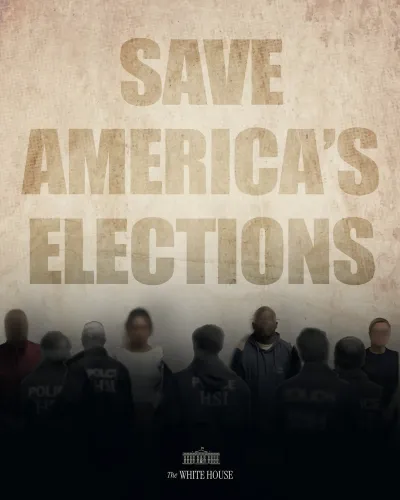
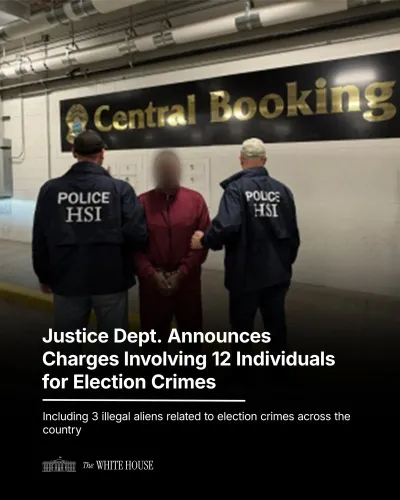
A blunt warning landed from the highest office in America: vote illegally, and federal prosecution follows. The White House posted on X on Tuesday, 6 October 2026, declaring that President Donald Trump and the Department of Justice are moving to crack down on noncitizen voting — and naming Democrats as the party that enabled the problem for years.
The White House's Three-Part Charge
The post lays out a pointed three-part argument: that Democrats 'spent years looking the other way while noncitizens cast ballots in American elections,' that the Trump administration is now 'taking action to protect election integrity,' and that anyone who 'illegally votes' faces prosecution 'to the fullest extent of the law.' The framing is both a policy announcement and a political attack, delivered in a single breath.
Noncitizen voting in federal elections is already illegal under existing US federal law. The post does not specify new legislation, but signals a change in enforcement posture — with the Justice Department explicitly named as the instrument of that shift.
Why the DOJ's Role Matters Here
Invoking @TheJusticeDept by name is not incidental. The Department of Justice controls federal prosecutorial resources, and a directive to pursue noncitizen voting cases signals a prioritisation of election-integrity enforcement that had not been a headline DOJ focus in prior administrations. Critics of such campaigns have historically argued that documented cases of noncitizen voting are extremely rare; proponents counter that any instance of illegal voting undermines democratic legitimacy and warrants aggressive deterrence.
The White House's statement does not cite specific case numbers, pending legislation, or a named DOJ programme — making this, at present, a declaration of intent rather than a detailed policy rollout.
Democrats in the Crosshairs — Again
The partisan framing — accusing Democrats of having 'looked the other way' — slots neatly into a long-running Republican argument that lax voter-roll maintenance and resistance to strict voter-ID requirements effectively facilitate illegal voting. Democrats have consistently disputed this, arguing such measures suppress turnout among eligible citizens, particularly minorities. Neither claim is adjudicated by this post; what the post does is plant a political flag ahead of future enforcement action.
The message closes with a direct address to would-be violators — a rhetorical move designed as much for deterrence as for headlines. If prosecutions follow, the White House has now created a paper trail of intent.
The next move belongs to the Justice Department: whether charges, policy memos, or new federal guidance materialise will determine whether this warning carries legal weight — or remains a prime-time political shot across the bow.
Point of View
The administration is signalling institutional commitment rather than mere rhetoric, though the absence of specific programmes or case data leaves the declaration in the space between warning and policy. For Indian observers, the parallel to debates around electoral rolls and voter verification in India's own elections is striking: the core tension between expanding voter access and ensuring roll integrity is a universal democratic pressure point. The real test arrives when — or if — the Justice Department produces visible prosecutions to back the warning.
NationPress
6 Oct 2026
Frequently Asked Questions
Is it illegal for noncitizens to vote in US elections?
Yes. Noncitizen voting in US federal elections is prohibited under existing federal law and carries criminal penalties. The White House's post signals stricter enforcement of this existing prohibition rather than the introduction of a new law.
What action is the Trump administration taking on noncitizen voting?
The White House announced on 6 October 2026 that President Trump and the Department of Justice are 'taking action to protect election integrity,' with a warning that illegal voters will be 'prosecuted to the fullest extent of the law.' Specific programmes or charges had not been detailed at the time of the post.
What did the White House accuse Democrats of doing?
The White House post accused Democrats of having 'spent years looking the other way while noncitizens cast ballots in American elections,' framing the current crackdown as a corrective to Democratic-era inaction on election integrity.
What role will the Department of Justice play in election integrity enforcement?
The White House named @TheJusticeDept as the enforcement arm of the Trump administration's election integrity push. The DOJ controls federal prosecution resources and its involvement signals that noncitizen voting cases will be a priority.
How common is noncitizen voting in US elections?
Documented cases of noncitizen voting in US federal elections have historically been described as rare by election researchers. Republican officials argue even isolated cases undermine democratic legitimacy; Democrats argue aggressive enforcement campaigns risk deterring eligible voters. The White House post does not cite specific case numbers.