US Democrats propose Protect Our Neighbors Act after Harjit Kaur deportation
Synopsis
Four California Democrats have introduced a bill that would let final deportation orders expire after 10 years — triggered by the case of Harjit Kaur, a Sikh grandmother deported to India after over 30 years of compliance with US immigration authorities. The Protect Our Neighbors Act puts a human face on a systemic gap: thousands of long-settled immigrants who followed the rules and still lost everything.
Key Takeaways
Four California Democratic lawmakers introduced the Protect Our Neighbors Act on 20 November 2026 .
The bill would make final deportation orders expire 10 years after issuance, with limited judicial renewal.
Eligible immigrants could seek lawful status after 10 years of continuous US presence, subject to criminal-history conditions.
Applications for relief would require a fee capped at $1,200 ; neither expiry nor a pending petition automatically grants a green card.
The legislation was directly inspired by Harjit Kaur , a Sikh grandmother deported to India in September 2025 after more than 30 years in the US.
The bill faces an uncertain path in Congress , where immigration reform proposals have repeatedly stalled.
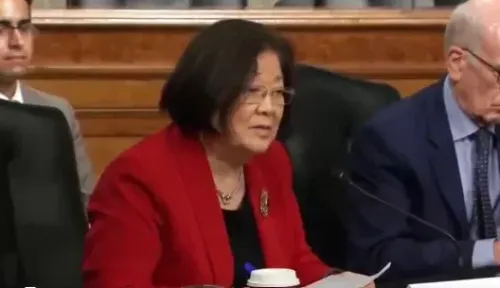
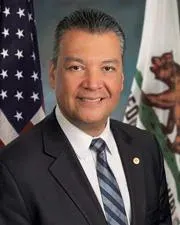
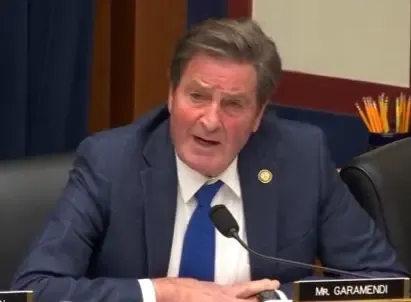
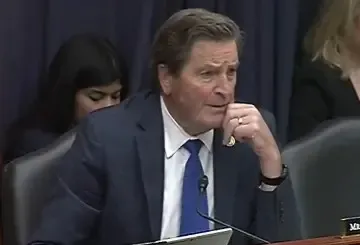
Four Democratic lawmakers from California have introduced legislation that would allow decades-old deportation orders to expire and open a pathway to permanent residence for long-settled immigrants — directly citing the case of Harjit Kaur, a Sikh grandmother deported to India after more than 30 years in the United States. The Protect Our Neighbors Act was announced on Thursday, 20 November 2026, by Representatives Lateefah Simon, John Garamendi, Zoe Lofgren, and Juan Vargas.
The Case That Drove the Bill
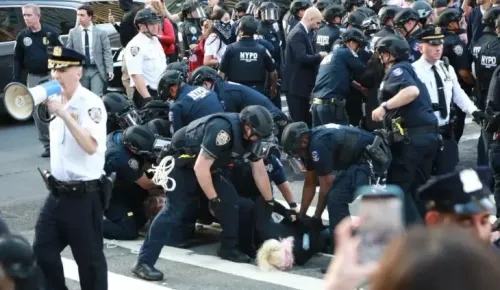
Harjit Kaur had lived in the US since the early 1990s and complied with immigration requirements, reportedly checking in with authorities every six months for more than 13 years. She was detained during a routine immigration check-in in September 2025 and subsequently deported to India, despite her long record of compliance and deep community roots.
Her family described the experience in stark terms. 'We are still traumatized and horrified by the cruel treatment of our grandmother one year ago,' the family said in a statement released through Representative Simon's office. They described Kaur as a central figure in both family life and the wider community, having raised children and grandchildren during her decades in America.
What the Legislation Proposes
The published bill would make final removal orders expire 10 years after issuance. An immigration judge could renew an expired order at the Homeland Security Secretary's request, but only upon clear and convincing evidence of significant reasons for the delay — unrelated to administrative or funding problems — and new evidence establishing that renewal served the public interest.
Immigrants whose orders had expired and were not renewed could seek lawful status after at least 10 years of continuous US presence, provided they had no conviction for an offence punishable by more than a year in prison. A renewal would be barred while such a petition was pending.
A separate provision would allow discretionary permanent residence for certain individuals physically present in the US with longstanding orders based on specified immigration grounds. Applications would require a fee capped at $1,200 and a certified copy of the applicant's latest federal income-tax return. Critically, neither order expiration nor a pending application would automatically confer a green card.
Lawmakers' Argument
The sponsors argued that immigrants whose removal had been deferred for years had built families, worked, and established community ties while remaining perpetually vulnerable to deportation. 'We need a sensible immigration policy for those who have resided peacefully for a long time in America,' Representative Lofgren said.
Garamendi's office framed Kaur's experience as emblematic of the broader uncertainty facing longstanding residents with unresolved immigration status — people who have remained in contact with authorities yet lack a clear legal pathway to stability.
Context and What Comes Next
The bill comes amid a broader national debate over the treatment of long-settled immigrants with unresolved legal status, a cohort that advocates argue has grown substantially over decades of deferred enforcement. This is not the first time California lawmakers have pushed for relief provisions, but the Kaur case has given the effort a specific, high-profile human anchor.
The legislation faces an uncertain path in Congress, where immigration reform proposals have repeatedly stalled. Its introduction, however, signals renewed Democratic intent to put individual deportation cases at the centre of a legislative argument. How Republican counterparts respond — and whether the bill attracts bipartisan support — will determine its chances of advancing beyond committee.
Point of View
13 years of voluntary check-ins, deported anyway. What the bill does not resolve is the enforcement gap that created the problem in the first place: orders that sat dormant for years while lives were built around them. Whether Congress treats that gap as a humanitarian failure or a system working as intended will reveal more about the current political moment than the bill's own text.
NationPress
20 Nov 2026
Frequently Asked Questions
What is the Protect Our Neighbors Act?
The Protect Our Neighbors Act is a US immigration bill introduced by four California Democratic lawmakers on 20 November 2026. It would allow final deportation orders to expire 10 years after issuance and create a pathway for eligible long-settled immigrants to seek lawful permanent residence.
Who is Harjit Kaur and why is her case significant?
Harjit Kaur is a Sikh grandmother who lived in the United States from the early 1990s and voluntarily checked in with immigration authorities every six months for over 13 years. She was detained at a routine check-in in September 2025 and deported to India, despite her decades-long compliance — a case the bill's sponsors cite as emblematic of the system's failures.
Who introduced the Protect Our Neighbors Act?
The bill was introduced by Representatives Lateefah Simon, John Garamendi, Zoe Lofgren, and Juan Vargas, all Democrats representing California.
What conditions must immigrants meet to benefit from this bill?
Immigrants must have at least 10 years of continuous US presence and no conviction for an offence punishable by more than one year in prison. Applications require a fee capped at $1,200 and a certified copy of the applicant's latest federal income-tax return; neither an expired order nor a pending petition automatically grants a green card.
What are the chances of the bill passing in Congress?
The bill faces significant uncertainty in Congress, where immigration reform measures have repeatedly stalled. Its introduction signals Democratic intent to keep individual deportation cases central to the legislative debate, but bipartisan support — essential for passage — has not yet emerged.