CM Bhajan Lal Sharma pays tribute to Sant Namdev on his Jayanti
Synopsis
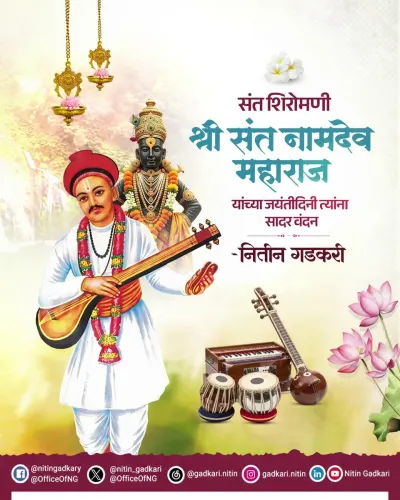
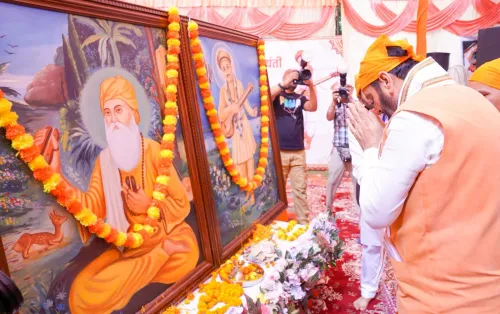
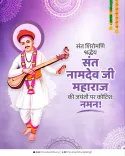
Rajasthan Chief Minister Bhajan Lal Sharma paid tribute to 13th-14th century Bhakti saint Namdev Ji Maharaj on his Jayanti, highlighting the saint's enduring message of love, social equality, harmony and service to humanity.
Key Takeaways
CM Bhajan Lal Sharma posted a tribute on 20 November 2026 marking the Jayanti of Sant Namdev Ji Maharaj .
Namdev was a 13th–14th century Bhakti saint from the Varkari tradition , composing devotional poetry in Marathi and Hindi.
His verses are addressed to Lord Vitthal of Pandharpur and emphasise devotion, social equality and selfless service.
Several of Namdev's compositions are enshrined in the Guru Granth Sahib , reflecting his cross-community spiritual influence.
The Chief Minister invoked Namdev's core values of love, equality, harmony and benevolence as a guiding light for society.
Such Jayanti tributes are a standard practice among Indian state leaders, reinforcing shared cultural and spiritual heritage.
A 13th-century poet-saint's message of love and equality echoed through the corridors of modern governance on Friday, 20 November 2026, as Rajasthan Chief Minister Bhajan Lal Sharma offered a formal tribute to Sant Namdev Ji Maharaj on the occasion of his Jayanti.
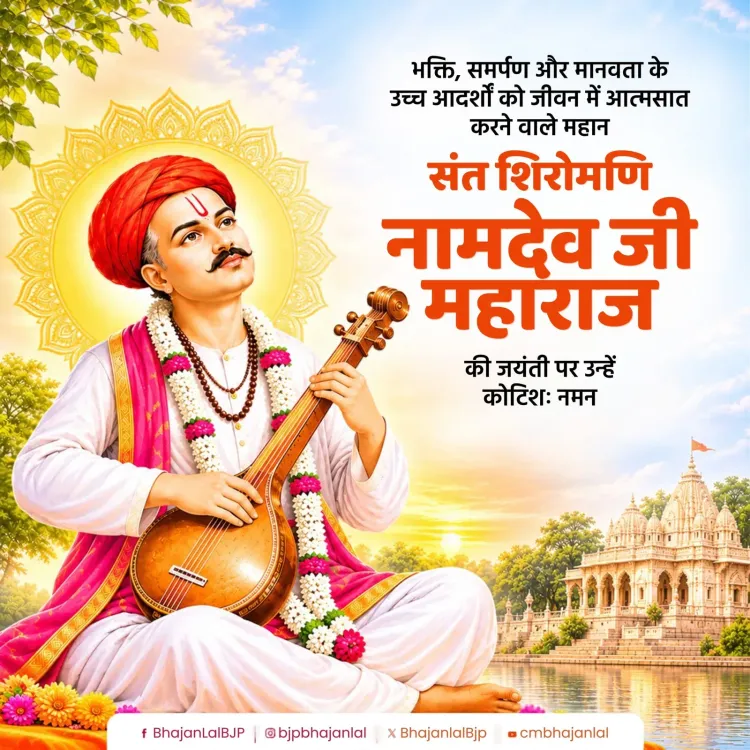
Posting on X in Hindi, CM Sharma wrote: 'भक्ति, समर्पण और मानवता के उच्च आदर्शों को जीवन में आत्मसात करने वाले महान संत शिरोमणि नामदेव जी महाराज की जयंती पर उन्हें कोटिशः नमन!' — 'Countless salutations to the great saint Namdev Ji Maharaj on his Jayanti, one who embodied devotion, dedication and the highest ideals of humanity in his life.' The Chief Minister added that Namdev's ideas and spiritual message would continue to guide society on the path of love, equality, harmony and benevolence, and that his inspiring life would forever motivate people toward public welfare and service to humanity.
Who was Sant Namdev Ji Maharaj?
Sant Namdev Ji Maharaj was a towering figure of the Bhakti movement, rooted in the Varkari tradition of Maharashtra. Living between the 13th and 14th centuries, he composed devotional poetry in both Marathi and Hindi, dedicating his verses to Lord Vitthal of Pandharpur. His poetry cut across caste lines, insisting on the spiritual equality of all human beings — a radical idea for his era that resonated far beyond Maharashtra's borders.
His influence spread across northern India as well, and several of his compositions found a place in the Guru Granth Sahib, the holy scripture of Sikhism, underscoring how his message transcended regional and religious boundaries. For millions of devotees across India, Namdev represents the living heart of the Bhakti tradition.
A tradition of remembrance in Indian political culture
Chief ministers and senior political leaders across India observe the Jayantis of medieval Bhakti and Sufi saints as moments of public acknowledgement of shared spiritual heritage. These tributes draw on themes — equality, compassion, service — that carry both cultural weight and contemporary relevance. CM Sharma's message follows this well-established convention, connecting the BJP-led Rajasthan government to a cross-community legacy of devotion and social harmony.
In a political landscape where identity and heritage frequently intersect, the choice to invoke Namdev's universal message of 'prem, samanta, sadbhav aur paropkar' — love, equality, harmony and benevolence — signals an alignment with the inclusive, service-oriented strand of India's saint tradition. The kicker, as any devotee of the Bhakti saints would put it: seven centuries on, the message still travels.
Point of View
Which frequently invokes the Bhakti and sant traditions to project an inclusive, heritage-rooted identity. Namdev's cross-regional, cross-community appeal — his compositions appear in Sikh scripture as well as Maharashtra's Varkari canon — makes him a particularly resonant figure for messaging that must land across diverse voter and devotee communities. The emphasis on 'equality and harmony' drawn from medieval saint poetry also allows the government to associate itself with progressive social values rooted in India's own spiritual history. As more state leaders issue similar messages on upcoming saint anniversaries, the cumulative effect is a soft-power narrative that links contemporary governance to centuries of reformist devotional thought.
NationPress
20 Nov 2026
Frequently Asked Questions
Who was Sant Namdev Ji Maharaj?
Sant Namdev Ji Maharaj was a 13th–14th century Bhakti poet-saint from the Varkari tradition of Maharashtra. He composed devotional poetry in Marathi and Hindi in praise of Lord Vitthal of Pandharpur, championing social equality and selfless service. Some of his compositions are included in the Guru Granth Sahib.
Why did Bhajan Lal Sharma post a tribute to Sant Namdev?
CM Bhajan Lal Sharma posted the tribute to mark Sant Namdev Ji Maharaj's Jayanti — the anniversary of the saint's birth — a practice common among Indian chief ministers who acknowledge the Jayantis of revered saints as moments of shared cultural and spiritual remembrance.
What is the Varkari tradition associated with Sant Namdev?
The Varkari tradition is a devotional movement centred on worship of Lord Vitthal at the Pandharpur temple in Maharashtra. It emphasises personal devotion, equality among devotees regardless of caste, and regular pilgrimage. Sant Namdev is one of the tradition's most celebrated poet-saints.
What values did CM Sharma highlight in his tribute to Namdev?
CM Sharma highlighted love, equality, harmony and benevolence as the core values Namdev's spiritual message embodies, and said the saint's inspiring life would continue to motivate people toward public welfare and service to humanity.
Is Sant Namdev revered outside Maharashtra?
Yes. Sant Namdev's influence extended well beyond Maharashtra — several of his devotional compositions were included in the Guru Granth Sahib, the holy scripture of Sikhism, making him a revered figure across multiple communities and regions of India.