Rajasthan CMO hails Lokmanthan as moment of pride for state
Synopsis
The Chief Minister's Office of Rajasthan on 20 November 2026 described Lokmanthan as a festival of India's cultural consciousness and folk-life traditions, calling its hosting on Rajasthan's soil a moment of pride for the state, in a post tagged to CM Bhajan Lal Sharma.
Key Takeaways
The Chief Minister's Office of Rajasthan posted about Lokmanthan on 20 November 2026 , calling it a festival of India's cultural consciousness.
The post was tagged to Chief Minister Bhajan Lal Sharma , who has held office since December 2023 .
The hashtag #आपणो_अग्रणी_राजस्थान ('Our Leading Rajasthan') accompanied the post, reinforcing the state's cultural identity branding.
Rajasthan's government described hosting Lokmanthan on its soil as a 'moment of pride' for the state.
Exact dates, venue, and programme details of this Lokmanthan edition have not been officially confirmed in public record.
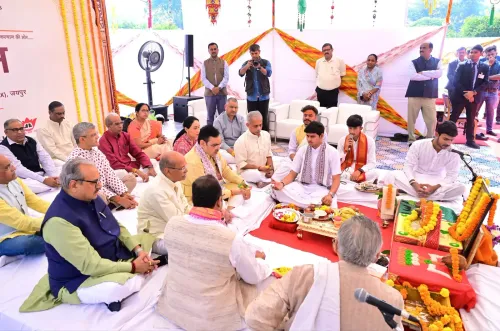
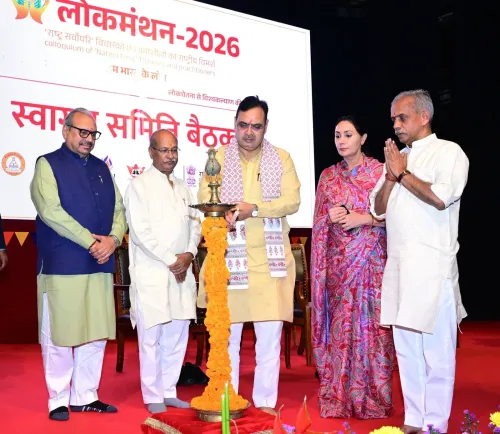
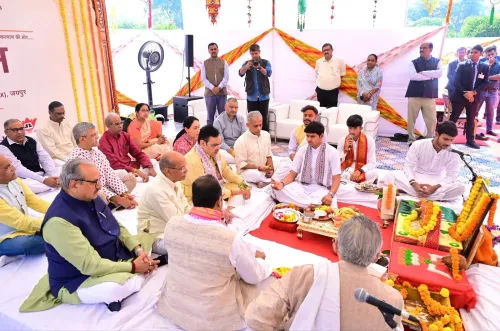
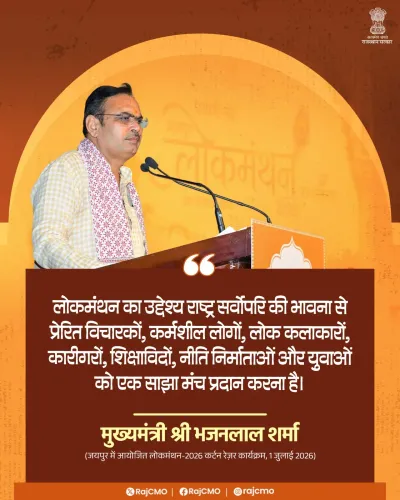
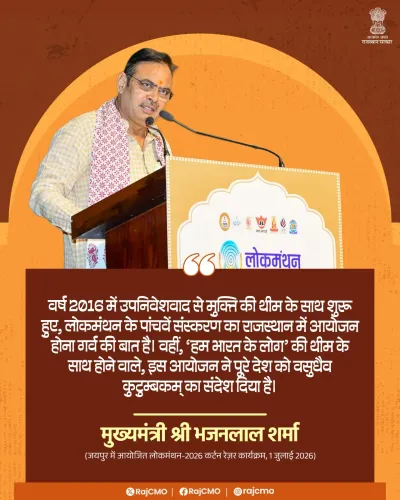
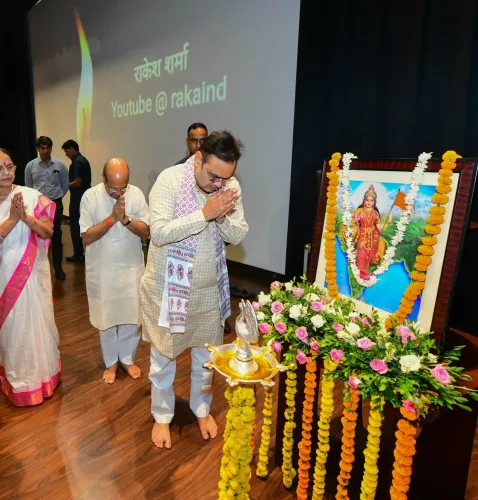
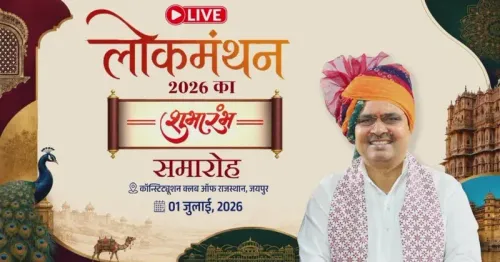
Rajasthan's folk soul is on display — and the state's own soil is the stage. The Chief Minister's Office of Rajasthan posted on X on Friday, 20 November 2026, calling Lokmanthan a celebration of India's cultural consciousness and folk-life traditions, and describing its hosting on Rajasthan's land as a moment of pride for the state.
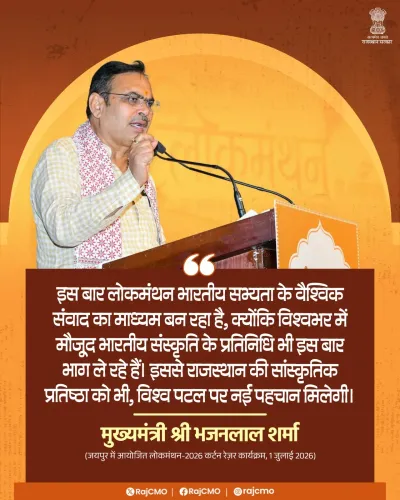
The post, tagged to Chief Minister Bhajan Lal Sharma with the hashtag #आपणो_अग्रणी_राजस्थान ('Our Rajasthan — the leader'), frames Lokmanthan not merely as a cultural event but as an emblem of the state's identity. 'Lokmanthan is a festival of India's cultural consciousness and the traditions of folk life,' the post reads, 'and its organisation on Rajasthan's soil is a moment of pride for the state.'
What Lokmanthan stands for
The name itself signals ambition: lok means 'people' or 'folk', and manthan means 'churning' — an evocation of the mythological samudra manthan, the cosmic churning that brought forth treasures. Applied to culture, it suggests a gathering where folk traditions are stirred together to surface something essential and enduring.
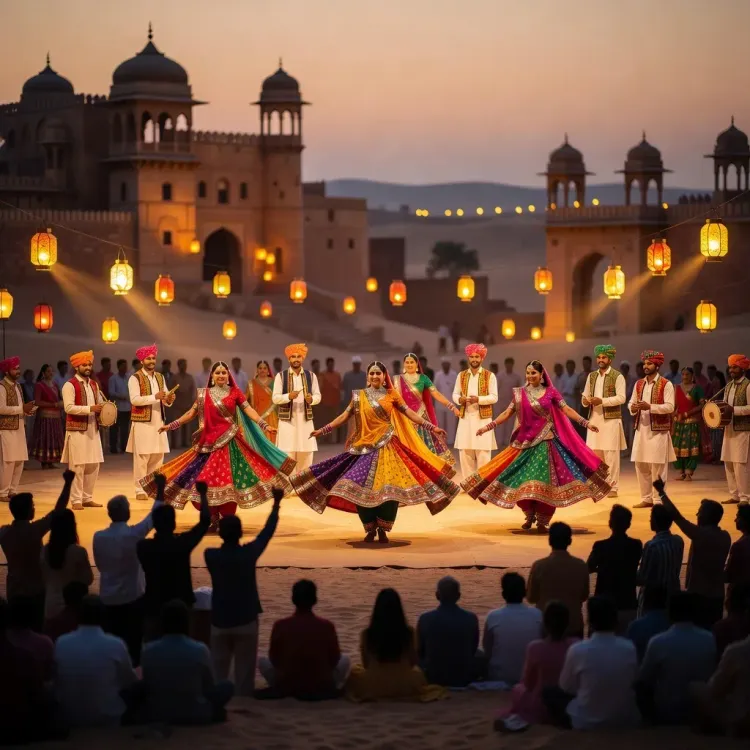
Rajasthan is widely regarded as one of India's most culturally layered states — home to distinctive desert music forms, classical dance traditions such as Ghoomar and Kalbelia, puppetry, storytelling, and a craft heritage that stretches across its arid landscape. An event that positions the state as the host of a national cultural dialogue places Rajasthan squarely at the centre of that conversation.
Bhajan Lal Sharma's cultural pitch for Rajasthan
Chief Minister Bhajan Lal Sharma, who took office in December 2023 after the BJP's victory in the Rajasthan assembly elections, has sought to anchor his administration's identity partly in cultural pride. The hashtag #आपणो_अग्रणी_राजस्थान — a Rajasthani-language phrase meaning 'Our Leading Rajasthan' — has become a recurring emblem of that positioning, blending regional linguistic identity with an aspirational governance narrative.
Rajasthan governments have historically used cultural festivals as tools of soft power — drawing folk artists, domestic tourists, and national attention simultaneously. Hosting an event framed around 'India's cultural consciousness' at the state level lifts that tradition into a broader national frame, suggesting Rajasthan as not just a repository of its own heritage but a keeper of something pan-Indian.
The specifics of Lokmanthan's dates, venue, and participating troupes have not been officially confirmed in public record. What the official post does confirm is the government's intent to claim this event as a matter of state honour — a signal that institutional weight is behind it.
India's folk traditions rarely get prime-time scaffolding. When a state's highest office calls their celebration a moment of pride, it changes the register — from local custom to national statement.
Point of View
Still consolidating his brand less than three years into office, anchoring the state to a national cultural narrative offers a low-risk, high-visibility dividend. The move also signals Rajasthan's ambition to rival states like Madhya Pradesh and Uttar Pradesh in using cultural events as development and tourism levers. Whether Lokmanthan translates that symbolic weight into tangible outcomes for folk artists and heritage practitioners will be the real measure.
NationPress
20 Nov 2026
Frequently Asked Questions
Where is Lokmanthan 2026 being held?
The Chief Minister's Office of Rajasthan has indicated Lokmanthan is being hosted on Rajasthan's soil, though the specific venue and dates have not been officially confirmed in public record.
Who is Bhajan Lal Sharma?
Bhajan Lal Sharma is the Chief Minister of Rajasthan from the BJP, who was sworn into office in December 2023 following the party's victory in the Rajasthan state assembly elections.
What does the hashtag Aapno Agrani Rajasthan mean?
'Aapno Agrani Rajasthan' is a Rajasthani-language phrase meaning 'Our Leading Rajasthan.' It is used by the state government and CM Bhajan Lal Sharma's office to reinforce regional pride and an aspirational governance identity.
Why is Rajasthan significant for cultural festivals?
Rajasthan is home to some of India's most distinct folk traditions, including Ghoomar and Kalbelia dance, desert music forms, puppetry, and a rich craft heritage, making it a natural hub for national cultural events.