Rajasthan CMO: Lokmanthan Now a Global Indian Civilisation Dialogue
Synopsis
The Rajasthan Chief Minister's Office announced on 2 July 2026 that Lokmanthan is evolving into a global platform for Indian civilisational dialogue, with cultural representatives of the Indian community from around the world joining this edition for the first time.
Key Takeaways
The Chief Minister's Office of Rajasthan announced on 2 July 2026 that Lokmanthan is being positioned as a global dialogue platform on Indian civilisation.
Representatives of Indian culture from across the world are participating in this edition, marking an international expansion of the conclave.
Lokmanthan is a recurring cultural conclave in Rajasthan focused on heritage, civilisational identity, and public discourse.
The announcement aligns with a broader pattern of Indian state governments using cultural events to engage diaspora networks and project soft power.
Formal programme details, confirmed dates, and the list of overseas participating organisations have not yet been announced.
The state government used the branding hashtag #AapnoAgraniRajasthan ('Our Leading Rajasthan') with the post.
The Chief Minister's Office of Rajasthan announced on Thursday, 2 July 2026 that this edition of Lokmanthan is being positioned as a global platform for dialogue on Indian civilisation, with representatives of Indian culture from across the world participating for the first time.
Context
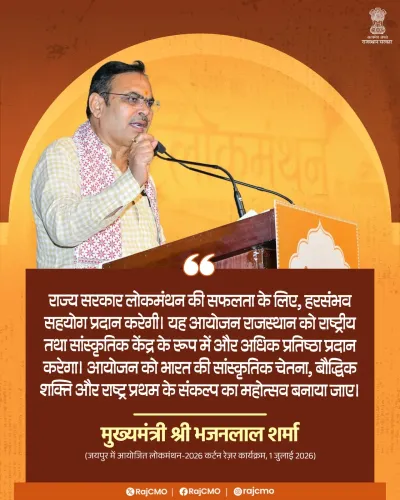
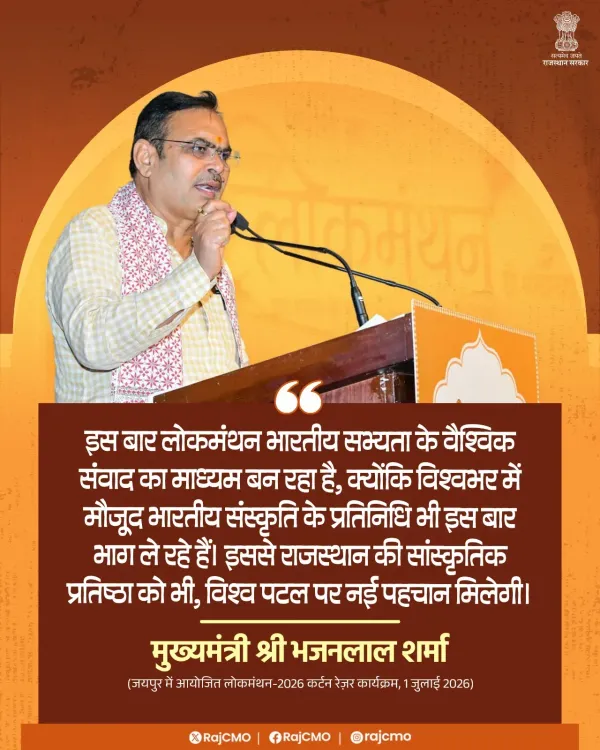
The official post from Rajasthan CMO stated: 'Is baar Lokmanthan Bhartiya sabhyata ke vaishvik samvad ka madhyam ban raha hai' — 'This time, Lokmanthan is becoming a medium for global dialogue on Indian civilisation.' The post added that representatives of Indian culture present across the world are also participating in this edition, marking a notable expansion of the conclave's reach.
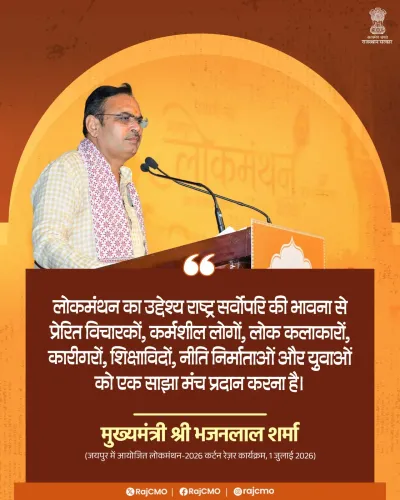
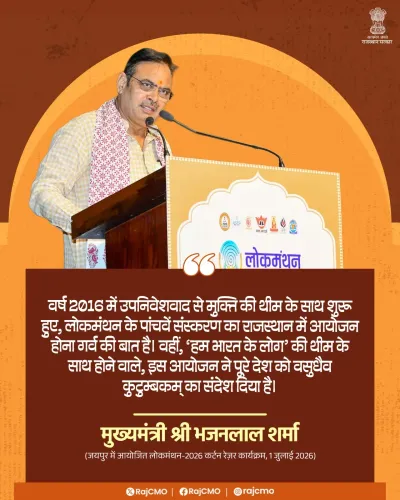
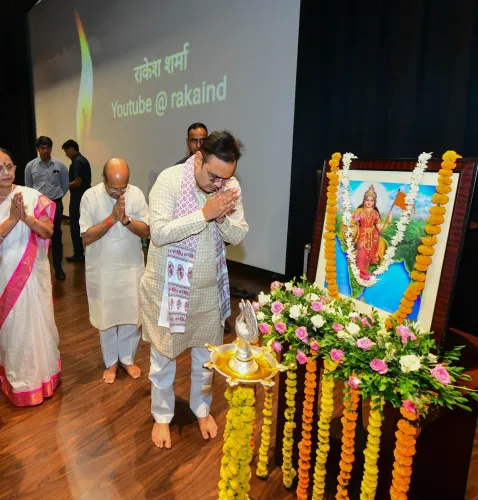
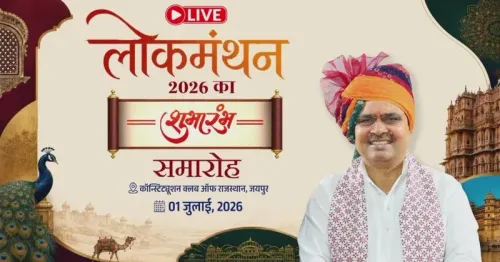
The hashtag #AapnoAgraniRajasthan ('Our Leading Rajasthan') was used, reflecting the state government's branding around cultural and developmental leadership. The announcement was accompanied by an image, underscoring the visual identity being built around the event.
Policy Backdrop
Lokmanthan is a recurring cultural conclave held in Rajasthan focused on Indian civilisation, heritage, and public discourse. It has served as a forum where intellectuals, cultural practitioners, and policymakers converge to deliberate on questions of civilisational identity and India's place in the world.
Rajasthan has a longstanding tradition of leveraging its heritage profile — from its forts and folk arts to its royal history — to anchor large-scale cultural events. State governments across India have periodically organised such conclaves to engage diaspora networks and project soft power, a pattern that sits alongside central government initiatives like Pravasi Bharatiya Divas, which formally connects the Indian government with global Indian communities.
Stakeholders and Impact
The explicit inclusion of overseas Indian cultural representatives signals that this edition of Lokmanthan is designed to transcend a domestic audience. Diaspora communities, cultural organisations operating outside India, and institutions engaged in the promotion of Indian heritage abroad are all positioned as active participants rather than observers.
For Rajasthan, hosting an event with a global Indian cultural footprint carries both soft-power and economic implications. Cultural tourism and event-linked hospitality are significant contributors to the state economy, and a conclave of this profile can amplify the state's identity as a hub for civilisational discourse.
What's Next
The formal programme, confirmed dates, venue details, and the list of participating cultural organisations from abroad are yet to be announced publicly. Observers will watch for state budget allocations directed at follow-up cultural programming and any formal partnerships with diaspora institutions that may emerge from this edition.
If Lokmanthan sustains its expanded international character beyond this edition, it could establish Rajasthan as a recurring anchor for India's civilisational diplomacy at the sub-national level — a model other heritage-rich states may seek to replicate.
Point of View
Positioning a state-level cultural event within the larger national project of civilisational assertion. By explicitly including overseas Indian cultural representatives, the conclave attempts to bridge domestic heritage programming with diaspora engagement — a space the central government has historically dominated through platforms like Pravasi Bharatiya Divas. For Rajasthan's ruling establishment, this international branding serves a dual purpose: elevating the state's profile in cultural diplomacy while reinforcing a political identity rooted in civilisational pride. Whether the conclave delivers substantive international participation or remains largely symbolic will determine its long-term credibility as a global forum.
NationPress
30 Sept 2026
Frequently Asked Questions
What is new about Lokmanthan 2026?
According to the Rajasthan Chief Minister's Office, the 2026 edition of Lokmanthan is being expanded to include representatives of Indian culture from across the world, making it a global platform for dialogue on Indian civilisation for the first time.
Who is organising Lokmanthan 2026?
The event is associated with the Government of Rajasthan, with the Chief Minister's Office making the announcement. Specific organising bodies and partner institutions have not yet been publicly confirmed.
What does Pravasi Bharatiya Divas have to do with Lokmanthan?
Pravasi Bharatiya Divas is a central government initiative to connect with the global Indian diaspora. Lokmanthan's expansion to include overseas Indian cultural representatives places it in a similar space at the state level, signalling Rajasthan's ambition to engage diaspora communities independently.
When and where will Lokmanthan 2026 be held?
The exact dates and venue for the 2026 edition of Lokmanthan have not been officially announced as of the Rajasthan CMO's post on 2 July 2026. Further details are awaited.