Why Did a US Lawmaker Leave His Seat Empty in Honor of an Indian American?

Synopsis
A US Congressman honors an Indian American grandmother by leaving her seat empty at the State of the Union. This poignant act highlights the harsh realities of Trump's immigration policies and the human cost of mass deportations. Discover the story of Harjit Kaur, a 73-year-old grandmother who experienced a tragic deportation.
Key Takeaways
Congressman Garamendi's tribute highlights the personal impact of immigration policies.
Harjit Kaur's story exemplifies the human face of deportation.
Immigration enforcement is a divisive issue in US politics.
Detention conditions raise important human rights concerns .
India remains a significant source of deportations in the US.
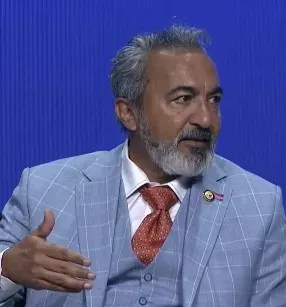
Washington, Feb 21 (NationPress) A prominent Democratic representative left his State of the Union guest seat vacant to pay tribute to a 73-year-old Indian grandmother who was detained and deported by US immigration officials.
Congressman John Garamendi stated that he was dedicating the seat to his former constituent, Harjit Kaur, who was deported to India last year.
“I am dedicating my State of the Union guest seat to my former constituent, 73-year-old grandmother Harjit Kaur. She is regrettably unable to attend due to being cruelly deported to India in the dead of night,” Garamendi expressed in a statement.
President Donald Trump is set to deliver the State of the Union Address on February 24.
“This seat symbolizes her plight and every individual across the nation who has been caged, detained, or killed by Trump's secret police force. Let her empty seat be a stark representation of the human cost of Trump's harsh deportation policies,” he added.
Kaur, aged 73, had resided in the United States since the early 1990s. Following the denial of her asylum case in 2012, she diligently complied with Immigration and Customs Enforcement (ICE) check-ins in San Francisco every six months for over 13 years.
On September 8, 2025, she was detained during a standard check-in and held at an ICE facility in Bakersfield, California. The next day, she was moved to the Mesa Verde Detention Facility.
On September 19, around 2:00 a.m., she was handcuffed and transported from Bakersfield to Los Angeles, then flown to Georgia without notice to her lawyer or family. Shortly afterwards, she was placed on a charter flight to India.
Her family was unaware of her whereabouts for over 24 hours. Although they had arranged commercial travel and intended to accompany her to India, she was deported without a chance to say farewell.
“President Trump claimed he would target the ‘worst of the worst’ in his immigration policy. However, his administration's decision to inhumanely deport a 73-year-old grandmother with no criminal record—who faithfully reported to ICE every six months for over 13 years—is yet another example of the thousands of lives and families disrupted by Trump's ICE,” Garamendi remarked.
“Regrettably, this has become alarmingly common under Donald Trump's mass deportation agenda. I dedicate this seat to Harjit, her family, and everyone affected by this rogue administration.”
The Congressman’s office reported that during her detention, Kaur was held for hours without any bedding or seating, forced to sleep on the floor, shackled during transfers, denied vegetarian meals in accordance with her religious beliefs, restricted from showering, denied access to prescribed medications, and provided insufficient water. At one point, she was given only a bowl of ice after not receiving a meal for over a day.
Her attorney noted that she received only one of several prescribed medications and did not see a doctor or nurse despite multiple requests. She had previously undergone double knee replacement surgery and suffered from thyroid disease and chronic migraines.
Since her return to India, she has maintained contact with her family but continues to face health challenges without nearby relatives to provide support.
Immigration enforcement remains one of the most divisive issues in US politics in recent years, especially under President Trump’s administration. His policies have drawn both backing for stricter border controls and criticism over detention conditions and deportation practices.
India is one of the countries whose nationals face expulsion proceedings in the United States, and deportations of Indian citizens have intermittently ignited debate in both Washington and New Delhi regarding consular access, documentation, and humanitarian safeguards.
Point of View
It's crucial to underscore the humanitarian implications of immigration enforcement. This situation reflects the broader issues within US immigration policy and raises questions about compassion and justice in a system often criticized for its harshness. Our commitment should be to report with integrity and empathy, focusing on the human stories behind the headlines.
NationPress
1 Oct 2026
Frequently Asked Questions
What prompted Congressman Garamendi to leave his seat empty?
He dedicated the seat to Harjit Kaur, a 73-year-old Indian grandmother who was detained and deported by US immigration authorities.
How long had Harjit Kaur lived in the US?
Harjit Kaur had lived in the United States since the early 1990s.
What were the conditions of Harjit Kaur's detention?
During her detention, Kaur faced numerous hardships, including being shackled during transfers, denied proper meals, and lacking access to medical care.
What impact has Trump's immigration policy had on individuals like Kaur?
Trump's immigration policy has led to the detention and deportation of numerous individuals, causing significant distress to families and communities.
What is the current status of deportations of Indian nationals in the US?
Deportations of Indian citizens continue to be a contentious issue, leading to discussions about consular access and humanitarian protections.