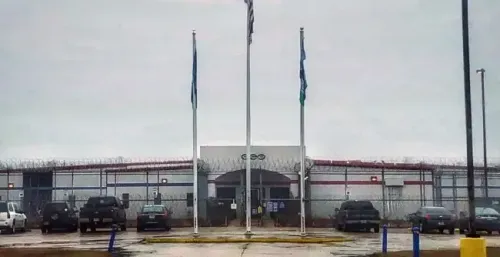
ICE paid $13 million monthly for empty detention beds, US audit finds

Synopsis
A federal audit has found that ICE paid $13 million every month for nearly 10,000 beds that sat empty — while also buying $1.07 billion worth of warehouses it is now selling off. The GAO's findings expose deep planning failures inside a $45 billion detention expansion that Congress approved just last year, with oversight positions half-filled and spending projections wildly off-target.
Key Takeaways
ICE paid an estimated $13 million a month for unused detention beds across four facilities , per a GAO audit released on 20 November 2026 .
An average of 9,733 beds remained empty daily; Diamondback Correctional Center and California City Correctional Facility accounted for the bulk of the cost.
ICE purchased 11 warehouses for $1.07 billion then scaled back, and now plans to sell seven of them; it also bought four detention facilities for $2.2 billion in mid-2026.
ICE was working to fill 55 of 87 oversight positions responsible for facility management and invoice validation.
The GAO rejected DHS's claim that spending-plan recommendations were already implemented, noting projections were still $38 billion — far above actual $10 billion obligations.
Senator Dick Durbin called for congressional accountability, stating 'It is time to hold DHS and ICE responsible.'
US Immigration and Customs Enforcement (ICE) paid an estimated $13 million a month for unused detention beds across four facilities, according to a federal audit released on 20 November 2026 that raised serious questions about the planning and cost-effectiveness of the agency's detention expansion programme. The findings come from the Government Accountability Office (GAO), Washington's independent congressional watchdog.
The Scale of Unused Capacity
An average of 9,733 beds covered by guaranteed contractual commitments remained empty each day during the period examined, the GAO found. The four facilities cited in the monthly cost estimate were California City Correctional Facility, North Lake Correctional Facility, Folkston D. Ray Processing Center, and Diamondback Correctional Center.
Diamondback alone accounted for approximately $5.84 million a month, while California City contributed around $5.02 million. The GAO's calculation included facility-wide charges as well as applicable daily bed rates. Guaranteed payment structures, the audit noted, can help ICE secure space at short notice and shield operators from financial losses — but they also leave the government paying for capacity that goes unused.
Warehouse Purchases and Billion-Dollar Acquisitions
The audit's concerns extended well beyond daily bed costs. Following Congress's provision of $45 billion for immigration detention in July 2025, ICE moved aggressively to expand its physical footprint. The agency purchased 11 warehouses for approximately $1.07 billion before substantially scaling back its conversion programme — it now plans to sell seven of those properties.
ICE also acquired four existing detention facilities for approximately $2.2 billion in July and August 2026. The GAO said the scope, timetable, and estimated costs of further acquisitions remained undetermined at the time of the review.
Planning Gaps and Oversight Shortfalls
The watchdog found that ICE had not updated its spending plan to reflect major changes in its warehouse programme, nor had it adequately assessed the full lifetime costs of its investments. Oversight staffing was also stretched: ICE was working to fill 55 of 87 allocated positions responsible for facility oversight and invoice validation — a gap that the audit flagged as a material risk to expenditure control.
The Department of Homeland Security (DHS) agreed with the GAO's two principal recommendations: that ICE produce timely and complete spending plans with lifetime cost estimates, and that it consider alternatives before committing to significant new detention investments.
DHS Response and GAO Pushback
However, DHS asked the GAO to close the spending-plan recommendation as already implemented, arguing that applicable plans had been developed, approved, and updated in line with ICE guidance. The GAO declined. It noted that the plan submitted in July still projected more than $38 billion in fiscal 2026 obligations, even after the major contraction of the warehouse programme. ICE ultimately reported approximately $10 billion in obligations from the detention allocation by the fiscal year's end — a significant divergence. DHS said ICE would work with the department's management directorate on a standard process for evaluating future investments. Both recommendations remained open.
Congressional Reaction
Senator Dick Durbin, the senior Democrat on the Senate Judiciary Committee and one of the lawmakers who requested the review, said the findings demonstrated waste within the Trump administration's immigration-enforcement programme. 'It is time to hold DHS and ICE responsible,' Durbin said in a statement. He also highlighted the warehouse purchases and the staffing shortages in detention expenditure oversight as grounds for closer congressional scrutiny. The audit's release and his remarks arrived together, amplifying political pressure on the administration to justify its detention spending.
Point of View
Moved fast to acquire properties, and ended the fiscal year with obligations of roughly $10 billion against projections of $38 billion: a planning disconnect of staggering proportions. The warehouse buy-and-sell cycle, costing over a billion dollars for assets now being offloaded, suggests procurement decisions were made without basic lifecycle analysis. Critically, with 55 of 87 oversight posts unfilled, the agency lacked the internal controls to catch or correct course — a structural vulnerability that no spending plan revision alone will fix.
NationPress
20 Nov 2026
Frequently Asked Questions
Why was ICE paying for empty detention beds?
ICE had signed guaranteed-payment contracts with detention facility operators, committing to pay for a fixed number of beds regardless of whether they were occupied. Such arrangements help the agency secure space quickly and protect operators from financial risk, but they left the government paying an estimated $13 million a month for an average of 9,733 unused beds daily.
Which facilities were involved in the unused-bed payments?
The four facilities cited in the GAO audit were California City Correctional Facility, North Lake Correctional Facility, Folkston D. Ray Processing Center, and Diamondback Correctional Center. Diamondback alone accounted for about $5.84 million a month, with California City adding roughly $5.02 million.
What were the warehouse purchases about?
After Congress allocated $45 billion for immigration detention in July 2025, ICE purchased 11 warehouses for approximately $1.07 billion, intending to convert them into detention space. The agency subsequently scaled back the programme and now plans to sell seven of those properties, raising questions about the cost-effectiveness of the initial acquisitions.
What did the GAO recommend, and has DHS complied?
The GAO made two recommendations: that ICE produce timely spending plans with lifetime cost estimates, and that it evaluate alternatives before major new investments. DHS agreed in principle but asked for one recommendation to be closed as already met — a request the GAO declined, noting that the submitted plan still contained projections far removed from actual fiscal-year outcomes. Both recommendations remained open.
Who is calling for accountability over the ICE spending findings?
Senator Dick Durbin, the senior Democrat on the Senate Judiciary Committee and one of the lawmakers who commissioned the audit, called the findings evidence of waste in the Trump administration's immigration-enforcement programme. He urged Congress to hold DHS and ICE accountable and flagged both the warehouse purchases and understaffed oversight as priorities for further scrutiny.