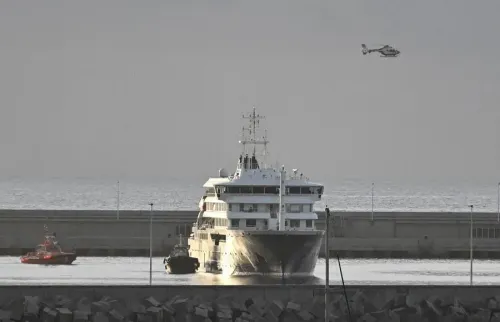
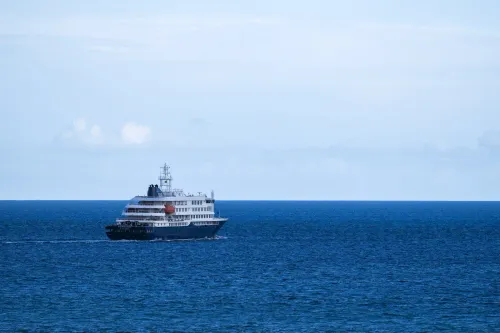
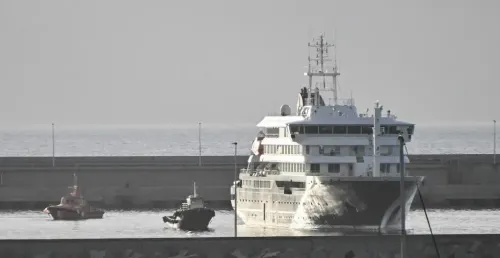
WHO confirms 2nd hantavirus case on Dutch cruise ship in Atlantic

Synopsis
A confirmed hantavirus death aboard a cruise ship in the Atlantic Ocean — a disease almost exclusively linked to rural rodent exposure — has raised urgent questions about how the virus reached a maritime vessel. With 150 people still on board, two crew members critically ill, and WHO confirmation of a second case, this outbreak is far from contained.
Key Takeaways
WHO has confirmed a second hantavirus case aboard an Oceanwide Expeditions cruise ship in the Atlantic Ocean .
The newly confirmed case was a Dutch female passenger who died on 27 April .
Deaths on board include a Dutch couple and a German national ; a British national is receiving intensive care in Johannesburg, South Africa .
Two crew members — British and Dutch — continue to present acute respiratory symptoms, one mild and one severe, both requiring urgent medical care.
Approximately 150 people remain on board; no additional symptomatic persons have been identified as of the latest statement.
Hantavirus spreads through contact with infected rodent urine, droppings, or saliva ; human-to-human transmission is rare.
The World Health Organization (WHO) has confirmed a second hantavirus infection aboard a vessel in the Atlantic Ocean, bringing the total number of confirmed cases on the Dutch cruise ship to two, operator Oceanwide Expeditions said in a statement on 5 May. The newly confirmed case was a Dutch female passenger who died on 27 April.
What Has Happened on Board
The outbreak has now claimed the lives of a Dutch couple and a German national, while two crew members have fallen ill. A previously confirmed hantavirus patient — a British national — has disembarked the vessel and is currently receiving intensive care in Johannesburg, South Africa. Approximately 150 people remain on board the ship.
According to the Oceanwide Expeditions statement, two crew members — of British and Dutch nationality — continue to present acute respiratory symptoms, with one classified as mild and the other as severe. The operator noted that both require urgent medical care. As of the statement's release, no additional persons with symptoms had been identified on board.
What Is Hantavirus and How Does It Spread
Hantaviruses are a group of viruses carried by rodents that can cause severe and potentially fatal disease in humans. Infection typically occurs through contact with infected rodents or their urine, droppings, or saliva. Human-to-human transmission is considered rare, according to WHO.
Exposure most commonly takes place during activities such as cleaning buildings with rodent infestations or spending time in heavily infested rural environments — including forests, fields, and farms. The presence of hantavirus aboard an ocean-going cruise vessel is notably unusual, as the disease is most commonly reported in rural settings.
Symptoms and Timeline of Hantavirus Pulmonary Syndrome
Hantavirus Pulmonary Syndrome (HPS) is characterised by headache, dizziness, chills, fever, muscle pain, and gastrointestinal problems including nausea, vomiting, diarrhoea, and abdominal pain. These are followed by sudden onset of respiratory distress and hypotension. Symptoms typically emerge 2 to 4 weeks after initial exposure, though they may appear as early as one week or as late as eight weeks following exposure.
What Happens Next
Health authorities have not yet publicly detailed how the rodent exposure may have occurred aboard the vessel, and an investigation into the source of the outbreak is reportedly ongoing. With critically ill crew members still on board and roughly 150 passengers and crew remaining on the ship, the situation continues to be monitored closely by international health officials. The case marks a rare instance of a confirmed hantavirus cluster aboard a maritime vessel, raising questions about biosecurity protocols in cruise operations.
Point of View
The optics for cruise operators — already navigating post-pandemic trust deficits — are damaging. The deeper question is whether maritime health regulations are equipped to handle zoonotic outbreaks that originate on land but manifest at sea, far from rapid medical intervention.
NationPress
22 Sept 2026
Frequently Asked Questions
What is the hantavirus outbreak on the Oceanwide Expeditions cruise ship?
WHO has confirmed two cases of hantavirus infection aboard an Oceanwide Expeditions vessel in the Atlantic Ocean. A Dutch female passenger died on 27 April, and a British national has been evacuated to intensive care in Johannesburg, South Africa.
How many people have died from hantavirus on the cruise ship?
Three people have died on board — a Dutch couple and a German national. A second confirmed case, a Dutch female passenger, also died on 27 April, according to the operator's statement.
How does hantavirus spread, and is it contagious between people?
Hantavirus spreads through contact with infected rodent urine, droppings, or saliva, or by touching contaminated surfaces. Human-to-human transmission is rare, according to WHO.
What are the symptoms of Hantavirus Pulmonary Syndrome (HPS)?
HPS symptoms include headache, dizziness, chills, fever, muscle pain, and gastrointestinal issues, followed by sudden respiratory distress and low blood pressure. Symptoms typically appear 2 to 4 weeks after exposure, but can emerge anywhere from one to eight weeks.
How many people remain on the cruise ship and what is their status?
Approximately 150 people remain on board as of the latest statement. Two crew members of British and Dutch nationality are presenting acute respiratory symptoms — one mild and one severe — and both require urgent medical care. No additional symptomatic individuals have been identified.