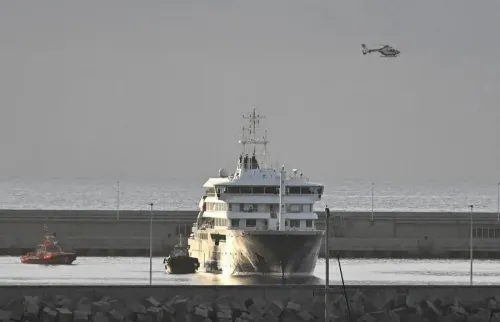
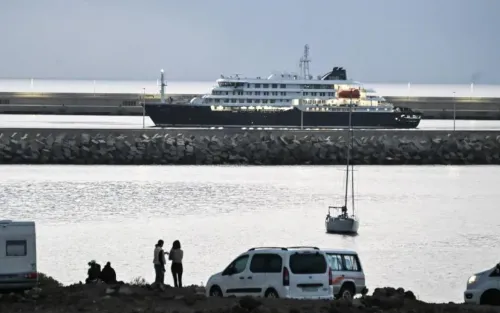
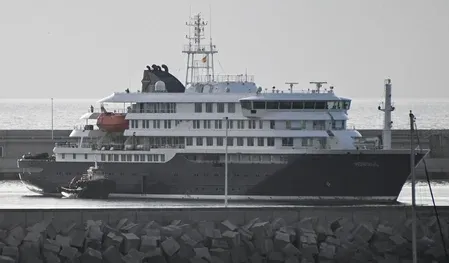
Hantavirus cruise ship MV Hondius docks in Rotterdam; 3 dead, Canada confirms case
Synopsis
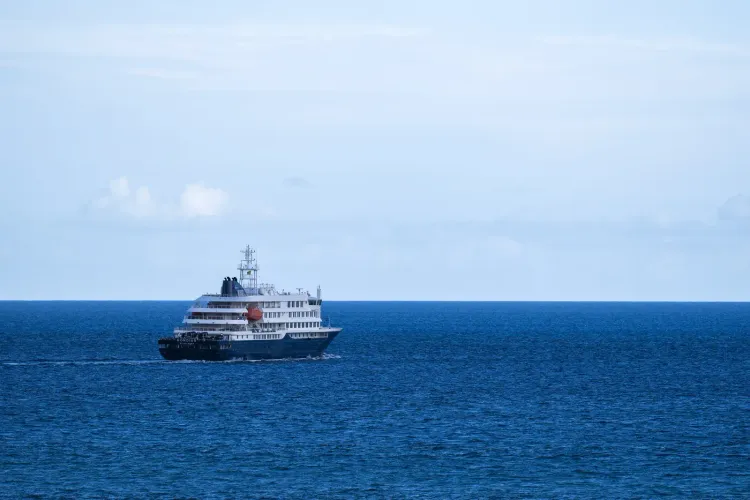
A polar expedition cruise ship linked to three hantavirus deaths has docked in Rotterdam for disinfection, with 27 crew and medical staff facing a six-week quarantine. Canada has now confirmed a positive case in a British Columbia passenger — raising the stakes for a disease with a weeks-long incubation period and passengers already scattered across the globe.
Key Takeaways
Hantavirus-affected cruise ship MV Hondius arrived at Rotterdam on Monday, 18 May for disinfection.
The outbreak has resulted in three deaths so far; 27 people on board face up to a six-week quarantine .
Crew includes 17 Filipinos , 4 Dutch nationals , 4 Ukrainians , 1 Russian , and 1 Polish national .
The Public Health Agency of Canada (PHAC) confirmed one positive hantavirus case in a passenger isolating in British Columbia .
A travelling companion of the confirmed case tested negative; no additional cases identified as of Sunday.
Hantavirus incubation ranges from one to eight weeks , complicating global contact tracing.
The hantavirus-affected polar expedition cruise ship MV Hondius arrived at the Dutch port of Rotterdam on Monday, 18 May for disinfection, marking the final stop of a voyage that has claimed three lives and drawn urgent scrutiny from international health authorities. The ship's arrival sets in motion a structured quarantine and decontamination process coordinated with Dutch public health officials.
Who Is on Board and What Happens Next
According to Oceanwide Expeditions, the Dutch vessel's operator, 27 people remain on board — 25 crew members and two medical personnel. The group includes 17 Filipino nationals, four Dutch nationals, four Ukrainians, one Russian, and one Polish national. Most will undergo a six-week quarantine in Rotterdam. Those unable to return to their home countries will isolate in the Netherlands, the Dutch health ministry confirmed last week.
Oceanwide Expeditions said in a statement: 'The remaining crew and medical staff on board MV Hondius will disembark in a staggered approach upon arrival in Rotterdam, in close coordination with the cleaning process.'
Canada Confirms a Hantavirus Case Linked to the Voyage
The Public Health Agency of Canada (PHAC) confirmed on Sunday that a cruise passenger currently isolating in British Columbia has tested positive for hantavirus following laboratory confirmation. Samples from British Columbia were sent to the agency's National Microbiology Laboratory (NML) in Winnipeg for confirmatory testing. One individual's sample returned positive on Saturday; a second individual — a travelling companion of the confirmed case — tested negative.
PHAC stated that no additional cases have been identified so far and that all high-risk contacts are isolating and will be closely monitored by local public health authorities. The agency added that the overall risk to the general population in Canada remains low at this time.
What Is Hantavirus and Why This Outbreak Is Unusual
Hantavirus is a rare but potentially fatal viral illness typically transmitted through contact with infected rodents or their droppings. Human-to-human transmission is not commonly documented for most hantavirus strains, making an outbreak aboard a cruise ship a medically significant and unusual development. The incubation period generally ranges from one to eight weeks, complicating contact tracing for passengers who have since dispersed globally.
The outbreak aboard MV Hondius has resulted in three deaths so far. Health authorities in British Columbia had earlier announced a presumptive positive case before PHAC's laboratory confirmation elevated it to a confirmed case — a procedural distinction that reflects the rigour of the public health response.
International Health Response and Risk Assessment
The case underscores the challenge of managing infectious disease outbreaks on international vessels, where passengers from multiple countries disembark at different ports before symptoms appear. The Dutch health ministry and PHAC are coordinating on contact tracing, though the scope of passenger dispersal adds complexity. Authorities have not publicly disclosed whether other countries have been notified of passengers who may have been exposed.
With the ship now docked in Rotterdam and quarantine protocols activated, health officials will closely monitor the six-week isolation period to determine whether the outbreak has been contained or whether further cases emerge among crew and contacts.
Point of View
And cluster transmission in an enclosed vessel raises questions about the source that authorities have not yet answered publicly. The six-week quarantine window is medically sound given the incubation range, but the real risk lies with passengers who disembarked at earlier ports and may not yet know they were exposed. Canada's confirmed case in British Columbia is a signal that the epidemiological footprint extends well beyond Rotterdam. International health coordination here is not optional — it is the only tool available.
NationPress
10 Oct 2026
Frequently Asked Questions
What is the MV Hondius hantavirus outbreak?
MV Hondius is a Dutch polar expedition cruise ship that experienced a hantavirus outbreak during its voyage, resulting in three deaths. The ship docked in Rotterdam on 18 May 2025 for disinfection, with 27 remaining crew and medical staff entering quarantine.
Has Canada confirmed a hantavirus case linked to the cruise ship?
Yes. The Public Health Agency of Canada confirmed on Sunday that one passenger currently isolating in British Columbia tested positive for hantavirus. A travelling companion of the confirmed case tested negative, and no additional cases have been identified so far.
How long will the MV Hondius crew be in quarantine?
Most of the 27 people on board — 25 crew members and 2 medical personnel — are expected to undergo a six-week quarantine in Rotterdam. Those unable to return to their home countries will isolate in the Netherlands, as confirmed by the Dutch health ministry.
How does hantavirus spread, and why is this outbreak unusual?
Hantavirus is typically transmitted through contact with infected rodents or their droppings, not through human-to-human contact. A cluster of cases aboard a cruise ship is medically unusual and has prompted international health scrutiny. The incubation period ranges from one to eight weeks.
What is the risk to the general public from this outbreak?
PHAC has stated that the overall risk to the general population in Canada remains low at this time. All high-risk contacts are isolating and are being monitored by local public health authorities. Dutch and Canadian health agencies are coordinating on contact tracing.