Europe heatwave 2024: WHO declares health emergency as France, Italy, UK hit record highs
Synopsis
The WHO has stopped calling Europe's heatwave a weather event — it's now a declared health emergency. With France shattering its all-time thermal record, 16 Italian cities on maximum red alert, and 40 drowning deaths in under a week, the Charon anticyclone bearing down threatens to make this the most extreme June heat event in European recorded history.
Key Takeaways
WHO Regional Director Hans Kluge declared Europe's heatwave a 'health emergency' , warning heat has caused over 200,000 deaths in the last four years.
France recorded its hottest day since measurements began in 1947 , with a national thermal index of 29.6 degrees Celsius on 24 June .
Italy placed 16 cities under maximum red alert (Level 3), including Rome , Milan , Florence , and Venice .
Spain's Aemet issued a red alert for Andalusia with forecasts of 44 degrees Celsius ; the UK issued a rare red warning for central and southern England.
At least 40 drowning deaths have been recorded across Europe since 18 June , many involving young people seeking relief from the heat.
The Eiffel Tower and Louvre museum in Paris closed early on Tuesday due to extreme temperatures; the incoming Charon anticyclone threatens further escalation.
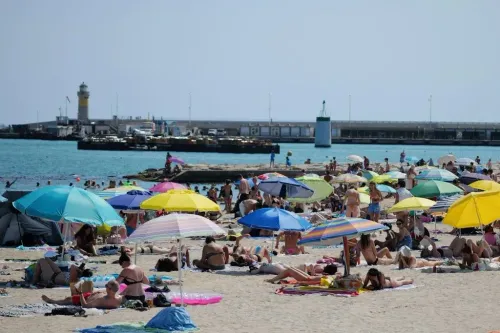
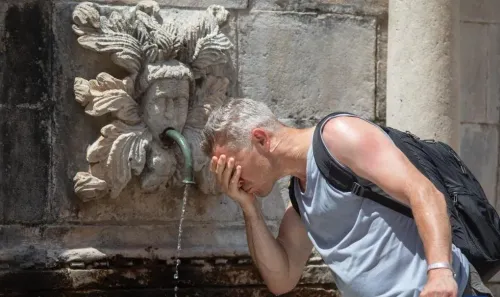
Europe is in the grip of a record-breaking heatwave that the World Health Organisation (WHO) has formally described as a 'health emergency', with France, Italy, Spain, and the United Kingdom all registering extreme temperatures and issuing their highest-level alerts as of 24 June. The crisis has already claimed lives, forced iconic landmarks to shut early, and placed health systems across the continent under acute strain.
Record Temperatures Across the Continent
Tuesday, 24 June was officially the hottest day ever recorded in France since meteorological measurements began in 1947. At 3 pm, the national thermal index reached 29.6 degrees Celsius, narrowly surpassing the previous record of 29.4 degrees Celsius set on 25 July 2019 — and also matched during the historic heatwave of 2003 on 5 August. According to Meteo-France, conditions are expected to deteriorate further in the coming hours.
In Spain, the national weather agency Aemet has issued a red alert for Andalusia, with forecasts of 44 degrees Celsius, and warnings for Cantabria and the Basque Country, where temperatures are projected to reach 40 degrees Celsius. In the United Kingdom, the meteorological office has issued a rare red warning for central and southern England, forecasting temperatures up to 40 degrees Celsius, prompting several schools to suspend activities.
Italy on Maximum Alert: 16 Cities at Red Level
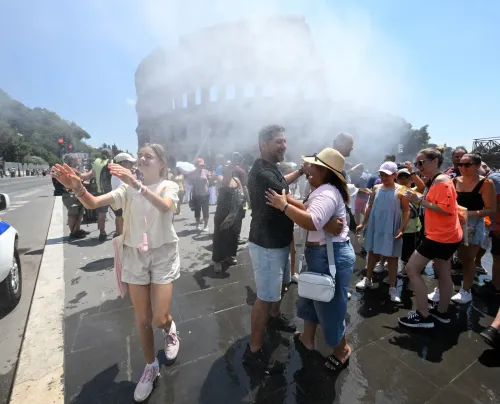
In Italy, the number of cities under red alert — the maximum Level 3, indicating emergency conditions with potential health effects even on healthy and active individuals — is set to rise to 16 on Wednesday. The cities on red alert include Ancona, Bologna, Bolzano, Brescia, Florence, Frosinone, Latina, Milan, Perugia, Pescara, Rieti, Rome, Turin, Venice, Verona, and Viterbo. Meteorologists warn that super tropical nights — with minimum temperatures above 25 degrees Celsius — will become increasingly widespread.
The current phase is being driven by the Cerberus anticyclone, which is expected to be succeeded by the African anticyclone Charon — a system described as potentially one of the most extreme anticyclonic events ever observed in June for both intensity and persistence, projected to cover at least half of Europe.
Deaths, Landmark Closures, and Human Cost
At least 40 deaths by drowning have been recorded since 18 June, with many of the victims reportedly young people seeking relief from the heat. The scale of the tragedy underscores the danger of extreme heat driving people toward water bodies without adequate safety measures.
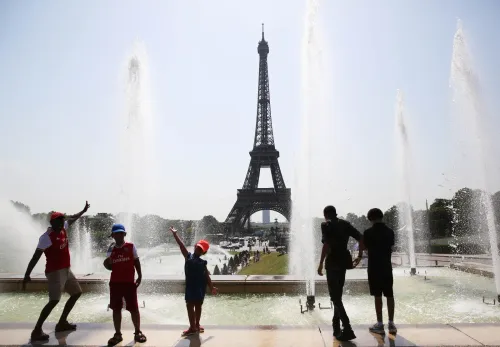
Iconic landmarks in Paris have not been spared. The Eiffel Tower closed early on Tuesday at 4 pm — described as 'exceptional' given the 'extreme temperatures expected' — while the Louvre museum also shut ahead of schedule for the same reason.
WHO Calls It a Health Emergency
Hans Kluge, WHO Regional Director for Europe, issued a stark warning in a post on X, drawing from an interview he gave to BBC News. 'Heat is no longer just a meteorological issue. It's a health emergency,' Kluge stated, adding: 'Rising temperatures are already putting human lives at risk and putting health systems under pressure across the WHO European Region.'
Kluge noted that Europe 'is the fastest warming region in the world,' and that in the last four years alone, heat has caused over 200,000 deaths, while heat-related mortality has increased by 30 per cent over the past 20 years. He emphasised, however, that such deaths 'are not inevitable,' pointing to actionable measures including timely community warnings, urban cooling initiatives, access to water and shade, monitoring of high-risk populations, and preparation of health systems ahead of peak temperatures. These steps are outlined in the new WHO Europe Guidelines for Heat and Health Action Plans.
What Comes Next
Conditions are not expected to ease in the near term. The arrival of the Charon anticyclone signals a further intensification of the crisis, with meteorologists warning that this could be among the most prolonged and severe June heatwaves in recorded European history. Health authorities across the continent are urging vulnerable groups — the elderly, young children, and those with chronic conditions — to take precautions immediately.
Point of View
000 heat-related deaths in four years and mortality up 30 per cent over two decades, the data indicts decades of under-preparation. The closure of the Eiffel Tower and the Louvre are symbols of a continent caught off-guard again, despite 2003's catastrophic precedent. The arrival of the Charon anticyclone will be the real test of whether the new WHO guidelines translate into coordinated government action — or remain aspirational documents.
NationPress
22 Sept 2026
Frequently Asked Questions
Why has the WHO declared Europe's heatwave a health emergency?
The WHO Regional Director for Europe, Hans Kluge, declared the heatwave a 'health emergency' because rising temperatures are directly threatening lives and overwhelming health systems. He cited data showing heat has caused over 200,000 deaths in Europe in the last four years, with heat-related mortality rising 30 per cent over the past two decades.
Which European countries are worst affected by the June 2024 heatwave?
France, Italy, Spain, and the United Kingdom are among the worst affected. France broke its all-time thermal record on 24 June, Italy placed 16 cities on maximum red alert, Spain issued a red alert for Andalusia with forecasts of 44 degrees Celsius, and the UK issued a rare red warning for central and southern England.
How many people have died in the Europe heatwave so far?
At least 40 deaths by drowning have been recorded across Europe since 18 June, with many victims reportedly young people seeking relief from the extreme heat. The WHO has separately noted that heat caused over 200,000 deaths across the European region in the last four years.
What is the Charon anticyclone and why does it matter?
The Charon anticyclone is an African high-pressure system expected to replace the current Cerberus anticyclone over Europe. Meteorologists describe it as potentially one of the most extreme anticyclonic events ever observed in June, likely to intensify and prolong the heatwave across at least half of Europe.
What steps does the WHO recommend to protect people during extreme heat?
The WHO recommends timely community warnings, urban cooling measures, ensuring access to water and shade, monitoring high-risk populations such as the elderly and young children, and preparing health systems before temperatures peak. These measures are detailed in the WHO Europe Guidelines for Heat and Health Action Plans.